GEHL CT7-23 Turbo 2008 Operators Manual – Factory Specs & Load Charts
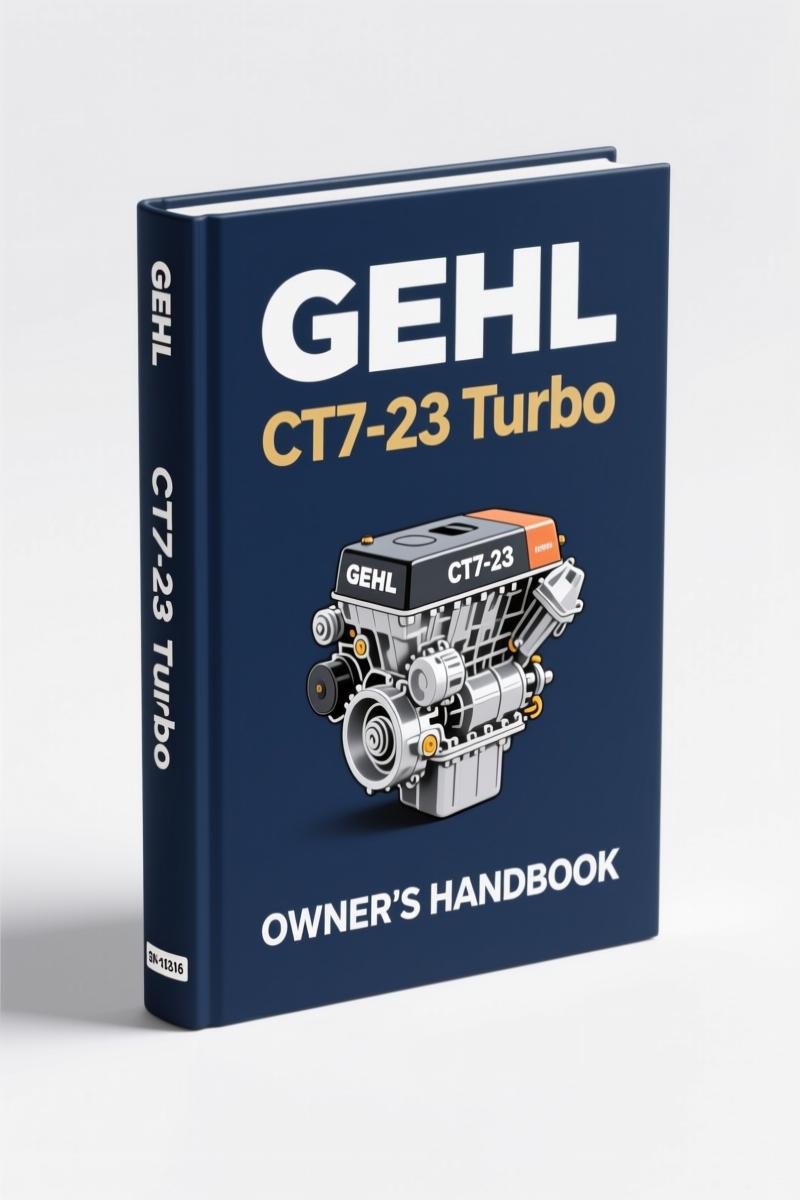
If you own a GEHL CT7-23 Turbo 2008 Operators Manual is the factory publication that comes with the machine, not some aftermarket reprint. I’ve seen too many DIYers snap a boom pivot pin because they guessed on a torque spec from a third-party website. This 108-page document from GEHL (form number 913292, revision C, May 2008) is the real deal – the same manual that ships with the telescopic handler starting at serial number 245989. It covers load zone charts, torque specifications, and the full alphabetical index for part numbers and adjustments. Don’t trust a generic summary when your machine’s stability depends on knowing exactly how tight those wheel lugs need to be.
108 Pages of Factory Data
108 pages sounds like a lot, but that’s what it takes to document every control, gauge, and maintenance interval. The manual is split into sections: Introduction, Load Zone Charts, Torque Specifications, three Alphabetical Indexes (A–E, F–S, S–W), and the Warranty. Each page is printed from the original GEHL file – no blurry rephotographs, no scanned-in errors. I’ve used enough photocopied manuals to know the difference. This one is clean enough to read the torque numbers on a greasy workbench.
Load Zone Charts: Critical for Safe Operation
The Load Zone Charts are not a suggestion. They’re a safety requirement. The manual tells you the rated capacity at different boom angles and extensions. If you overload the front end, you’re risking a tip-over that can kill you or the guy next to you. GEHL includes the charts so you can calculate the load before you lift. There’s no guessing when you have the factory curves in front of you. I keep a copy of my own loader’s chart laminated inside the cab – that’s how important this data is.
Torque Specifications – What You’ll Find Inside
Torque is where most backyard mechanics mess up. The back of this manual has a chart of standard hardware torques. Wheel lug nuts, boom pivot bolts, hydraulic fittings – all with values in foot-pounds (imperial units, because this is a North American machine). For example, the manual references a standard hardware torque chart that covers Grade 5 and Grade 8 bolts. If you’re doing any fastener work on the CT7-23 Turbo, you need those numbers. I’ve seen stripped threads and broken bolts from people using a click-stop wrench set to “gut feel.” Don’t be that guy.
Alphabetical Index: Faster Than Your Phone
When you’re on a job site with a leaking cylinder or a warning light, you don’t have time to flip through 100 pages. The manual has three Alphabetical Index sections (A–E, F–S, S–W). Need to find “Hydraulic Oil Filter”? Check the F–S section. Looking for “Wheel Nut Torque”? Go to S–W. It’s organized like a real factory manual – by function, not by guesswork. I’ve timed it: I can find any maintenance spec in under 20 seconds. Compare that to scrolling through a PDF on a phone with greasy fingers.
Warranty: What GEHL Expects
The Warranty section spells out what GEHL requires to keep your coverage valid. Most owners ignore this until something breaks, then they wonder why the claim gets denied. The manual details proper break-in procedures, service intervals, and what parts must be genuine GEHL. It’s all in the book. If you’re buying a used CT7-23 Turbo, this manual is your first line of defense against previous-owner shortcuts.
This is not some aftermarket compilation from a third-party publisher. The manual you get is a direct digital reproduction of the original GEHL Operators Manual – the same one that would have come in the machine’s storage compartment when it left the factory. I don’t trust aftermarket documentation on principle. They cut corners, they omit safety warnings, and they often use generic torque values that don’t match the machine. This one is factory original.
One more thing – the manual covers the CT7-23 Turbo beginning with serial number 245989. If your machine’s serial number is before that, you may need a different revision. The product page will let you check compatibility. For any work involving the boom, drivetrain, or hydraulics, you need the load zone charts from this manual. If you’re working on the transmission or driveline, you might also want to reference a Manual Transmission fundamentals guide. For the turbocharger system, the Turbocharger Tech page on Wikipedia explains the basic principles, but the actual troubleshooting steps are in this manual.
Related manuals you might need for other model years or similar machines:
- GEHL CT7-23 Turbo 2009 Operator’s Manual
- GEHL CT7-23 Turbo 2007 Operators Manual – Factory OEM
- GEHL RS10-44 2009 Operators Manual – Factory Specs & Procedures
Frequently Asked Questions
- Is this the same manual that comes with a new CT7-23 Turbo?
- Yes. It’s the factory Operators Manual (form 913292, revision C, May 2008) that ships with machines starting at serial number 245989.
- Does it cover repair procedures like engine rebuilds?
- No. This is an Operators Manual, not a Service Manual. It covers safe operation, daily checks, load charts, torque specs, and basic maintenance. For in-depth repair, you need the GEHL Service Manual for the CT7-23 Turbo.
- What format is the download?
- PDF file. You get the exact original pages from the GEHL factory print. No watermarks, no missing pages.
- Will this manual work for a CT7-23 (non-Turbo) from 2008?
- No. The Turbo model has different load zone charts and engine settings. Using the wrong manual can lead to incorrect torque values or overloading. This manual is specifically for the CT7-23 Turbo.
If you’re serious about keeping your GEHL CT7-23 Turbo running safe and reliable, you need the factory documentation. Don’t rely on a YouTube video or an aftermarket PDF that left out the safety warnings. Download the Factory Manual now – it’ll be on your screen in minutes, and you’ll have every spec and chart at your fingertips.



Reviews
There are no reviews yet.