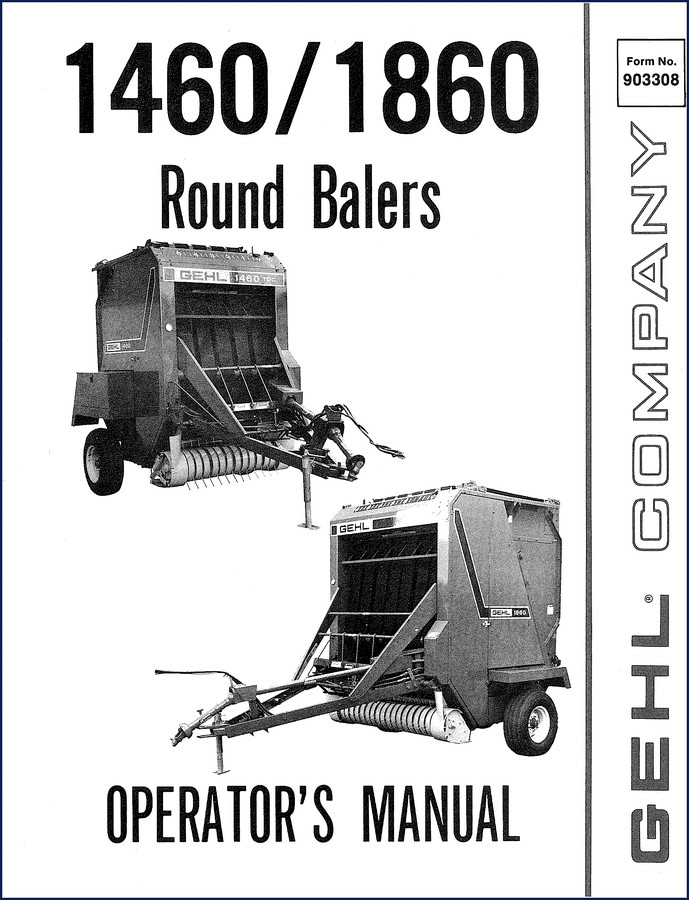
GEHL 1860, 1460 Operators Manual – What You Get with a Factory Print
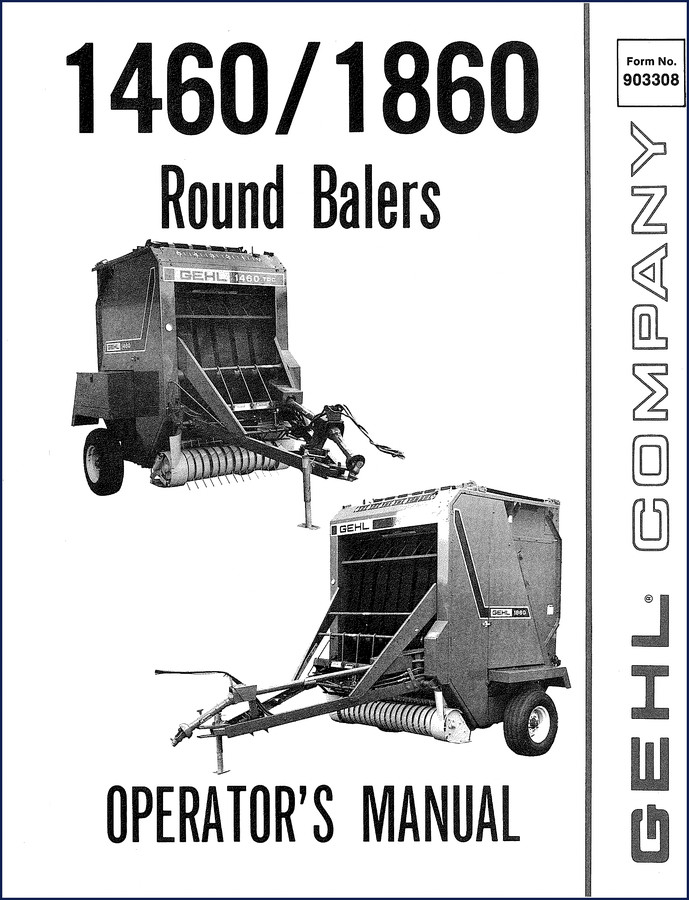
Twenty-eight years of turning wrenches, and I still see guys chasing ghosts because they trusted an aftermarket reprint. This GEHL 1860, 1460 Operators Manual is the real deal—68 pages of GEHL-issued procedures, torque specs, and safety rules. No third-party guesswork.
Safety Section: Why Page 8 Matters
Page 8 of this manual covers the safety decal locations and hazard zones specific to the 1460 and 1860 balers. I’ve pulled enough PTO shafts out of torn jeans to know that skipping page 8 means you’re inviting a hospital visit. The manual lists every control and safety device from page 10 through 14. If you’re working on one of these machines, you need that information open on your bench.
Adjustments (Pages 24-31): How to Set Clearance Without Breaking Things
The adjustment section on pages 24 through 31 covers belt tension, pickup height, and tailgate latch alignment. These are the settings that make or break a bale shape. Aftermarket manuals will tell you “adjust until it feels right.” This manual gives you factory clearance numbers. Follow them. Your baler will thank you.
Troubleshooting (Pages 47-53): Real Problems, Real Fixes
Seven pages of troubleshooting—page 47 to 53—separated by symptom, cause, and fix. No flow charts that lead you in circles. If the baler won’t wrap, you turn to that section. If the net wrap slips, same place. I’ve used this section on a 1460 baler that was jamming every five bales. Found a worn tension arm adjuster within ten minutes. Aftermarket manuals don’t have that depth.
Source Validity: GEHL Factory vs Aftermarket Reprints
This is an original GEHL operator’s manual, not a scanned copy somebody ran through an OCR. The warranty statement inside the front cover is intact. The specifications on page 3 are straight from the factory. When I see a manual that says “Standard Hardware Torque Specifications” on the inside back cover, I know I can trust those foot-pounds. Aftermarket versions often round numbers or miss grades of bolts. That gets you a stripped thread or a broken bolt.
Does This Manual Cover Both the 1460 and 1860 Models?
Yes. The cover says 1460/1860 Round Balers, and the entire manual applies to both models. Component identification on pages 15-16 matches both machines. Operation instructions on pages 17-23 apply to both. The only differences are in optional features listed on pages 55-57. If you own either model, this 68-page document is the correct factory manual.
What You Get in the Lubrication Schedule (Pages 32-33)
Two pages of grease points and intervals. No guessing which fittings need attention every 10 hours versus every 50 hours. The maintenance schedule on pages 62-63 lays out daily, weekly, and seasonal tasks. I’ve seen balers rust out inside because operators followed generic advice. Follow this schedule and your machine will last.
FAQ
- Is this manual the same as a service repair manual?
- No. This is an operator’s manual. It covers operation, adjustments, lubrication, and basic service. Major internal repairs require the service manual. But for daily use and adjustments, this is the manual you want.
- Can I print the PDF?
- Yes.
- What torque values are listed in this manual?
- The inside back cover has a standard hardware torque specification table for bolts up to grade 8. Specific assembly torques for baler components are called out in the adjustment section pages 24-31 and service section pages 34-45. For example, the tailgate pivot bolt torque is listed on page 28.
- Will this help me troubleshoot a non-wrapping baler?
- Pages 47-53 include a troubleshooting chart for wrapping issues. Check for worn net tension bushings and incorrect belt clearance. The manual tells you how to measure and adjust.
I see too many guys waste billable hours because they bought a cut-price manual. This GEHL 1860, 1460 Operators Manual is the one I keep on my shop shelf. You can Download the Factory Manual right now from AutoRepairManuals and get the same documentation factory mechanics rely on.
If you need the parts breakdown, grab the GEHL 1860 Parts Catalog. For other GEHL machines, check the GEHL RS10-44 2009 Operators Manual – Factory Specs & Procedures or the GEHL RS10-44, RS10-55, RS12-42 2011 Operators Manual – Factory Specs. For background on baler driveline basics, see Manual Transmission and Manual Transmission.

Reviews
There are no reviews yet.