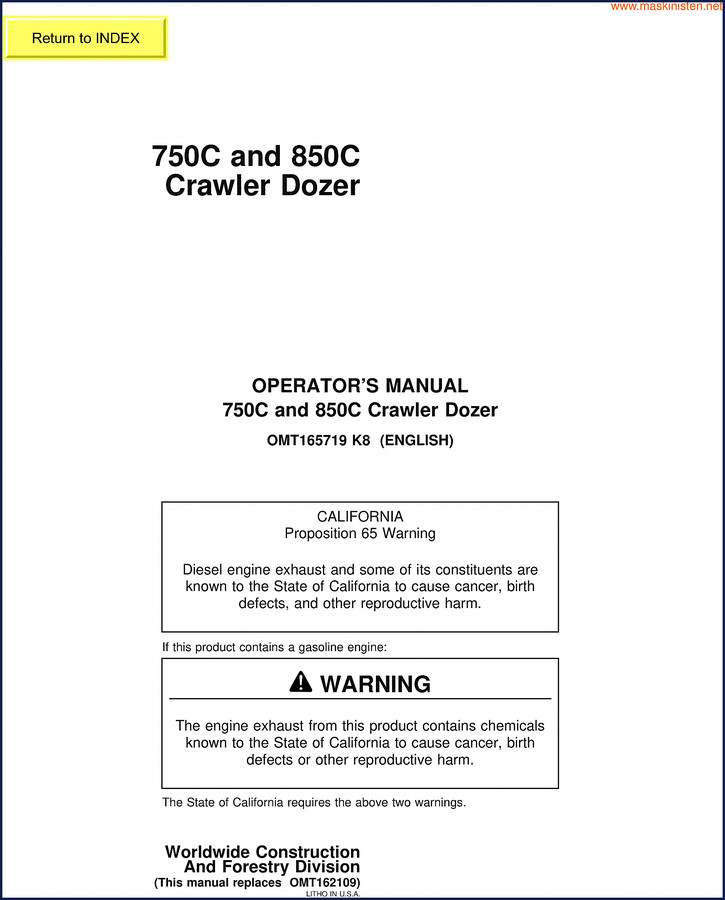
John Deere 750C, 850C Operators Manual
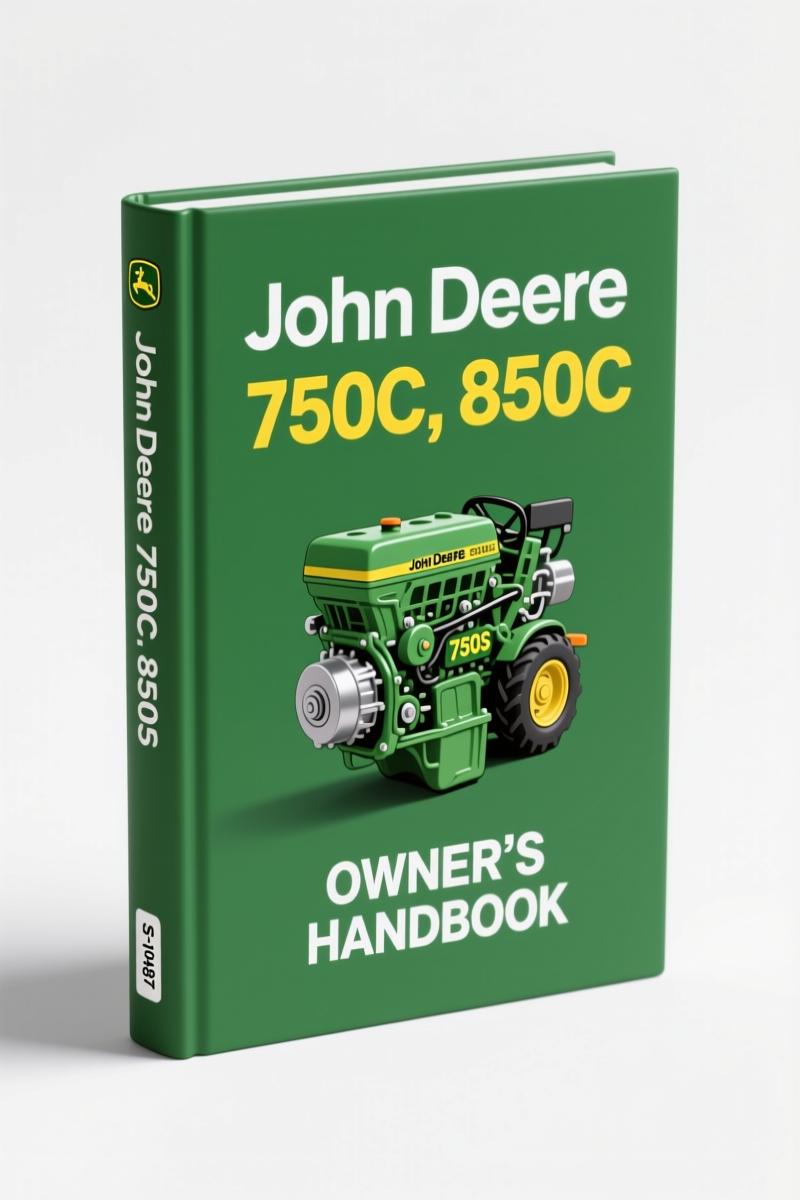
If you’re running a 750C or 850C crawler dozer and you’re tired of guessing how to interpret warning lights or what the break-in interval actually is, this is the book that will set you straight. I’ve seen too many guys skip the pre-start inspection because they figured they knew the machine. Then they turn around and wonder why the transmission oil temp gauge is pegged. The John Deere 750C, 850C Operators Manual is the OEM document that comes with the machine — it’s not a reprint, not a third-party rewrite. It’s the same 324-page book your dealer would pull out when you buy the dozer new. And it’s the one you need on the shelf if you want to keep your crawler running without burning up a hydraulic pump or rolling it over on a slope.
Safety Sections: Rollover, Backover, and Rollaway Warnings
Page 2 of this manual starts with the warning that reading it is mandatory — not optional. The Safety chapter covers exactly what the title says: recognize safety information, understand signal words, avoid injury from rollover accidents. It tells you to wear the seat belt and not try to jump clear if the machine tips. That’s not generic advice. John Deere wrote it because they tested the machines and know that a crawler dozer can roll in certain conditions. There’s also sections on backover accidents and rollaway prevention. If you’re loading this machine on a trailer, the manual has a specific procedure under ‘Avoid Injury from: Loading Machine on a Trailer’. Do not skip that page. The manual also tells you how to park it safely — use the park lock levers, chock the tracks. I’ve seen on-site accidents that would have been avoided if someone had actually read the OEM safety instructions.
What Does the Operator’s Station Chapter Cover?
The Operator’s Station chapter walks you through every gauge, indicator, and control in the cab. It covers the display monitor gauges, the engine coolant temperature gauge, fuel level, engine oil pressure, and the STOP-engine indicator with alarm. There’s a dedicated section on the transmission oil pressure gauge and the battery disconnect switch. You’ll find blade control lever, park lock levers, engine speed lever, transmission speed lever for lever-steer machines, and FNR lever. The manual even shows you the pedal configurations for lever-steer and pedal-steer machines. If your 850C has work lights, air conditioner, or a dome light, those controls are documented. Also includes how to adjust the seat and use the seat belt properly. This chapter is reference-grade — you can find exactly which amber light means ‘service required’ and which one means ‘return FNR to neutral’. You won’t get that from a generic guide.
Break-In Schedule: First 10 Hours and 50-100 Hours
Break-In is a separate chapter in this manual. It covers three intervals: observe engine operation closely during the first hours, then after the first 10 hours perform checks and inspections, and finally between 50 to 100 hours there are specific tasks. The manual gives you the exact steps — not just ‘check fluids’ but what to look for. For example, after the first 10 hours you should retorque the track adjuster? I don’t have that spec in front of me, but the manual states what needs doing. The break-in period is critical for the engine and drivetrain. If you shortchange it, you’ll chase oil leaks and premature wear for years. This section is only a few pages but it’s the kind of info that saves you from a teardown down the road.
Follow the Pre-Start Inspection Checklist
There’s a dedicated Pre-Start Inspection chapter that says inspect the machine daily before starting. It doesn’t assume you know what to look for — it lists the items. You check the coolant level, the engine oil, the hydraulic oil, the fuel/water separator, the tracks for damage, and the condition of the safety signs. This is the same list a professional operator uses. The manual also covers the cold-weather start aid (ether injection) and how to use booster batteries on a 24-volt system. If you skip this inspection and then try to start the engine in freezing weather, you might damage the glow plugs or over-crank the starter. The manual tells you to check instruments after starting and to warm up the engine. That’s not optional.
Starting the Engine: Cold Weather and Cold Start Aid
Engine starting procedure is in its own chapter under Operating the Engine. It covers starting normally, using starting fluid for cold weather (with the ether injection indicator on the dash), and using coolant heater if equipped. There’s also a section on using booster batteries. The manual gives the correct sequence: check instruments before starting, then start, then check instruments after. I’ve had guys tell me they just fire it up and go. That’s how you blow a head gasket because the coolant was low and the engine overheated before the gauge ever moved. This manual also mentions the emissions control warranty statement for U.S. and California — that’s on page 4. Not something you normally think about, but if you modify the fuel delivery you void the warranty. Good to know.
Source Authenticity: OEM vs Aftermarket
This is the genuine John Deere factory operators manual. Not a reprint by some third-party that scanned a copy and lost the foldout diagrams. Not a PDF that someone OCR’d with typos. I’ve seen aftermarket manuals that list the wrong fluid type or swap torque values between models. That gets expensive. This manual is the original document published by John Deere for the 750C and 850C crawler dozers. It includes the original warnings about California Proposition 65 for diesel exhaust. The measurements are given in both metric and customary U.S. units — it says so on page 2. The right and left sides are defined by facing forward travel. That might seem basic, but I’ve had arguments over which side is left when a service writer is ordering parts. This manual clears that up.
If you need the full repair details — torque specs for the final drives, disassembly of the transmission, or the bulldozer blade hydraulic schematics — you’ll want the companion technical manual. Check the John Deere 750C 850C Technical Manual for those procedures. Or if you’re specifically digging into the dozer blade, the John Deere 750C 850C Technical Manual – Section: Section 32 Bulldozer covers that section. And if you already have the operator’s manual but need another copy for the glove box, the John Deere 750C 850C Crawler Dozer Operator’s Manual is the right product. For background on how Manual Transmission works in track-type tractors, this operator’s manual doesn’t go into overhaul, but the technical manual does. Also, if you’re researching general crawler dozer operation, Manual Transmission articles can help — but stick with the OEM documentation for your specific series.
Frequently Asked Questions
- Does this manual include torque specifications for the track bolts?
- No. This is an operators manual — it covers operating procedures, daily inspection, break-in, and safety. Torque specs are in the technical service manual.
- What are the exact differences between the 750C and 850C covered in this manual?
- The manual covers both models in one document. The differences are indicated in sections like the transmission speed lever configurations and the engine power ratings. The 850C has a different blade control setup and slightly higher operating weight. The manual treats them both but calls out variations where they exist. For example, the FNR lever operation differs between lever-steer and pedal-steer machines, and those options are available on both models. The safety sections and break-in procedures apply identically. The operator’s station chapter shows the same gauge cluster layout but notes any model-specific indicators. If you need the exact engine displacement differences or track width variations, you’ll want the technical manual for the detailed specs.
You’ve got a crawler dozer that cost thousands. The manual that tells you how not to wreck it is right here. 324 pages, OEM John Deere, no guesswork. Download the Factory Manual and put it in the cab or on your shop tablet. It beats learning the hard way.

James L. –
Excellent workshop guide. The pages are clean and well indexed. A must-have for any John Deere 750C, DIYer doing maintenance. Worth every penny.
David M. –
Superb resource! The pages are clean and well indexed. Contains precise wiring diagrams for John Deere. I will definitely buy again.
Michael S. –
This is exactly what I required. The PDF is high resolution. It assisted me to troubleshoot my John Deere 750C, electrical connector. I will definitely buy again.