Skip to content
Sale!

Manitou MRT 2150, MRT 1850, MRT 2540 2005 User Manual – OEM Specs

Original price was: $18.82.Current price is: $11.99.

Factory Manitou MRT 2150, MRT 1850, MRT 2540 2005 User Manual – 282 pages of load charts, safety system settings, and machine identification.

Manitou MRT 2150, MRT 1850, MRT 2540 2005 User Manual

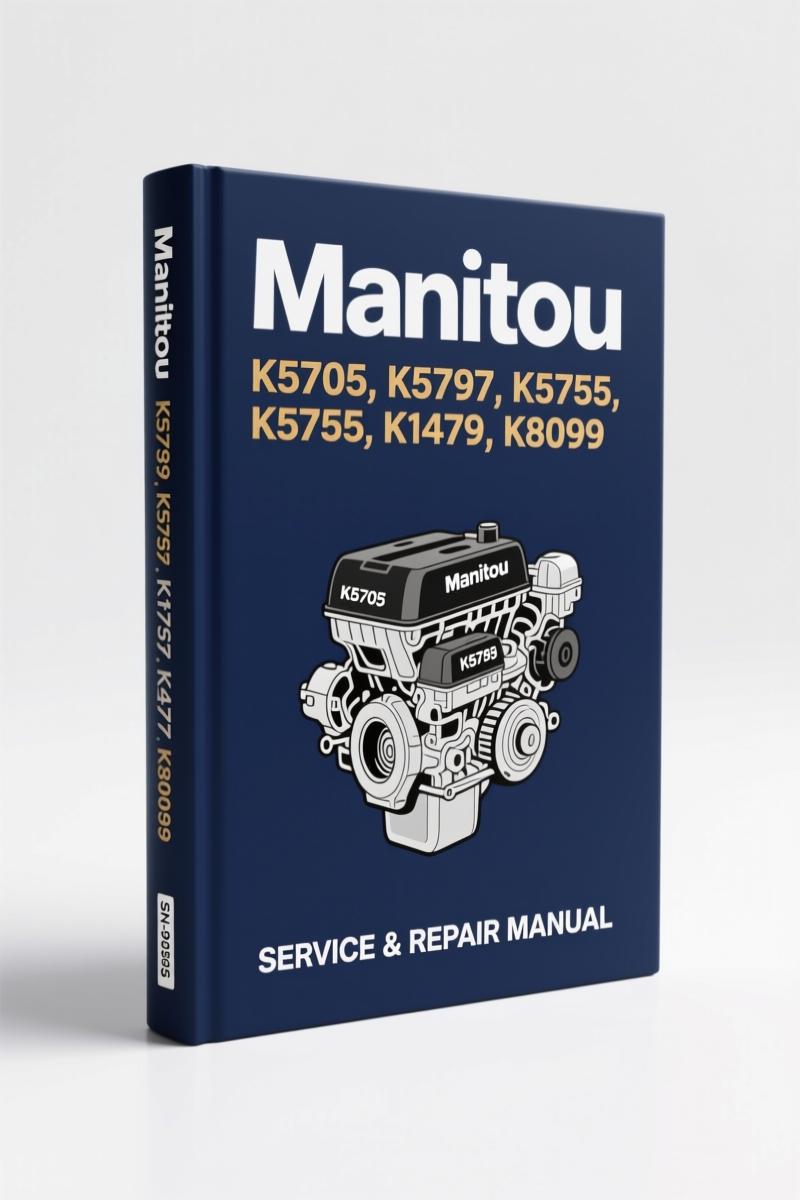
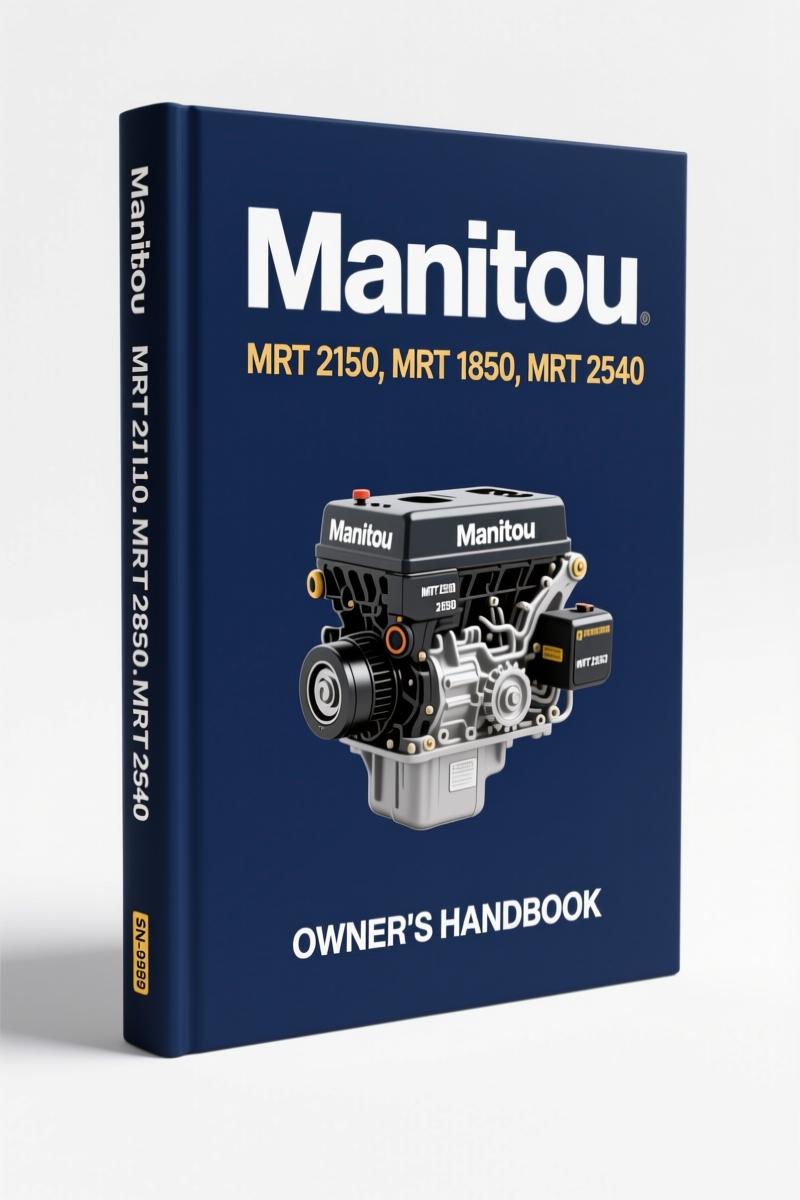
Manitou MRT 1850 user manual 2005 cover showing telehandler

You’re wrenching on a Manitou MRT 2150, or maybe an MRT 1850 or MRT 2540 from the M Series. The machine’s down, the operator’s breathing down your neck, and the aftermarket PDF you downloaded from some forum lists the load capacity for the wrong attachment. I’ve been there. That’s why you need the factory Manitou MRT 2150, MRT 1850, MRT 2540 2005 User Manual. 282 pages, bound by the same engineers who designed the telehandler, not some guy with a scanner. This is the handbook the operator’s cab should have never lost.

Identification Plate and Machine Numbers

Page 4 of this manual drills down into the machine identification plate. You’ll see the serial number, model year built, empty weight (16100 kg for the MRT 2150), engine power (97 kW), and the CE marking. Without this page, you’re guessing which variant you have. The manual also lists the safety system settings (GSS system) for each attachment—fork positions A through E, baskets, winches. If you swap an attachment without checking that table, the stability system won’t know what hit it.

Safety System Settings for Attachments

One of the biggest headaches on these machines is the GSS (tip-over prevention) setup. The manual dedicates a full table—starting around page 4 and continuing through the load chart sections—to show which GSS position matches which accessory. For example, forks use position A, a DRH 2.25/4m basket rated at 365 kg uses position B. Miss that, and you’re overriding the safety computer. The manual warns: “Do not use accessories on other positions or those not provided for by the safety system setting.” That’s not lawyer talk; that’s a machine that will tip.

Lifting Capacities and Load Charts

You need the charge pressure or the lift capacity for a specific boom angle? This manual has the tables from page 5-1 to 5-27 for the user’s handbook section, and from 5-1 to 5-135 for the crane operation section. Those are factory-tested numbers, not generic charts. I’ve seen shops snap a boom because they used a competitor’s chart that assumed a different counterweight. Don’t be that shop. The load charts here are for the MRT 2150, MRT 1850, and MRT 2540 specifically.

Why This User Manual Beats Aftermarket Copies

I get asked all the time: “Why pay for a manual when I can find one free online?” Because the free copies are scanned at 150 dpi, missing the fold-out load charts, and have the wrong torque specs for the wheel nuts. This is an original OEM print from 2005, reference 648315. The dealer contact information is right on page 3—your dealer, not some random forum user. When you need to know the exact hydraulic oil fill procedure for the MRT 2540, this manual gives it to you in three languages (English, Dutch, Danish). Aftermarket copies don’t have that certification.

Get the Right Data Before You Operate

Before you fire up that telehandler to lift a 3-ton winch, open this manual to the attachment compatibility chart. It lists the GSS position for a 3-ton winch (position D) and a 2-ton winch (position C). Use the wrong position, and the safety system may cut lift speed or refuse to raise the boom. That’s a job-site shutdown you didn’t budget for. The manual also includes the empty weight and maximum capacity (10800 daN for the MRT 2150). Keep a copy in the glovebox and one in the shop.

Frequently Asked Questions

Does this manual cover the MRT 2150, MRT 1850, and MRT 2540?
Yes. The title says MRT 1850-2150-2540 M Series, and the identification page lists all three models with specific serial number ranges.
What languages are the instructions in?
Three languages: English, Dutch, and Danish. The manual is marked EN-NL-DK on every page header.
How do I know the safety system setting for a basket attachment?
Turn to page 4 of the manual. The GSS table shows position B for the DRH 2.25/4m basket rated at 365 kg and position C for the 1000 kg basket. You must also check the load charts on pages 5-1 through 5-27 for the user section. Do not rely on memory.
Can I use this manual to rebuild the transmission?
This is a user manual, not a service manual. It covers operation, safety system settings, load charts, and identification. For internal transmission work you need the corresponding Manual Transmission factory service manual. But the user manual does include the engine power specs and weight data needed for ordering parts.

Stop guessing with generic PDFs that fell off the back of a truck. You need the factory data that matches the VIN plate bolted to your Manitou. This 282-page User Manual is the difference between a safe lift and a call to the insurance adjuster. Manitou MRT 2150 Parts Catalog gives you the part numbers when something breaks. MANITOU MRT M Series Baskets Use Manual 2004 and MANITOU MRT M Series Baskets User Manual 2004 cover attachment-specific instructions. For the transmission rebuild, see the Manual Transmission service manual.

Download the Factory Manual and put the right numbers in your hand before you touch that machine again.

Page Count

282

Year

2005

Brand

Manitou

Language

English, NL, DA

Reviews

There are no reviews yet.

Be the first to review “Manitou MRT 2150, MRT 1850, MRT 2540 2005 User Manual – OEM Specs”

Your email address will not be published. Required fields are marked *

Sale!

Manitou MRT 2150, MRT 1850, MRT 2540 2005 User Manual – OEM Specs

Original price was: $14.75.Current price is: $11.99.

OEM 2005 Manitou MRT 1850, 2150 & 2540 user manual — 281 pages of factory safety, operation & maintenance data.

Manitou MRT 2150, MRT 1850, MRT 2540 2005 User Manual

Manitou MRT 1850, 2150, 2540 User Manual 2005 cover showing telehandler

Right off the bat: if you’re working on a Manitou MRT 1850, MRT 2150, or MRT 2540 and you don’t have the factory user manual in your hand, you’re guessing. And on a 16,100 kg machine that lifts 10,800 daN at 11 meters, guessing gets people killed or costs you a boom. I’ve seen guys skip the safety system adjustment procedure and then wonder why the load chart doesn’t match reality. Don’t be that guy. This is the Manitou MRT 2150, MRT 1850, MRT 2540 2005 User Manual — 281 pages of the same documentation that shipped with the machine from the factory.

Safety System Adjustment: What the Factory Says

Page 2 of this manual lists the GSS (safety system) settings for each attachment. Forks, basket, winch — each one has a different position (A, B, C, T, etc.) and a specific capacity rating. The manual gives you the exact GSS type, position, and accessory used. For example, a basket with 365 kg capacity uses GSS B; a 3-ton winch uses GSS T. Try using a winch on a basket setting and the overload protection won’t work right. The manual also warns: “Ne pas utiliser les accessoires dans des positions différentes ou non prévues par le réglage du système de sécurité.” That’s not optional — it’s a safety interlock. Every tech and operator on an MRT machine should have this data accessible.

Load Charts: Pages That Keep You Alive

The manual devotes pages 5-1 through 5-27 to the load charts in the operator section, with separate cab placard instructions. For crane mode, it’s pages 5-1 through 5-135. Those aren’t general guidelines — they’re certified capacity limits for each configuration. If you’re working with a PT 1000 attachment or a T-5000 winch, you need those charts to set the stabilizers and boom angle correctly. Aftermarket reprints often omit these pages or compress the graphics. This is the original factory print, scanned at high resolution so the 10,800 daN line at 11 m is readable.

Capacity and Identification Data

The identification plate data on page 2 lists the model (MRT 2150 example), serial number, year of manufacture (2006 in that example, but manual covers 2005 machines), tare weight 16,100 kg, engine power 97 kW, and lifting force at 11 m: 10,800 daN. The manual also includes blank fields for the dealer stamp and R.C.T.A. (French regulatory) info. If you’re setting up an MRT 1850 or 2540, the same format applies — you get model-specific pages for capacities and safety system adjustments. No generic tables, no aftermarket approximations.

Who Needs This Manual

Home-garage guys with a telehandler? Not really — this is a 16-ton machine, not a lawn tractor. This user manual is for operators and shop techs who maintain these machines in ag, construction, or rental fleets. If you do pre-delivery inspections, annual safety checks, or teach new operators, this is the document you hand them. It covers daily checks, control identification, and the safety system setup for all three MRT models (1850, 2150, 2540) from 2005. The manual is trilingual (French, English, Spanish) — useful if you have mixed crews or need to reference the original French terminology for parts ordering. Pair it with the Manitou MRT 2150 Parts Catalog for a complete shop setup.

OEM Print vs Aftermarket Copies

I’ve seen third-party “reprints” that blur the load chart numbers so bad you can’t tell if it says 3,000 or 3,300 kg. This manual is a direct scan of the factory binder — not a photocopy of a photocopy. The 2005 edition includes the E2 emission compliance label and the correct torque values for wheel nuts (in Nm; convert to ft-lbs using a chart — I don’t trust the online converters). You also get the factory warnings in bold, like the red box about not using attachments in positions not covered by the GSS adjustment. That text gets lost in aftermarket cuts. If you also need basket-specific instructions, check MANITOU MRT M Series Baskets Use Manual 2004 and MANITOU MRT M Series Baskets User Manual 2004 for dedicated attachment procedures. For background on how the transmission interacts with the gear system, reference a Manual Transmission fundamentals guide from a trusted engineering source — but stick to this manual for the MRT-specific data.

FAQ

Does this manual cover the MRT 2540?
Yes. The manual covers all three models: MRT 1850, MRT 2150, and MRT 2540. Model-specific data appears on the identification page and throughout the load charts.
What torque specs are in this manual?
Wheel nut torque is referenced in the maintenance section of the book, given in Nm. You’ll need to convert to ft-lbs yourself. No aftermarket guesswork.
Is this the same as a service repair manual?
No. This is a user’s handbook — operation, safety, load charts, daily maintenance. For engine rebuilds or valve adjustments, buy a service manual. This is the document you hand to the operator.
Can I use this for a 2006 model?
This edition is dated 2005 (REF 648315). If your machine is 2006 or later, some safety system updates may differ. Check the serial number range in the manual’s identification section.

Download the Factory Manual now and keep the original data on your tablet or print it for the job box. No more guessing what the GSS setting should be or whether you’re reading the right load chart. It’s 281 pages — use them.

Page Count

281

Year

2005

Brand

Manitou

Language

French, English, Spanish

Reviews

There are no reviews yet.

Be the first to review “Manitou MRT 2150, MRT 1850, MRT 2540 2005 User Manual – OEM Specs”

Your email address will not be published. Required fields are marked *

You may also like…

Don`t copy text!