Toyota 623 Training Manual
I’ve seen too many guys fry an ECU because they grabbed the wrong multimeter. This Toyota 623 Training Manual is the kind of thing you should have read before you touched your first wiring harness. It’s 30 pages of factory-level electrical theory, not a reprint of some aftermarket knockoff. If you’re diagnosing a no-start, a parasitic draw, or a communication fault, knowing the difference between analog and digital meters is where it starts. This course was written by Toyota Technical Training to keep techs from chasing ghosts.
Essential Electrical Concepts: What This Course Covers
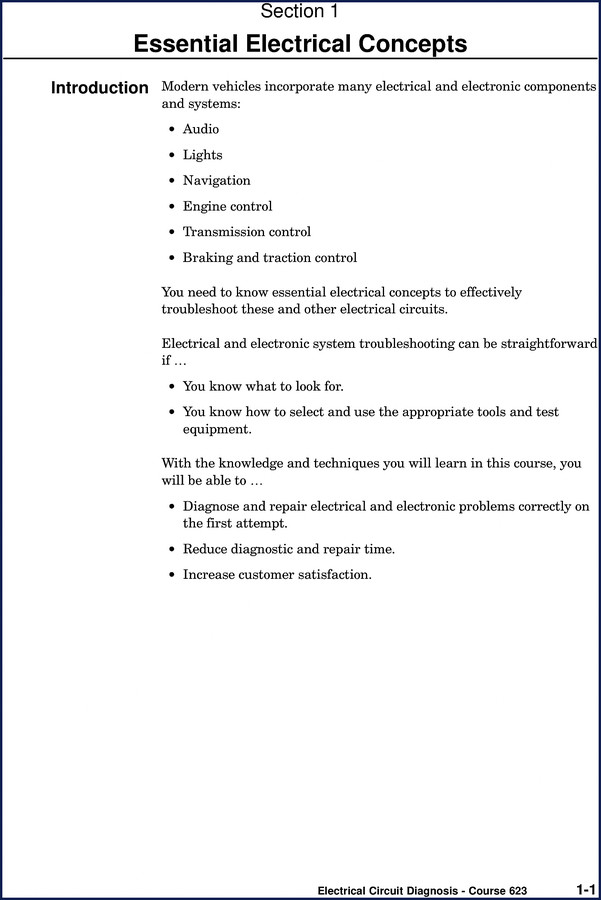
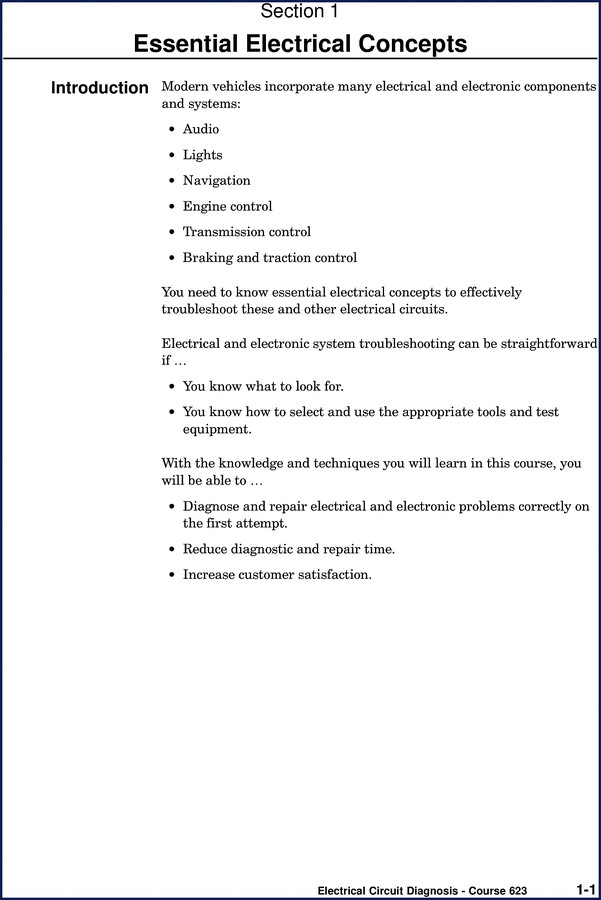
Section 1 opens with a list of modern vehicle systems that rely on electronics: audio, lights, navigation, engine control, transmission control, braking and traction control. Page 1 of the Training Manual lays out why you need to understand voltage, current, and resistance before you poke a test light into a module. The course promises that knowing what to look for and how to pick the right tool will let you diagnose and repair electrical problems correctly on the first attempt. That’s the goal – not guesswork, not swapping parts, but actual diagnosis.
Analog vs. Digital Multimeters: Why It Matters
Page 2 dives into metering functions. You get a voltmeter for voltage, an ammeter for current, an ohmmeter for resistance – all combined into a multimeter. But here’s where rookies mess up: analog multimeters use a mechanical pointer and are not suitable for circuits with sensitive electronic components like ECUs. Digital multimeters display actual numbers, have higher internal resistance, are less prone to shock damage, and last longer on batteries. If you’re working on a Toyota with any ECU – which is every modern one – you need a decent digital meter. This manual makes that clear on page 3.
Diagnosing Electrical Problems: The Factory Approach
The whole point of this course (course number 623) is to teach systematic troubleshooting. It doesn’t just say “check the battery.” It teaches you how to select the right test equipment and interpret readings. The OCR excerpt shows the mantra: “If you know what to look for and you know how to select and use the appropriate tools and test equipment.” That’s the difference between a diag that takes an hour and one that takes all day. This manual gives you the logic, not just the specs.
Does This Manual Cover Modern Vehicle Systems?
Yes – but in a foundational way. Page 1 lists audio, lights, navigation, engine control, transmission control, and braking/traction control. It doesn’t give you wiring diagrams for a 2024 Camry; it teaches the underlying concepts that apply to all those systems. If you’re a DIY mechanic trying to figure out why your dome light stays on, or a beginner who wants to understand how a crankshaft position sensor talks to the ECU, this Training Manual builds that base. Pair it with a vehicle-specific service manual from Toyota Series 623 Electrical Circuits Training Manual for the full picture.
30 Pages of Focused Training Material
At 30 pages, this isn’t a doorstop. It’s a condensed course – the kind of thing you can read in an evening and apply the next morning. The content is dense: front-panel layouts of multimeters, explanations of analog vs. digital, and why internal resistance matters when measuring voltage drop in ECU circuits. No fluff, no filler photos of smiling mechanics. Just factory training. If you need to understand how an ammeter works before you measure parasitic draw, start here. Then move to Toyota Starting System Overview and Circuits and Toyota Section 5: The Charging System Training Manual for the hands-on procedures.
Source Validity: OEM Toyota Training vs. Aftermarket
I don’t trust aftermarket documentation on principle – been burned by wrong pinouts and torque specs that don’t match. This is a genuine Toyota training manual (course 623). You can verify the credibility by checking the Automotive Industry Overview at Toyota’s own site. If it came from Toyota Technical Training, it’s the same material dealership techs study. That’s worth a lot when you’re trying to avoid buying a new ECU because you used an analog meter on a 5V reference circuit.
Frequently Asked Questions
- Is this manual only for professional technicians?
- No. It’s written for anyone who needs to understand automotive electrical basics – home garage enthusiasts, students, even DIYers. The language is clear, and the concepts are taught from the ground up. That said, it assumes you have a basic multimeter and know how to turn it on.
- Does the manual include wiring diagrams for specific models?
- It does not. That’s not the purpose. This is a training manual covering theory and metering techniques. For actual vehicle-specific wiring and pinouts, you’ll need a factory service manual for your model year.
If you’re serious about cutting down electrical diagnostic time – and saving your modules from accidental damage – this is the foundation you need. Download the Factory Manual and get the theory straight before you touch another circuit.
Reviews
There are no reviews yet.