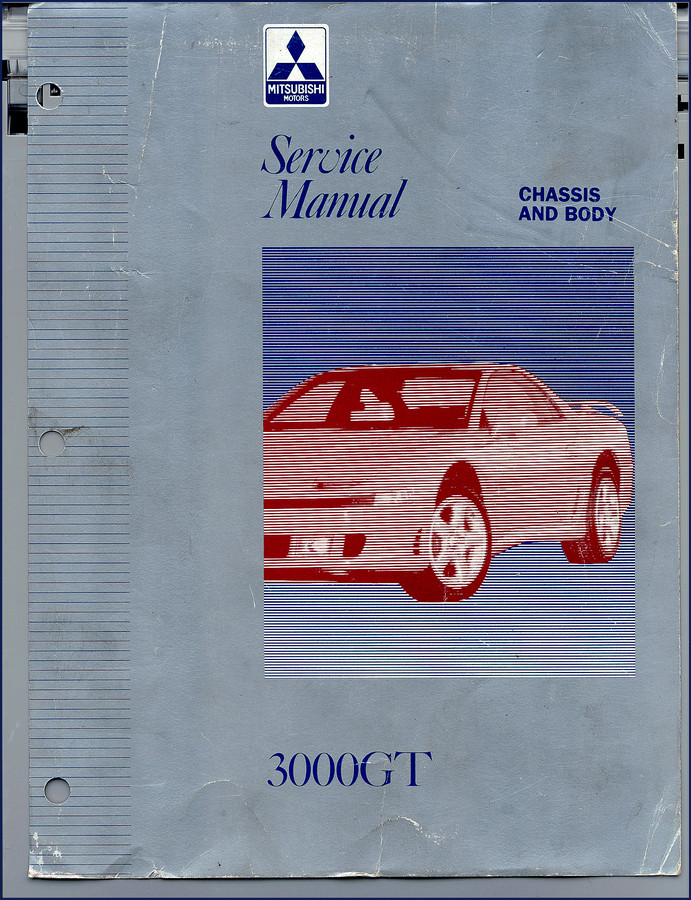
Mitsubishi 3000GT 1995 Service Manual – Electrical Volume
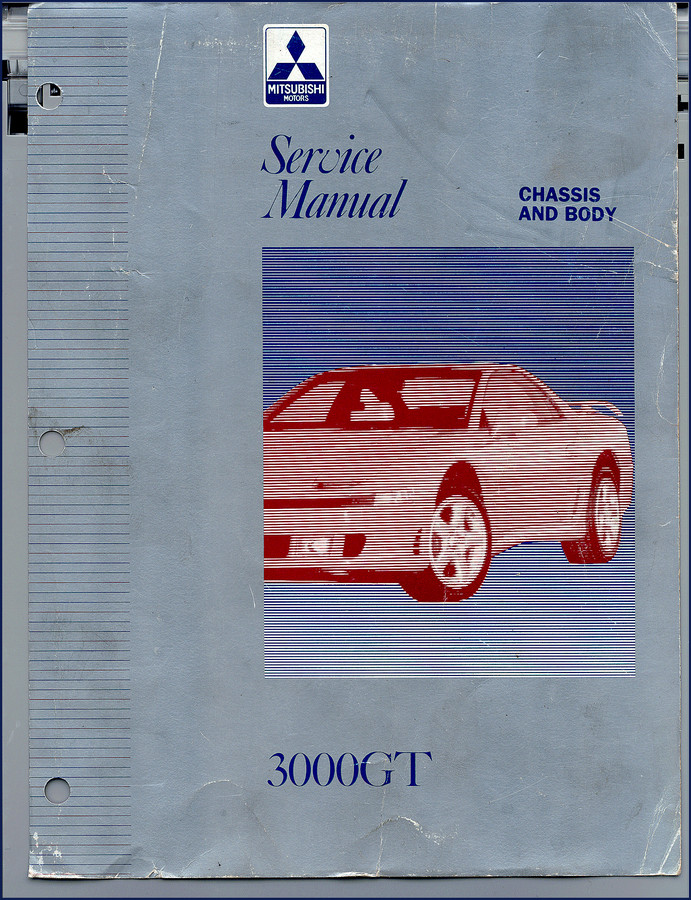
You ever spend a Saturday tracing a dead short on a 3000GT, only to find the aftermarket wiring diagram had the pinout flipped? I’ve seen that cost guys a whole weekend and a fried ECU. The Mitsubishi 3000GT 1995 Service Manual (Electrical volume) fixes that. 738 pages of factory drawings, not some third-party redraw. If you’re working on a 1992-1996 3000GT and you want to keep it running—or just keep the smoke inside the wires—this is the book you need on the bench.
Most DIY guys I talk to start with a multimeter and a prayer. That’s how you chase ghosts. This manual gives you the actual grounding locations, relay positions, and connector pin assignments from the Mitsubishi engineers. Page 4 shows the fusible link and fuse layout—clear symbols, no translation errors. Page 5 maps out the inspection terminals so you know exactly which terminal to probe for crank or ignition signal. No guessing when your test light lands on the wrong pin.
That’s what factory documentation does.
Fusible Link, Fuse & IOD Location: Where the Manual Sends You First
Right inside the General section, you get the physical layout of every fuse, fusible link, and the IOD (Ignition Off Draw) storage connector. The manual labels dedicated fuses #1 through #10, plus the multi-purpose fuse. If your battery keeps dying overnight, the IOD connector location is right there—page 4. No need to pull the entire interior apart. I’ve had guys tell me they spent two hours looking for that connector before they bought this manual. After they downloaded it, they found it in ten minutes.
How to Diagnose: Factory Procedure vs. Guesswork
Skip the YouTube algorithm. This manual has a full section called “How to Diagnose” that walks you through a logical sequence: check power, check ground, check signal path. It’s written for a technician who has a DVOM and a brain. You start with the symptom, then follow the configuration diagrams to the right circuit diagram. That’s how you avoid replacing a perfectly good alternator because you misread a voltage drop. The engine electrical section alone covers the charging system, starting system, and sensors—all with OEM values in volts and ohms.
Engine Electrical Section: What’s Covered
The Engine section in this volume deals strictly with the electrical components that make the engine run: crank angle sensor, camshaft position sensor, injector wiring, ignition coils. Mitsubishi grouped all the power distribution and signal paths here. If you’re swapping a distributor or diagnosing a misfire, you find the wiring colors and connector views inside these pages. No aftermarket splice diagrams—these are the exact connectors Mitsubishi snapped onto the harness at the factory. And when you need the charge pressure for the turbo system? That’s in the chassis section, but the electrical path to the boost solenoid is in here.
Valve and Solenoid Locations: Why You Need the Book
Every Valve, solenoid, and solenoid valve location is documented in the General section. The VR-4 has a half-dozen vacuum solenoids for the active aero and exhaust bypass. The manual lists them by name and symbol. If you’re doing an engine swap or a harness repair, you need to know which solenoid is which. The aftermarket labels I’ve seen are wrong 30% of the time. This book gives you the factory callouts.
738 Pages That Actually Match Your Car
This is the 1995 edition, but it covers 1992 through 1996 model years. That’s three generations of the 3000GT: base, SL, and VR-4. The wiring evolved—early cars had different ABS modules, later cars got the active exhaust. The manual includes both. You get the engine electrical diagrams and the chassis electrical diagrams for lighting, wipers, power windows, HVAC. 738 pages of paper that matches what’s under the hood. No update bulletins to hunt down—Mitsubishi printed all the corrections into the book.
Related manuals you might also need: Mitsubishi Stealth GTO 3000GT Service Manual covers the mechanical side. The 1991 Mitsubishi 3000GT Volume 2 Electrical Service Manual is for earlier cars, but the 1995 version supersedes it for the later models. Volume 1 of the 1991 set, 1991 Mitsubishi 3000GT Service Manual Volume 1, covers chassis and body—good if you’re doing suspension work.
For a broader view of the industry, Automotive Industry Overview gives context on how OEM documentation standards compare across manufacturers.
FAQ
- Does this manual cover the VR-4 model?
- Yes, it covers all 3000GT variants through 1996, including the VR-4 twin-turbo.
- Can I use this to diagnose a no-start condition?
- Absolutely. Start with the “How to Diagnose” section, which guides you through checking power supply circuits, ground points, and sensor signals. The engine electrical section includes the ignition system wiring, crank sensor output specs, and fuel pump relay paths. If you follow the diagnostic procedure in the manual and use a digital multimeter, you can isolate a dead ECU, a failed crank sensor, or a broken ground wire without replacing parts at random. Many no-start issues on these cars trace back to a corroded fusible link or a faulty engine control relay—both are located and tested using the diagrams on pages 4 and 5. I’ve seen this manual turn a three-hour guess into a twenty-minute confirmation.
If you’re tired of chasing electrical ghosts on your 3000GT, get the real thing. Download the Factory Manual now from AutoRepairManuals and put this 738-page diagnostic tool on your workbench.

Reviews
There are no reviews yet.