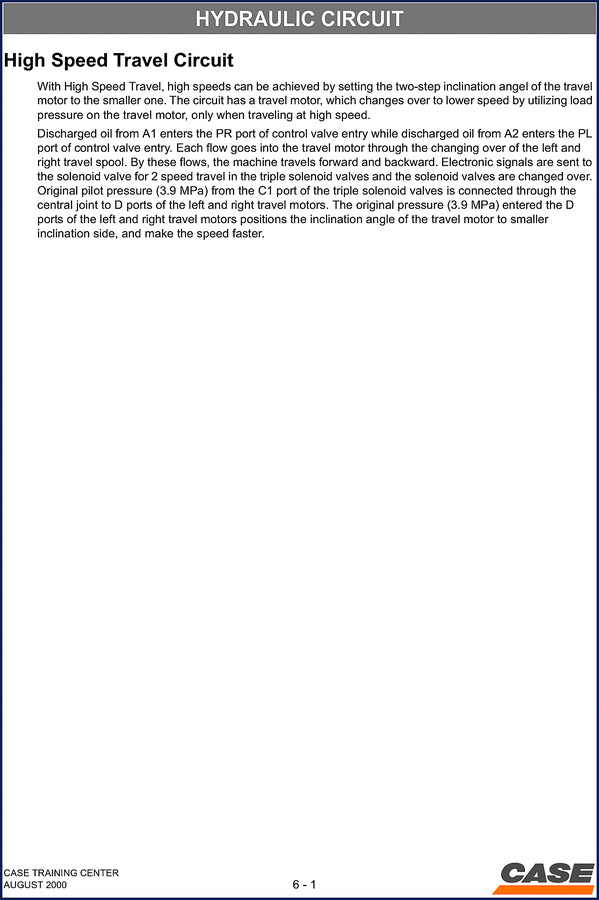
Case 130 2000 Training Manual – OEM Hydraulic Specs You Can Trust
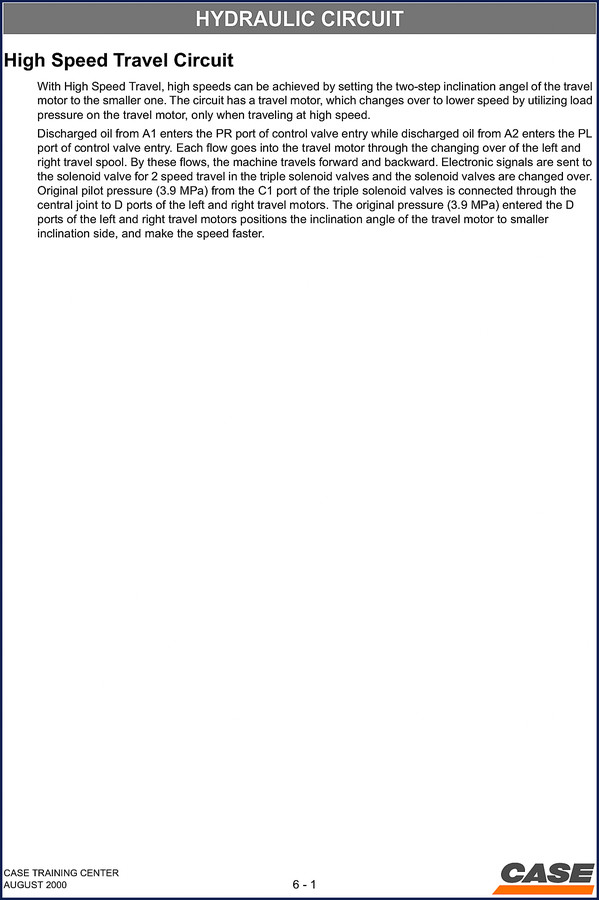
If you’re pulling wrenches on a Case 130 excavator and the hydraulics are acting up, you’ve seen the damage from guessing. A wrong torque on a valve cover or a misadjusted cushion valve can cost you a pump. This Case 130 2000 Training Manual is the field training document from Case’s own training center, dated August 2000. 51 pages covering every hydraulic component from the hand remote controls to the boom cylinder. I’ve been turning wrenches since before most of you were born, and I’ll tell you straight: if you skip the OEM training docs, you’re working blind.
Hand Remote Controls: Adjusting Free Play on Page 2
Page 2 walks you through the hand remote control assembly. You’ve got four regulator spools, two springs per spool, and a cam that pushes on push rods. The larger diameter spring gives the operator the wrist resistance. The manual tells you exactly how to adjust the free play by rotating the cam. Set it too tight and you’ll get partial spool actuation. Page 2 also warns you about a torn dust cover – replace it or you’ll wear out the push rod seals. That kind of detail keeps your pilot system working right.
What the Main Hydraulic Pump Section Tells You
Page 13 dives into the main hydraulic pump. This is where most technicians get in trouble because they don’t have the OEM pressure and flow specs. The manual covers the pump’s internal components, the swashplate angle, and the compensator adjustment. You’ll need a spanner wrench and a dial indicator to check end play. Never use a grinding wheel on a stuck valve spool – replace it or send it out. This section also references the pilot pressure gear pump on page 21, which feeds the control valve. Understand that circuit and you’ll stop chasing ghost leaks.
3 Safety Valve Systems You Cannot Ignore
Boom safety valve (page 8), dipper arm safety valve (page 30), cushion valve (page 8). These aren’t optional. If you bypass or misadjust any of them, you’re looking at a cylinder drift or a burst hose. The training manual explains the function of each valve, how to test it, and the correct shim stack. Page 8 covers the cushion valve and boom safety valve back-to-back – that’s critical if you’re dealing with a boom that won’t hold. Don’t rely on aftermarket diagrams. This is the factory document.
Get the Cushion Valve Adjustment Right
The cushion valve section is only a page, but it’s one of the most misadjusted components on these machines. The manual shows the cross-section and the spring preload. You set it by counting turns from a reference point. If you get it wrong, the cylinder will cushion too early or too late. Either way, you’re replacing seals inside a month. Page 8 has the exact procedure. Follow it and move on.
Why This 2000 Training Manual Matters for Your Shop
This is not a generic reprint. It’s the original Case Training Center document from August 2000 – 51 pages, spiral-bound size, black-and-white schematics with real part callouts. Every chapter from TRAVEL FOOT CONTROLS to BOOM CYLINDER has the kind of detail you only get from the manufacturer. The dual flow valve (page 32), swing motor (page 34), drive motor (page 36), swivel joint (page 40), flow restrictor (page 42) – all covered with flow paths and pressure settings. If you need to understand the difference between a pilot circuit and a work circuit, this manual lays it out. Check the Case 130 180 Garden Tractor Parts Catalog if you work on those models too, and for the hydraulic circuit diagrams see the Case 130 2000 Training Manual – OEM Hydraulic Circuit Docs. For a different machine, the Case 721D 2003 Training Manual – OEM Factory Specs covers the wheel loader. And if you’re brushing up on basic driveline concepts, read up on Manual Transmission mechanics to see how oil flow parallels hydraulic circuits – it’s the same principles applied differently. The same goes for Manual Transmission synchronizer design – understanding that helps with the flow restrictor function on page 42.
- Does this manual cover the electrical system?
- No. It’s strictly hydraulic components.
- Can I use this for a Case 130 with a different pump?
- This manual covers the specific pump used in the 2000 model year. If your machine has a pump with a different part number, cross-reference the pump section (page 13) to verify. The training manual focuses on the theory of operation and disassembly procedures. You’ll need the parts catalog for interchange.
- How many pages are there?
- 51 pages total.
- Is this the same as a service manual?
- No. This is a training manual from Case’s training center, August 2000. It explains how each component works, not step-by-step repair instructions. For repair procedures, you need the service manual.
Stop throwing parts at a Case 130 that won’t track or dig. The factory spec is here. Download the Factory Manual and get the hydraulic system straightened out with actual Case training documentation.
Reviews
There are no reviews yet.