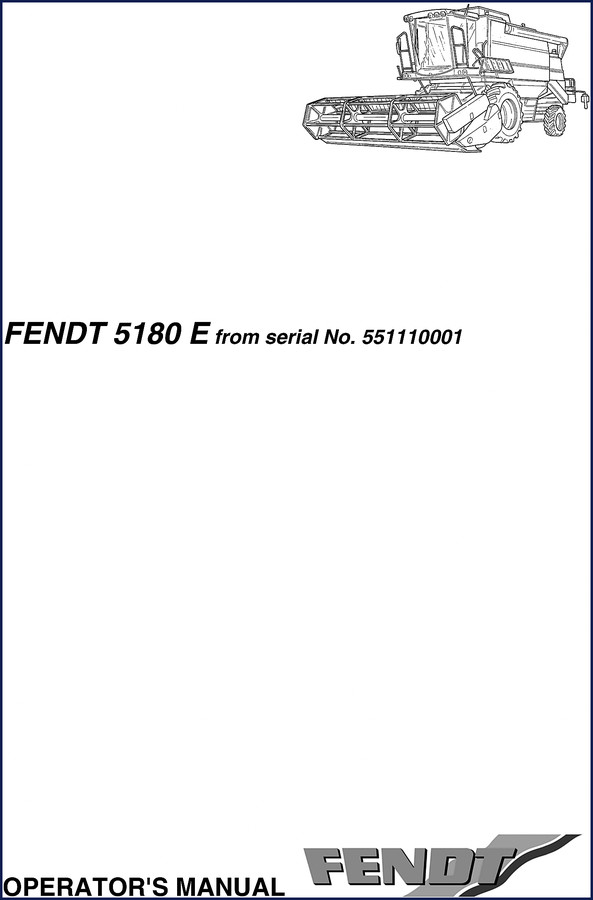
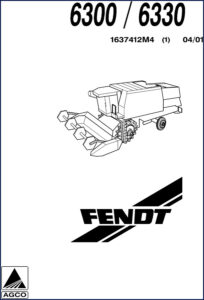
Fendt 5180E Operators Manual – Factory Specs for Your Combine
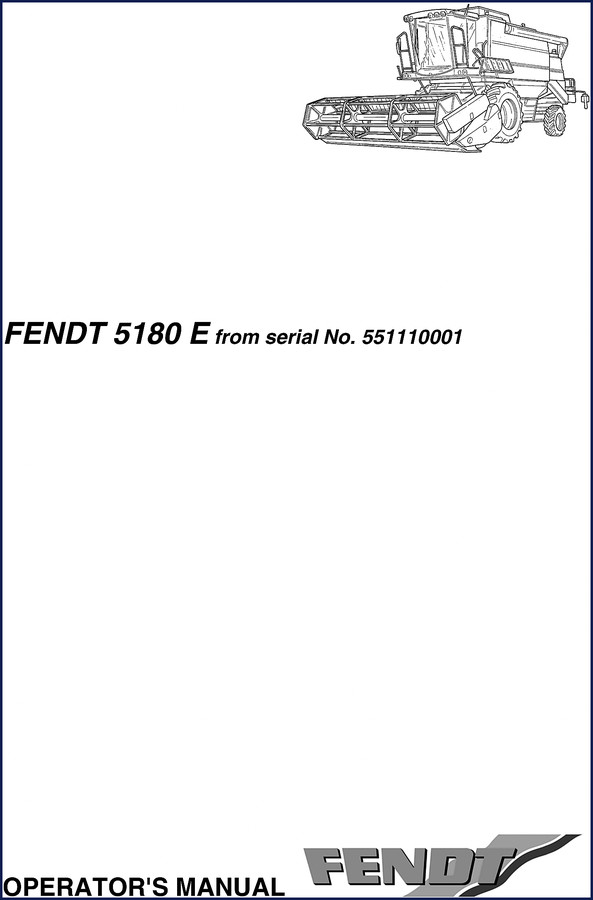
If you’re running a Fendt 5180E combine and you’ve been relying on a third-party reprint or that faded photocopy from the previous owner, you already know the frustration. Torque specs that don’t match, wiring diagrams that skip pins, and maintenance intervals that leave you guessing. That’s why you need the factory Fendt 5180E Operators Manual – the actual 234-page document that came from the factory. Not a copy, not a summary. The real thing.
Why the Fendt 5180E Operators Manual is the Only Manual You Should Trust
I’ve been turning wrenches for 28 years. I’ve seen more stripped bolts and blown seals from guys using aftermarket manuals than I can count. This manual is OEM – straight out of the Fendt factory. Section 1 covers General Information, including safety, combine identification from serial number 551110001 onward, noise levels inside the cab, fire resistance, and hydraulic hose requirements per European standard EN 982. That kind of detail matters when you’re working on a $300,000 combine. The manual also covers statutory regulations, electromagnetic emissions, and road transport notes with weight distribution charts. Guesswork ends here.
General Information: Safety and Machine Identification
Section 1 of this Operators Manual gives you the complete safety rundown – emergency exit procedures, safety device locations, appropriate use guidelines, and scrapping/disposal instructions. You also get the combine identification page so you can verify serial number ranges. The vibration data and fire resistance specs inside the cab are factory-measured, not assumed. Skip this section at your own risk. I wouldn’t.
Operation – Controls and Instruments: Crop Processing
Section 2 walks you through every control in the cab. The crop processing subsection explains header height control, reel speed adjustment, and concave clearance – all with the factory procedure. You don’t get someone’s interpretation; you get the exact sequence Fendt engineers intended. Need to know the charge pressure for the hydrostatic system? Page 73 has it. Don’t guess, use the book.
The manual also covers the control of the separator and cleaning unit. If you’ve been adjusting the sieve opening by feel, stop. The factory specs are right here. The operation section also details the transmission – a hydrostatic unit that works like a sophisticated Manual Transmission in its power flow – but with hydraulic control. Understanding the shift logic saves you hours of frustration.
Field Operations: Adjusting the Harvesting Setup
Section 3 is where the real work happens. It covers calibrating the yield monitor, setting cleaning fan speed, adjusting sieves, and handling the unloading auger. The manual gives you the correct sequence for header attachment and detachment, including hydraulic coupler pressures. One wrong move and you blow a seal. I’ve seen it. Use the factory data.
Field operations also includes the procedure for road transport – how to lock the header, set the brakes, and check the lights. The weight distribution table on page 43 (from Section 1) tells you exactly how much tongue weight you’re dealing with. Tie that into your truck’s capacity, not a guess.
Lubrication and Maintenance: The OEM Schedule
Section 4 – Lubrication and Maintenance – is the heart of long-term reliability. Daily, 50-hour, 250-hour, and annual service intervals are spelled out with exact oil grades, filter part numbers, and capacities. Engine oil: SAE 15W-40 API CJ-4, 17 quarts. Hydraulic system: 28 gallons of Fendt-approved fluid. The chart includes Fendt part numbers so you don’t end up with the wrong filter. If you’re maintaining a fleet, this section alone is worth the price.
Maintenance also covers belt tension checks, radiator cleaning intervals, and battery care. The manual includes a lubrication diagram with grease points and recommended grease type. Miss one zerk and you’ll be replacing a bearing mid-harvest. Not worth it.
Troubleshooting: Common Combine Failures
Section 6 – Troubleshooting – is laid out as a symptom-cause-repair table. Engine won’t start? Check the fuel solenoid and battery voltage. Header won’t lift? Hydraulic pressure low – verify the pump charge pressure. Threshing losses too high? Adjust concave clearance and rotor speed per the chart. The manual gives you the diagnostic steps without flipping back and forth. Fendt engineers wrote this for a technician in the field. It works.
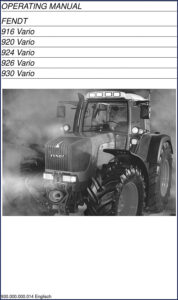
While you’re at it, if you’re working on other Fendt models, check out the related manuals: Fendt 916 Vario, 920 Vario, 924 Vario, 926 Vario, 930 Vario User Manual | OEM Fa, FENDT 900 Vario Series 2003 Service Training Manual, and Fendt Favorit 816 824 1998 Training Manual. They cover different chassis but the same factory approach.
For a comparison of driveline technology, study the differences between a hydrostatic drive and a conventional Manual Transmission. Each has its place, but this combine’s hydrostatic system requires specific fluid and filter care – all detailed in the manual.
Off-Season Storage and Technical Specs
Section 7 tells you how to store the combine properly – battery disconnect, coolant freeze protection, hydraulic system preservation, pest control. Section 9 has the complete Technical Specifications: engine power, torque curve, tire sizes, weights, and capacities. Every number is from the factory. No rounding, no estimates.
- Is this manual a reprint or a copy?
- No. It is a direct digital copy of the original factory document, exactly as printed by Fendt.
- What maintenance intervals are covered in the manual?
- The lubrication and maintenance section (Section 4) includes daily, 50-hour, 250-hour, and annual service schedules. Each interval lists specific checks: engine oil and filter change, hydraulic fluid level and condition, air filter restriction indicator, belt tension, and more. The manual provides exact part numbers for filters and belts, plus oil capacities in both quarts and liters. For example, the engine oil capacity is 17 quarts (16 liters) of SAE 15W-40 API CJ-4. The hydraulic system holds 28 gallons (106 liters) of Fendt-approved fluid. Grease points are illustrated with positions and recommended grease type. Following this schedule is the surest way to keep your 5180E running through every season.
Stop working with a manual that leaves you guessing. Download the Factory Manual now and get back to harvesting with the right specs in your hands.
Reviews
There are no reviews yet.