Skip to content
Sale!

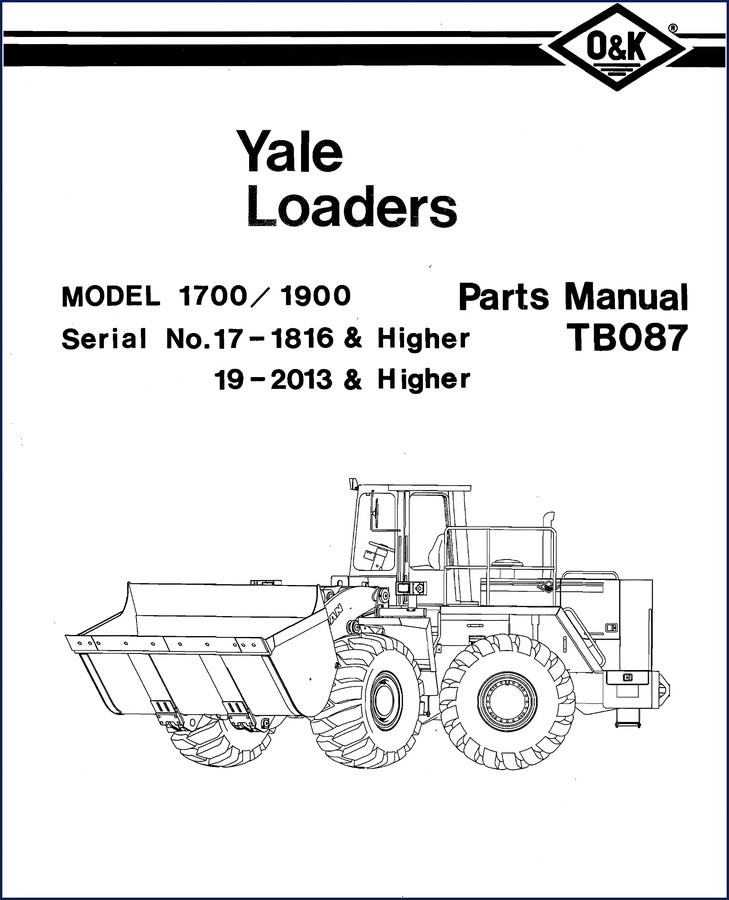
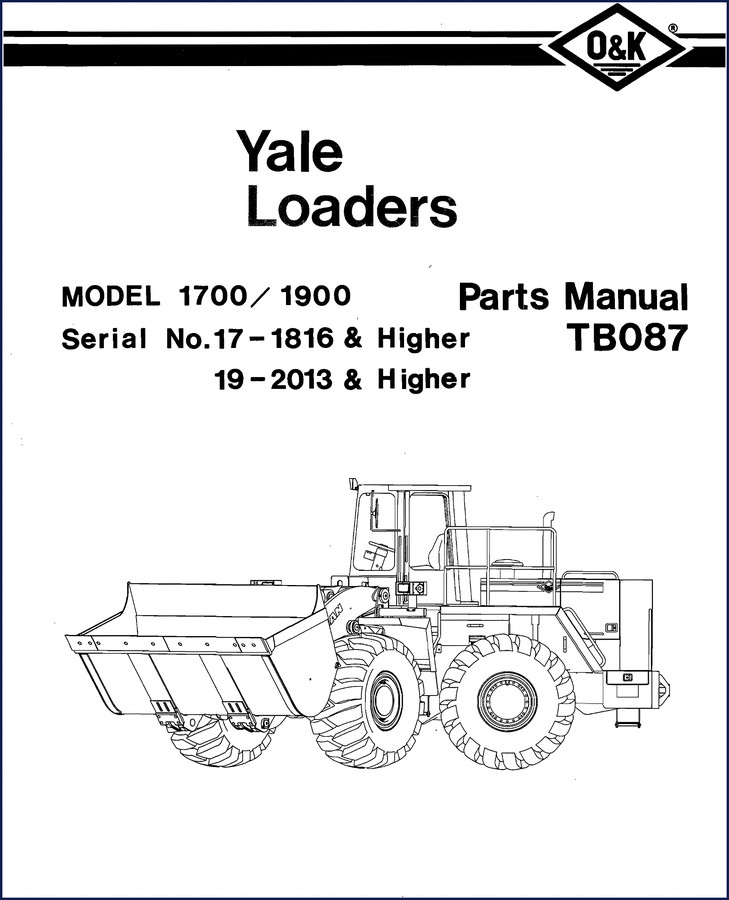
Yale 1700, 1900 Parts Catalog – Factory Parts Manual for Loaders
Original price was: $28.20.Current price is: $20.00.

Factory parts catalog for Yale 1700 and 1900 loaders. 219 pages of OEM illustrations and part numbers. Stop ordering wrong parts.

SKU: 42014015496 Categories: , , Tags: , , , Brand:

Yale 1700, 1900 Parts Catalog – Factory Parts Manual for Loaders

Yale 1700 1900 Loaders Parts Manual - 219 pages

If you’ve ever ordered a part for a Yale loader and gotten the wrong one, you know the headache. Waiting days for a replacement while the machine sits. That’s what happens when you use aftermarket parts lists or guess based on a blurry scan. This Yale 1700, 1900 Parts Catalog is the real deal – a factory OEM manual, not some cobbled-together PDF. It covers models 1700 and 1900, serial number 17-1816 and higher, with manual part number TB087. I’ve torqued enough bolts to know that the right part number saves more than time – it saves your job. This manual lives on my workbench, not in a drawer.

Page 2 of the manual makes something clear: you need to write down your machine serial number, engine model, transmission and converter numbers, front and rear axle part numbers. I’ve seen guys skip that step and end up with a cylinder that’s half an inch too long. The manual gives you blanks to fill in. Do it before you order anything. Yale 1700 1900 Loaders Parts Manual – Section: Floor Plates & Seat Support covers some of the body parts, but for the full drivetrain you want the complete catalog.

219 Pages of Factory Parts Illustrations

Every page is an exploded-view illustration with corresponding part numbers. The index in the front lets you jump to the system you need – transmission, axle, bucket, hydraulics, whatever. You don’t have to flip through 219 pages guessing. Find the assembly, get the part number, order it. That’s it. The manual also lists quantities and whether a part is serviced separately. No mystery. If a bolt is part of an assembly, it says N.S.S. – not serviced separately. That saves you calling the dealer asking why they won’t sell you that one nut.

Use the Index to Locate Your Assembly

The index is your first stop. Don’t be the guy who starts flipping randomly. The manual tells you: “Determine the basic system or assembly in which the part is used, and find this system or assembly in the Index.” It references the exact pages. I’ve used this method on a 1900 loader that had a blown hydraulic fitting – found the page in under 30 seconds. Page 3 explains the abbreviations you’ll see: A.R. (as required), N.S.S., N.I. (not illustrated). Know them before you start ordering.

Serial Numbers: The Key to Correct Parts

Yale updated parts over the years. The manual covers serial number 17-1816 & higher for the 1700, and 19-2013 & higher for the 1900. If your machine predates that, you need a different manual. On page 2, there’s a table for recording all your serial numbers – engine, transmission, axles. I’ve got a photo of that page taped to my toolbox. When I call the parts counter, I read those numbers before I even say what I need. That’s professional. Yale 1700 and 1900 Loader Parts Catalog is the same data in a different format, but this is the official one.

What Do A.R., N.S.S., and N.I. Mean?

These abbreviations appear throughout the parts list. A.R. means “as required” – no fixed quantity. N.S.S. – not serviced separately. N.I. – the part exists but isn’t shown in the illustration. If you ignore N.S.S., you’ll waste time asking for a part that only comes as part of a bigger assembly. I’ve seen a guy try to order a single seal that was N.S.S., then get mad when the dealer said he had to buy the whole housing. Read the manual. It’s on page 3. YALE Loader Model 1700 and 1900 Parts Manual T8083 is another reference, but this TB087 manual is the one Eaton authorizes.

3 Reasons to Choose the OEM Parts Catalog

  1. Accuracy: Factory engineering drawings, not aftermarket redraws. The part numbers match what Yale stamped on the castings.
  2. Speed: Index and exploded views cut searching time. You find the part, order it, get back to work.
  3. Safety: Wrong parts can fail. Loader brakes, lift cylinders, steering components – you don’t gamble with those. OEM catalog means OEM parts.

Aftermarket manuals often omit serial number breaks or mix up left and right sides. This one doesn’t. If you’re working on a 1700 or 1900 loader, this is the only parts manual you need on the shelf. Automotive Industry Overview shows how standardized these systems are across OEMs. Automotive Industry Overview applies here too – the same rigor that goes into car manuals goes into this Yale catalog.

Does this catalog include repair procedures or torque specs?
No. This is a Parts Catalog, not a service manual. It identifies parts and illustrations. For disassembly and torque specs, you need the corresponding service manual.
How do I know which serial number range my loader falls into?
Find your machine’s serial number plate. Usually on the right frame rail or near the engine. Compare to the ranges in the manual: 1700 from S/N 17-1816 up, 1900 from S/N 19-2013 up. If your serial is lower, you’ll need a different edition. You can also call your Yale dealer with your S/N.

You can stop guessing which part fits. The factory manual is what the dealer uses. Download the Factory Manual from AutoRepairManuals and start ordering the right parts. Your loader – and your schedule – will thank you.
Page Count

219

Brand

Yale

Language

English

Reviews

There are no reviews yet.

Be the first to review “Yale 1700, 1900 Parts Catalog – Factory Parts Manual for Loaders”

Your email address will not be published. Required fields are marked *

Sale!

Yale 1700, 1900 Parts Catalog – Factory Parts Manual for Loaders

Original price was: $55.60.Current price is: $40.00.

Factory parts catalog for Yale 1700 & 1900 loaders – 219 pages of exploded diagrams, part numbers, and ordering info.

SKU: 42014007011 Categories: , , Tags: , , , , Brand:

Yale 1700, 1900 Parts Catalog – Factory Parts Manual for Loaders

Yale 1700 and 1900 Loader Parts Catalog – factory exploded view diagrams and part numbers

If you’ve ever tried ordering a part for a loader using an aftermarket parts list, you know the headache. Wrong numbers, missing illustrations, and the machine sits while you chase down the right bracket. This Yale 1700, 1900 Parts Catalog is the OEM document from Yale – the same one the dealer uses. 219 pages of exploded diagrams, part numbers, and ordering instructions that eliminate guesswork.

I’ve been wrenching for 28 years. When I need a part number for a 1700 or 1900 loader, I reach for this catalog. It covers both models, with separate sections for GM and PO engine variants. The index alone saves hours – look up “Accelerator Pedal Linkage (GM)” and it sends you to page 38. No flipping through generic cross-references.

Floor Plates & Seat Support – What This Manual Actually Covers

The TOC lists over 130 individual assemblies. Everything from the floor plates and seat support (page 46 for Belly Pans & Guards) to the bucket cylinder hydraulic system. Each section shows an exploded view with a parts list. You get the part name, number, and quantity. If a part is not serviced separately (N.S.S.) or used as required (A.R.), the catalog notes it. This is the level of detail you need when a lift cylinder seal goes and you don’t want to buy the whole cylinder.

For the 1900 model, front axle assembly starts on page 116; rear axle on page 117. The 1700 model has its own separate axle sections on pages 151 and 152. That means you order the right differential groups – not a “universal” part that doesn’t fit.

Accelerator Pedal Linkage – GM vs PO: Two Separate Sections

Many aftermarket catalogs lump all engine variants together. This one doesn’t. Section “Accelerator Pedal Linkage (GM)” appears on pages 38-39. “Accelerator Pedal Linkage (PO)” is on page 37. The linkage parts – rods, clevises, springs – are different between the GM and Perkins (PO) engines. The catalog shows exactly which bracket and hardware you need. If you’re rebuilding a 1700 with a GM engine, you don’t waste money on PO parts.

Transmission Controls and Clutch Cut-Out – Factory Schematic

The transmission control valve assembly (pages 68-69) includes a note about serial number breaks. The clutch cut-out system (page 144) also has a note – you need to check the serial number before ordering the valve. Missing that detail can cost you a week of downtime. The catalog explains the abbreviations like N.I. (Not Illustrated) so you know when a part exists on the machine but isn’t shown in the diagram.

Hydraulic piping for the 3-spool accessory valve is covered on pages 60-61. The automatic hoist cut-out (pages 52-54) ties into the brake controls and electrical system. Everything is cross-referenced to the same page range. No flipping back and forth between different manuals.

Axle Assemblies – Front and Rear for Model 1700 and 1900

Differential groups for the 1700 front axle span pages 122-125. For the 1900, pages 136-139. The brake group for each axle is listed separately: page V.23 for the 1700 (yes, that’s a roman numeral page) and pages 94-95 for the 1900. You don’t guess which brake shoe or seal belongs to which model – the catalog gives you the exact part number.

Use this catalog when you tear down an axle for a bearing overhaul. The exploded view shows every shim, washer, and snap ring. Ordering the correct inner bearing for a 1900 rear axle takes ten seconds if you have this open on your bench.

Why You Want the Factory Parts Catalog Over Aftermarket

I’ve seen aftermarket parts catalogs copy the drawings but change part numbers to avoid copyright. That gets you a bracket that looks right but doesn’t use the same bolt pattern. This is the original Eaton Construction Equipment Division manual – Manual No. TB087, Part No. 2022989. It includes the introduction that explains how to order using machine serial number, model number, part number, name, and quantity. That introduction alone saves return shipping costs.

The catalog also lists serial number breaks – “Serial No.17-1816 & Higher” for the 1700 and “19-2013 & Higher” for the 1900. Parts changed over production years. If you order without checking serial number, you might get the wrong part. This manual forces you to verify before you order.

Frequently Asked Questions

Does this manual cover the engine internal parts?
No. This is a parts catalog for the loader – it covers engine mounting, cooling, exhaust, and controls, but not internal engine components like pistons or crankshafts. For engine internals, you need the engine manufacturer’s manual.
Can I use this manual for a Model 1700 only?
Yes. Both models are included, but each section clearly marks which model it applies to. For example, the front axle assembly is listed separately for Model 1700 (page 151) and Model 1900 (page 116).
Are torque specs or adjustment specs included?
No. This is a parts catalog – it gives part numbers, names, and quantities. It does not contain torque values or adjustment specifications. You need the service manual for that.
How do I order the correct part using this catalog?
First, find the assembly section (e.g., Brake Controls & Lines on pages 52-54). Identify the part number from the list, then provide that part number along with your machine model and serial number when ordering. The manual introduction on page 3 explains the required information. Follow it, and you get the right part without returns.

Related Manuals

For a broader background on loader design and the automotive industry context, see the Automotive Industry Overview. Another perspective on heavy equipment evolution can be found at Automotive Industry Overview.

Don’t waste time on aftermarket catalogs that guess part numbers. This is the real thing – direct from Yale/Eaton. Put it on your tablet next to the lift cylinder you’re rebuilding. Download the Factory Manual now.

Page Count

219

Brand

Yale

Language

English

Reviews

There are no reviews yet.

Be the first to review “Yale 1700, 1900 Parts Catalog – Factory Parts Manual for Loaders”

Your email address will not be published. Required fields are marked *