Atlas Copco QAC 500 2010 User Manual
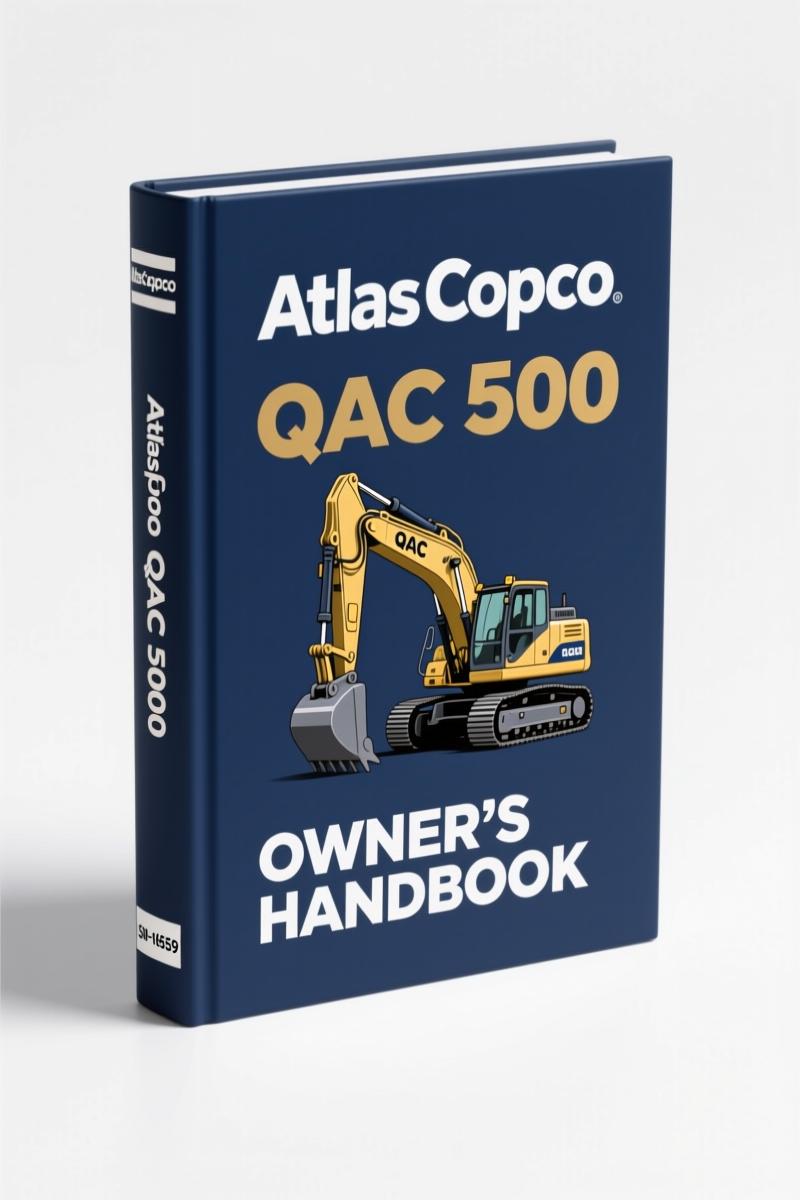
You want to keep a QAC 500 running on a jobsite without burning up the alternator or having the controller lock you out mid-job. I get it. That’s why you need the Atlas Copco QAC 500 2010 User Manual – the actual factory document, not some aftermarket rehash that skips torque specs and safety classes. This 88‑page manual came off the press in 2010 and covers every system from the Qc4002™ control panel down to the earth leakage relay. I’ve seen too many guys guess their way through a coolant top‑up and end up with a seized engine because they used the wrong PARCOOL EG concentration. This manual kills that guesswork.
Safety Precautions for Portable Generators
Page 6 kicks off with the safety section, and if you’re the type who skips the first chapter, stop it. Atlas Copco laid out seven specific hazard categories: transport, installation, operation, maintenance, tool applications, battery handling. Each one has its own subsection. For example, “Safety during transport and installation” tells you exactly how to secure the generator frame and what lift points are factory‑approved. Ignore that and you could drop a 4,000‑pound unit on someone’s foot. The manual also covers battery safety precautions – proper venting, terminal torque, and the order for disconnecting leads. That last one is something I still see DIY guys get backwards.
Qc4002™ Control Panel: Understanding the Menu Overview
This generator uses the Qc4002™ module, and the manual devotes a solid block of pages to the pushbutton and LED functions, password levels, fail classes, and the diagnostics menu. If you’ve ever had a controller throw a “fail class 3” and you didn’t know if it was a sensor fault or a full shutdown, you need this section. It lists every standard mode – manual start, auto start, remote start – plus the paralleling application if you’re tying multiple units together. The parameter overview table tells you to refer to the controller itself for exact values, but the manual explains what each parameter controls. That’s better than any third‑party booklet I’ve seen.
3 Critical Safety Sections You Must Read Before Cranking
First: “Safety during use and operation” – covers grounding, load limits, and what to do if the earth leakage relay trips. Second: “Tool applications safety” – this is for when you’re running welders or high‑inrush tools off the generator. It lists maximum cable lengths and minimum conductor sizes. Third: “Safety during maintenance and repair” – that section tells you to lock out the battery switch and wait for the anti‑condensation heater to cool before touching alternator windings. Skip any of these and you’re inviting a fire or an electrocution.
What Does the Maintenance Schedule Cover?
Page 57 has the maintenance schedule in table form – daily, weekly, monthly, quarterly, yearly items. Engine oil change intervals are tied to PAROIL 5W40 or 15W40 depending on ambient temperature. The manual specifies the exact PAROIL viscosity grades; you won’t find that in a generic operator’s guide. Alternator maintenance includes measuring the insulation resistance with a megohmmeter – the procedure is on page [DATA NEEDED] but the greasing interval for the bearings is clearly stated. Coolant checks require PARCOOL EG and the manual tells you how to monitor coolant condition using a refractometer. That’s a level of detail a pro needs.
Get the Right Oil Specifications
Engine oil specs are listed under two categories: PAROIL 5W40 and PAROIL 15W40. The manual includes the API classification and viscosity range. Don’t use automotive oil with friction modifiers in this diesel – the specs call for a heavy‑duty diesel oil. The “Engine oil and oil filter change” procedure gives you step‑by‑step with torque values for the drain plug and filter housing. No torque wrench? Then don’t touch it. You’ll strip the threads and have a leak that costs you billable hours. The manual also covers the automatic oil make‑up system – a feature that keeps the sump full if the generator runs unattended for long periods.
Technical Specifications for QAC 500
Toward the back you’ll find the full technical data: engine make and model, alternator ratings, unit dimensions, and fuel consumption figures. The conversion list of SI units into British units is included so you can translate liters to gallons and Nm to ft‑lbs. The dataplate section shows you where to read the serial number and how to interpret the model code. If you’re ordering parts or setting up a fleet, that plate is your fingerprint.
Troubleshooting the Alternator
The “Alternator troubleshooting” page lists symptoms like “no voltage output,” “low voltage,” “over‑voltage,” and “high vibration.” Each symptom has a list of probable causes and the factory‑recommended corrections. For instance, if the insulation resistance is below 1 MΩ when measured with a 1000V megohmmeter, the manual tells you to dry the windings and re‑test. That’s not something you’ll find in a Chilton guide. The problem‑solving chart covers engine issues too – hard starting, black smoke, high coolant temperature. It’s condensed but actionable.
Installation and Connecting the Load
Page 54 walks you through installation – positioning the generator for airflow, grounding per local codes, and connecting non‑linear loads like UPS systems or variable‑frequency drives. The manual includes a warning about harmonic distortion and tells you to keep total harmonic distortion below 10 % for sensitive equipment. Cable quality and minimum section are specified in the “Quality, minimum section and maximum length of cables” subsection. If you’re running 400 ft of feeder cable to a jobsite trailer, those numbers matter – undersized cable heats up and drops voltage, which can wreck the load.
FAQ – Atlas Copco QAC 500 2010 User Manual
- Does this manual cover the Qc4002™ controller passwords?
- Yes. Section “Passwords” under the control panel chapter lists the factory passwords and tells you how to change them. You need these to enter the diagnostics menu or change fail‑class settings.
- What fuel fill procedures are documented?
- Two methods: manual fuel fill and automatic fuel fill. The manual shows the switch positions and the float valve setup for the auto‑fill system. It also covers connecting an external fuel tank. No details on fuel tank capacity – that’s in the technical specs later.
- How do I check the alternator insulation resistance?
- The manual gives a step‑by‑step under “Alternator maintenance” – isolate the generator, disconnect the load cables, measure between windings and ground using a 1000V megohmmeter. Minimum acceptable value is 1 MΩ. If lower, dry the windings with warm air and retest.
- What is the correct coolant spec for this generator?
- PARCOOL EG. The manual specifies a 50/50 mix with distilled water for temperatures down to -35°C. It also tells you to monitor coolant condition with a refractometer and replace it every two years or 4,000 hours. Using non‑OEM coolant can corrode the engine block and void the warranty.
Bottom line – if you’re running a QAC 500 on a construction site or backup power install, don’t rely on memory or a scribbled note. Pick up the factory manual, read the safety chapter first, and keep it next to the generator. Everything from the battery charger to the earth leakage relay is in there. Download the Factory Manual and put the guesswork behind you.
Related Manuals
- Instruction Manual Portable Compressors XRY/XRXS/XRVS
- Atlas Copco Portable Compressors Instruction Manual
- Instruction Manual Portable Compressors XAHS/XAS Series
See also: Manual Transmission for diesel engine overhaul procedures, and Manual Transmission for gearbox specs.

Robert T. –
This is exactly what I was looking for. It is easily zoomable on my iPad without losing quality. It guided me to troubleshoot my Atlas Copco QAC engine. Great value for money.
Charles W. –
Five stars! The PDF looks clean. It assisted me to fix my Atlas Copco QAC engine. Saves me hundreds of money.