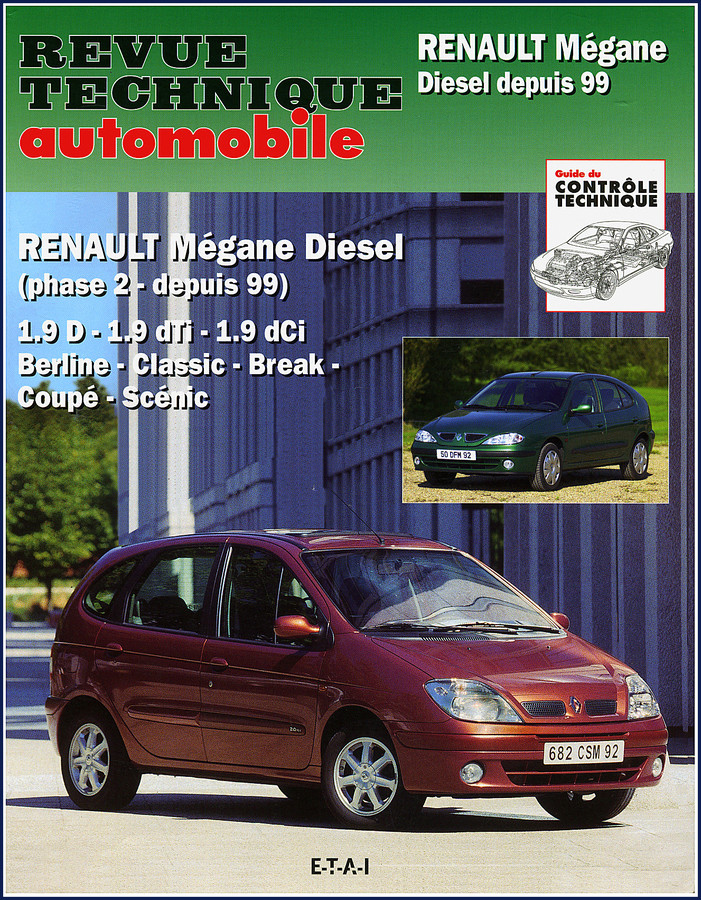
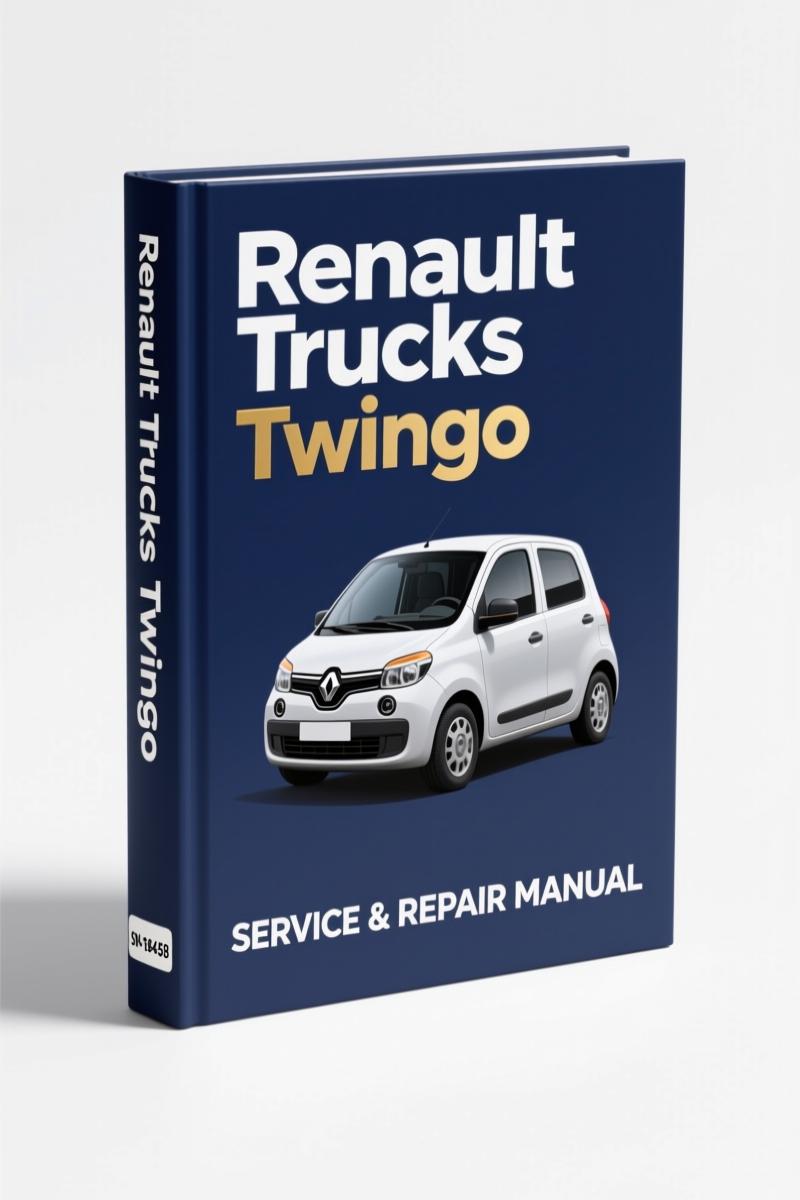
Renault Trucks Laguna, Trafic, Mégane, Twingo Training Manual
If you’ve ever opened a wiring diagram printed on a third-party website and found the color codes don’t match what’s under the hood, you know the frustration. And if you’ve chased a charging system fault without factory voltage specs, you’ve wasted billable hours. This training manual from Renault Trucks is the real deal—original OEM documentation used to teach techs how electrical systems actually work on the Laguna, Trafic, Mégane, and Twingo. It’s 76 pages of factory-developed theory and diagnostics, not a watered-down aftermarket reprint.
76 Pages of Electrical Fundamentals – Not a Quick Reference
This Training Manual starts where most DIY guides ignore: the physics of electricity. Page 2 lists the chapters: basic electricity concepts, multimeter operation, Ohm’s law, power, the battery, magnetism, the three-phase alternator, regulation and charging circuit, internal alternator controls, diodes, starter motor, and the two-speed starter with three brushes. Each section builds on the last, so you understand why a voltage drop happens, not just that it’s bad. The manual also covers vehicle identification for all four models—Mégane, Twingo, Laguna, and Trafic—along with engine and gearbox codes, abbreviations, and technical documentation use. That’s the foundation you need before you touch a test light.
Vehicle Identification: Laguna, Twingo, Mégane, Trafic (Page 33)
Starting on page 33, there’s a dedicated section for identifying each vehicle by model year and VIN pattern. This is where the Laguna differs from the Twingo in terms of wiring harness routing and component locations. You also get engine identification and gearbox codes—critical when ordering parts or cross-referencing electrical connectors. For example, if you’re working on a Trafic with a specific engine, the manual shows you exactly which alternator and starter configurations were factory-fitted. Pair this with the RENAULT G9T G9U Engine Workshop Repair Manual 2003 for full mechanical coverage.
Alternator and Charging Circuit Diagnostics – Factory Procedure
Too many techs replace alternators without testing the circuit properly. This manual explains the three-phase alternator operation (page 19), the regulation and charging circuit, and how to perform internal controls on the alternator. Page 5 shows you the basic concept of voltage as electrical pressure—like water pressure in a hydraulic system. With that foundation, you can interpret the factory test steps. The manual also covers diode testing (page 27) and starter motor diagnostics (page 28). If you need a full wiring diagram for a specific model year, check the Renault Laguna 2005 Wiring Diagram for example.
Why a Training Manual Beats a Standard Repair Manual for Electrical Work
Repair manuals tell you to remove and replace parts. Training manuals teach you how the system works so you can diagnose without swapping components at random. This one dedicates several pages to using a multimeter correctly (page 2, section on digital multimeter use) and includes a whole chapter on interpreting electrical schematics and wire color codes (page 55-68). You learn to trace a circuit, identify connector pinouts, and understand current flow. For mechanical jobs, grab the Renault Laguna 2001 Service Manual, but for electrical root-cause analysis, this training manual is the better tool.
OEM Source – Avoid Aftermarket Mistakes
This is original Renault Trucks training material, printed for dealer techs. It’s not a scanned third-party copy with fuzzy diagrams and guessed torque values. The manual uses factory abbreviations and color codes, and the vehicle identification data is straight from the manufacturer. When you rely on aftermarket documentation, you risk wrong wire colors or missing ground points. With this OEM manual, you know the information is correct. For additional reference on transmission types, see Manual Transmission on Wikipedia and Manual Transmission basics for gearbox identification.
Frequently Asked Questions
- Does this manual include wiring schematics for a 2005 Laguna?
- No. It covers electrical theory and vehicle identification, not complete wiring diagrams.
- What multimeter setting should I use to test alternator output?
- Set your multimeter to DC volts, scale to at least 20V. Connect positive lead to battery positive terminal and negative to battery negative. With engine running at idle, voltage should read between 13.5 and 14.5 volts for a healthy charging system. This manual teaches you that principle on page 5 (voltage as pressure) and page 20 (charging circuit regulation). Don’t guess—learn the procedure from the source.
That’s what you get with factory documentation: no guesswork, no mismatched colors, no wasted time. If you’re serious about diagnosing Renault electrical systems without part-swapping, get the original factory document. Download the Factory Manual from AutoRepairManuals today.
Charles W. –
Perfect workshop guide. The PDF is very clear. It assisted me to rebuild my Renault Trucks Laguna, transmission. Highly recommended for mechanics.
Robert T. –
This is exactly what I needed. Quick download after checkout. Contains precise wiring diagrams for Renault Trucks. I will recommend this shop to others.
Richard G. –
I am so happy with this transaction. The scan is high-quality and well indexed. It assisted me to troubleshoot my Renault Trucks Laguna, transmission. I will definitely buy again.