Porsche Boxster 1999 Technical Manual – What the Factory Wrote
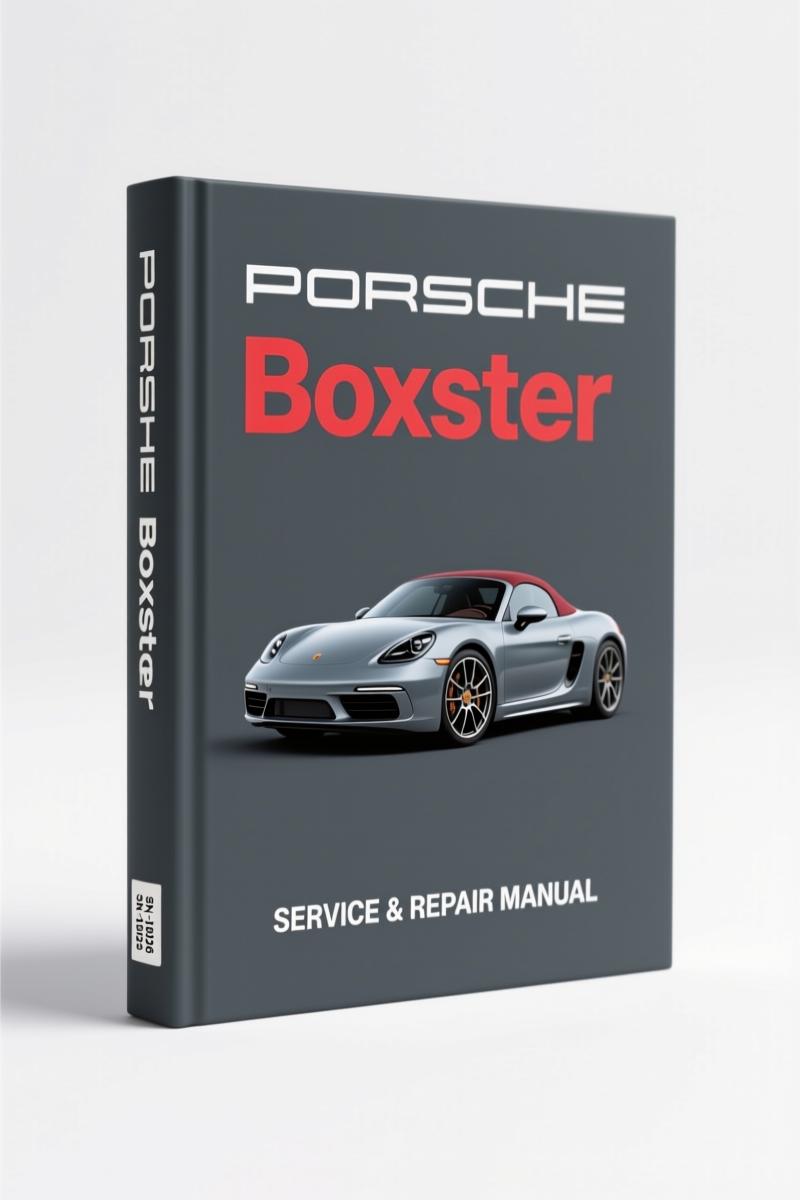
If you’ve ever tried to pull torque specs for a Boxster from a generic repair site, you know the routine – you get a range, maybe a footnote, and a prayer that the bolt doesn’t strip. That’s not how I work, and that’s not how this factory manual works. The Porsche Boxster 1999 Technical Manual is a 206-page OEM document that gives you exact numbers, factory procedures, and the kind of detail you’d get if you stood next to a Porsche tech in Stuttgart. No interpretation, no third-party rewrites.
Running Gear – The Section You’ll Clip to Your Bench
Group 4 is the core of this manual for anyone touching suspension or brakes. It splits into Front Wheel Suspension (4 40), Rear Wheel Suspension (4 42), Wheels/Tires/Alignment (4 44), Anti-Lock Brake System (4 45), Brake Mechanics (4 46), Brake Hydraulics (4 47), and Steering (4 48). Every bolt torque, every alignment angle, every ABS bleed sequence is written for a tech with a 10-mm socket and a torque wrench. The manual explicitly calls out the ABS diagnosis under Repair Group 45, which ties into the Group 0 diagnosis section. If you’re doing a brake job and trust a third-party manual, you’re gambling with pedal feel. This one gives you the factory spec for the brake booster pressure differential – something aftermarket books routinely skip.
Engine and Fuel – Real Numbers, Not Guesses
Group 1 covers the engine in two parts: Part 1 up to Repair Group 13 (crankcase, suspension, crankshaft, pistons), Part 2 from Group 15 onward (cylinder head, valve drive, lubrication, cooling). Group 2 dives into fuel supply, exhaust, electronic injection (Group 24), ignition (Group 28), and starter/power supply/cruise control (Group 27). The manual includes DME diagnosis under Group 0 (0 24) so you can trace a no-start without swapping parts. For a 1999 Boxster, that DME is specific and the pinout data here matches the factory harness – not a generic Bosch diagram. You’ll find the exact fuel pressure spec and the resistance values for the injectors. No rounding.
Transmission: Manual and Automatic in One Folder Set
The manual dedicates a full folder to manual transmission (Group 3) with sections on clutch control (3 30), actuation and housing (3 34), gears and shafts (3 35), and final drive with differential lock (3 39). Another folder covers automatic transmission: torque converter (3 32), actuation/housing (3 37), gears/control (3 38), and the same final drive section. Having both in one professional document saves you from buying separate books. The Tiptronic diagnosis is under Group 0 (0 37) – critical for that ‘99 Boxster with the Tiptronic S option. Aftermarket manuals often merge specs, but this one keeps the automatic internal pressures separate from the manual clutch pedal adjustments. That matters when you’re rebuilding a valve body.
Diagnosis and Circuit Diagrams – Factory-Level Troubleshooting
Group 0 is split into two diagnosis folders: one up to Repair Group 45 (covers sales check, OBD, DME, Tiptronic, ABS), another from Group 69 onward (airbag, seat memory, heating, alarm system, PCM, ParkAssistent, HBA). The circuit diagrams live in Group 9 – part 1 covers wiring for the ’99 model, part 2 for the ’00 model. The booking data confirms these are original factory diagrams, not redrawn. If you’re chasing an intermittent electrical fault on a ’99 Boxster, this is the only way to get the exact wire colors, pin numbers, and ground points. I’ve seen too many shadetree guys fry a PCM because they used a aftermarket diagram that swapped a switched 12V with a constant. That doesn’t happen with this manual.
Source Authenticity – Why This Is Not a Third-Party Reprint
The document was printed in Germany in October 1999 as part of the official Boxster Technical Manual series. It consists of 15 folders covering all groups from 0 to 9, with the foreword explicitly stating it combines Technical Information and Repair instructions into one reference work. The PDF you get is a direct scan of that factory original – no re-typesetting, no anonymized data, no “compiled for DIYers” nonsense. The group structure matches exactly what Porsche issued to its dealerships. If you’ve ever compared a Chilton or Haynes against an OEM book, you know the difference is the difference between a firm handshake and a wet noodle.
Related Manuals
- Boxster Technical Manual Electrics 1999
- Porsche Boxster (986) Technical Manual Body
- Porsche Boxster 986 2000 Circuit Diagrams Technical Manual
- Automotive Industry Overview
- Manual Transmission
FAQ
- Does this manual cover the 1999 Boxster S?
- Yes, the manual covers the 1999 Boxster model, including the S variant where applicable.
- What torque values are listed for the cylinder head?
- The factory specifies a multi-stage tightening sequence. The manual lists the exact values in Newton-meters and foot-pounds for both M10 and M12 head bolts, including the angle degrees for the final turn. You’ll find them in Group 1 under cylinder head removal. Following the sequence exactly prevents head gasket failure.
- Are the circuit diagrams included?
- Group 9 contains full wiring diagrams for the 1999 model year, covering all electrical systems from the DME to the alarm system.
- Can I use this for the 2000 model?
- No. Circuit diagrams differ; separate manual exists for the ’00 model.
If you’re working on a Boxster and want to avoid guesswork, get the specs that the factory techs used. Download the Factory Manual now.

James L. –
Great factory service manual. The pages are clean and easy to navigate. Every torque spec is provided for Porsche Boxster. Worth every penny.
Michael S. –
Great buy! The PDF quality is excellent. Every torque spec is provided for Porsche Boxster. Saves me hundreds of dollars.
Richard G. –
This is exactly what I needed. The text is searchable and well indexed. It guided me to repair my Porsche Boxster engine. I will definitely buy again.