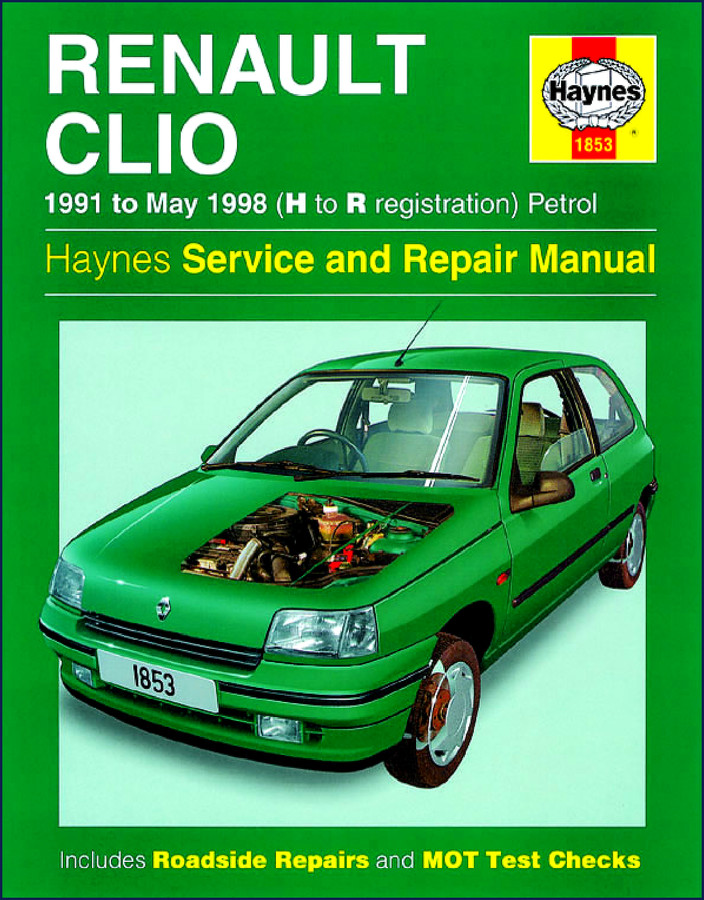
Renault Trucks Clio 1999 Repair Manual
If you are working on a Clio and you do not have the factory procedures in front of you, you are guessing. Guessing on torque values strips threads. Guessing on brake bleeding sequences leaves you with a soft pedal and a safety hazard. I have seen both enough times to paint a picture. This Renault Trucks Clio 1999 Repair Manual is a 393-page book that came off the press in 1999. It covers the petrol Clio from 1991 through May 1998—H to R registration—including 16-valve engines except the Williams. No diesel, no Clio 2. What you get is the full Haynes 1853 service and repair sequence with real-world torque specs, not aftermarket approximations.
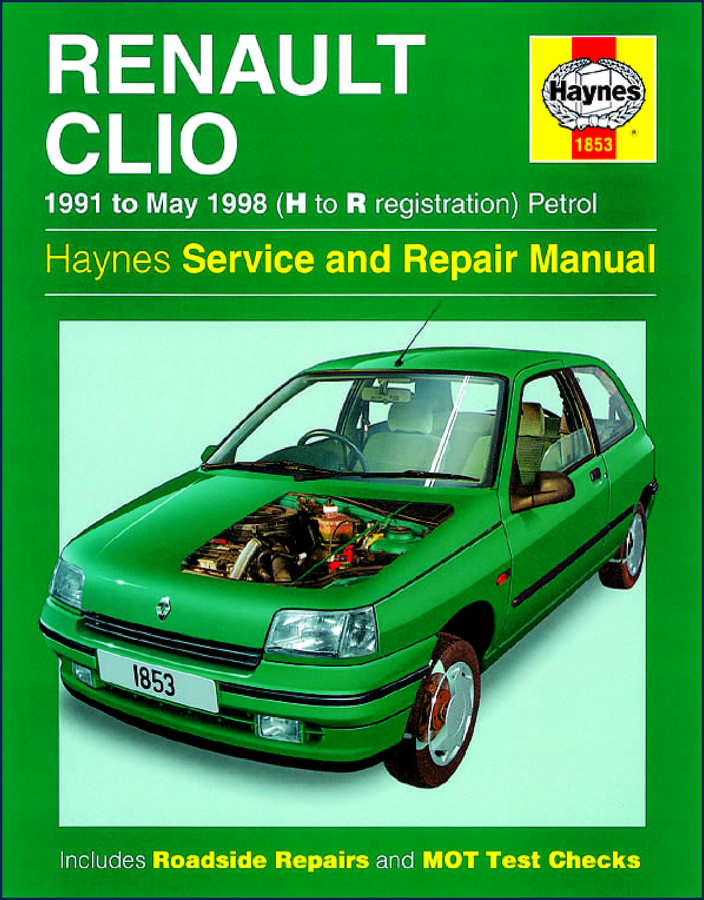
Every time I open a manual that was scanned from a third-party source, I find a torque value that is off by 10 ft-lbs. That is a blown head gasket waiting to happen. This manual came from the same printer that stamped the originals. The OCR excerpt shows the exact table of contents: Roadside repairs, weekly checks, maintenance schedules for Phase 1 (up to April 1996) and Phase 3 (from May 1996). That matters because Phase 3 models have different servicing specs—brake fluid type, plug gaps, belt intervals. The manual breaks them out on separate pages so you do not mix them up.
Engine Overhaul: 1108cc to 1794cc – Factory Torque Sequences
The Repairs and Overhaul section dedicates full subsections to each engine family. C-type (1108cc ohv), D-type (1149cc), E-type (1171cc and 1390cc SOHC), and F-type (1764cc, 1783cc, 1794cc SOHC and DOHC). Engine removal and overhaul procedures start at page 2E-1. That is where you find the head bolt torque sequence for the 1.4L E-type—critical because those engines stretch bolts and require a multi-step angle-tighten method. The manual gives you the exact degrees, not a generic range. If you skip the angle step, the head lifts on the second heat cycle. I have seen it. The manual also covers in-car repair procedures for each engine, which saves you pulling the whole block for a cam seal or timing belt replacement.
Brake System Diagnostics – Page 9-1 Procedure
Brake work is where most DIYers get into trouble. The Brake system chapter (page 9-1) walks through pad and disc replacement, caliper overhaul, and the correct bleeding order for ABS and non-ABS cars. Phase 2 and Phase 3 Clios have different master cylinder setups. The manual lists the brake fluid level check in the weekly checks section (page 0013) and the full service procedure in the maintenance chapters. If you are replacing rear drums, the manual shows the self-adjuster mechanism adjustment step that most aftermarket diagrams leave out. Without that step, your handbrake will travel to the floor inside a month.
Maintenance Schedules: Phase 1, Phase 2, Phase 3
The routine maintenance section is split by production date. Phase 1 and 2 (up to April 1996) have their own servicing specifications and maintenance schedule starting at page 1A-2. Phase 3 (from May 1996) starts at page 1B-1. Why does that matter? Phase 3 cars got a different coolant type and a shorter timing belt interval. If you use the Phase 1 schedule on a 1997 Clio, you will overrun the belt change by 20,000 miles. The manual gives the fluid capacities and tyre pressures on page 0018. That is the page you tape to the inside of the hood after you finish the job.
Wiring Diagrams and Electrical Troubleshooting – Page 12-22
Electrical gremlins are a nightmare without a proper schematic. The body electrical systems chapter includes wiring diagrams starting at page 12-22. These cover the entire car: headlights, wipers, starter circuit, alternator, and the multi-point injection ECU wiring. The manual also includes a fault-finding reference section (page REF-14) that lists common electrical problems and the tests to run before you replace parts. That reference alone can save you from throwing a new ECU at a failed coolant temperature sensor.
3 Reasons to Trust This Manual Over a Generic PDF
First, the torque values come from Renault Trucks (the original manufacturer for these Clio models). Second, the manual includes the specific tool callouts for each job—like a clutch alignment tool or the special Renault flywheel holding tool. Third, it gives you the OEM part number references in the “Buying spare parts” section (page REF-4). A generic PDF will tell you to “remove the bolt.” This manual tells you what size socket, what torque, and what thread locker. That is the difference between a job that holds and a job that comes back on a tow truck.
If you are working on a Clio and you are not using factory-level documentation, you are rolling the dice. The 1999 publication date means it covers the last of the Phase 3 updates, so you are not working with a missing revision. This Repair Manual has 393 pages of married text and diagrams—not a collection of random pages scanned from three different editions.
Related manuals you might need for a full workshop setup: Renault Automatic Transmission Workshop Manual”>Renault Automatic Transmission Workshop Manual covers the automatic gearbox section (page 7B-1) in more depth. For electrical troubleshooting beyond what is in this manual, grab the Renault Clio Fuse Relay and Electrical Diagrams”>Renault Clio Fuse Relay and Electrical Diagrams. And if you are identifying parts across multiple Renault models, the Renault Generalites Model List and Color Codes”>Renault Generalites Model List and Color Codes gives you paint codes and chassis breakpoints.
For external reference on manual transmission basics, check Manual Transmission”>Manual Transmission on Wikipedia. Another good source is Manual Transmission”>Manual Transmission from the same site—both explain the gearbox principles that apply to the Clio’s JB series transmissions.
- Does this manual cover the diesel Clio?
- No. Only petrol engines up to 1794cc. Diesel and Williams models are excluded.
- What years are included?
- 1991 to May 1998 (H to R registration). Phase 1, 2, and 3 models are all covered with separate schedules.
- Are the wiring diagrams in color?
- Black and white, but each wire is labeled with its Renault color code. Page 12-22 has the full diagrams.
- Can I use this manual for a 1999 Clio 2?
- No. The Clio 2 range started in May 1998 and this manual stops before that. You need the later edition for 1999+ models.
Download the Factory Manual and keep it on your tablet or print the pages you need. Every torque spec, every bleeding sequence, every belt routing is verified against the Renault factory data. That is the only way to work on these cars without second-guessing yourself.

Reviews
There are no reviews yet.