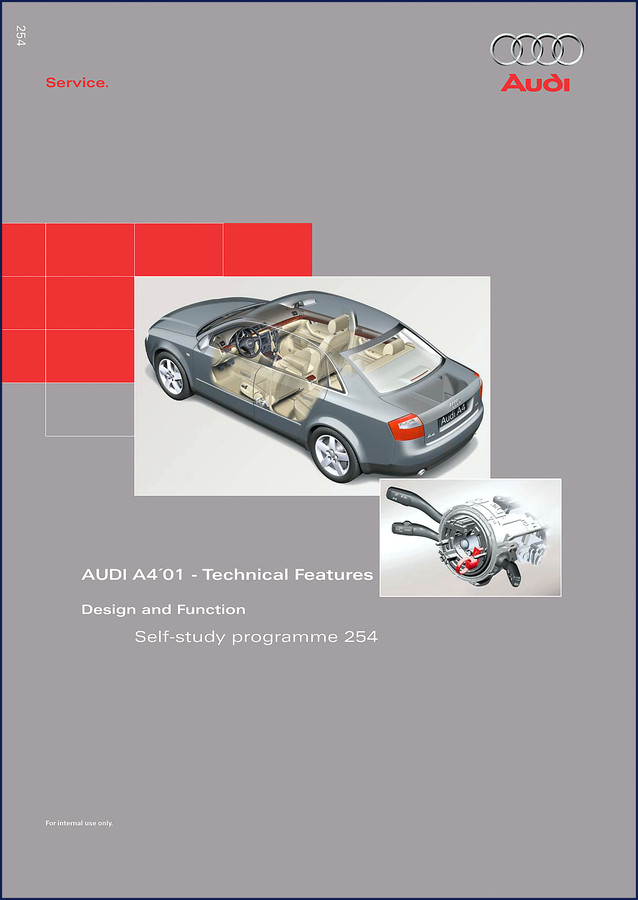
Audi A4 2001 Technical Manual – The Self-Study Programme
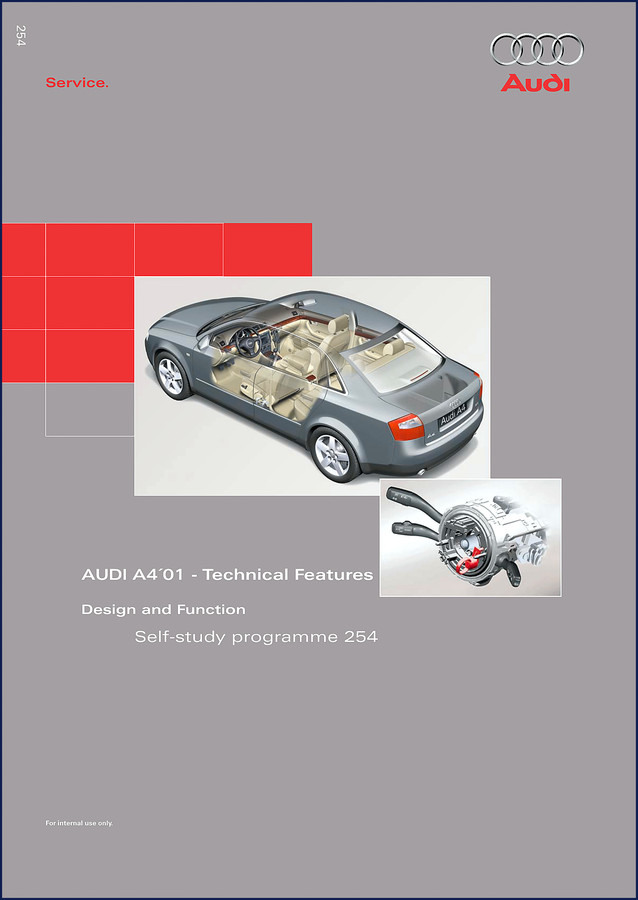
If you are digging into a 2001 Audi A4 and need to understand how the systems actually work before you start pulling wrenches, this is the document you want. It is not a workshop manual – Audi made that clear on page 3 of the original. The self-study programme (SSP 254) is 88 pages of factory-level design and function explanation. You get the logic behind the parts, not just torque values. I have seen too many guys skip the theory and then snap a bolt because they did not understand the load path. This manual stops that.
Forced induction, CAN BUS networks, multi-communication bars, crash sensors for the front airbag – all of it is covered. You want to know why the trapezium link rear axle works the way it does? Page 27. Need the layout of the electronic stability programme with brake assistance? Page 32. This is the kind of information that makes the difference between a repair that lasts and one that comes back on a flatbed.
Crash Sensors for Front Airbag – Page 14
The airbag system on the A4 is not something to guess at. The manual dedicates a full section to the crash sensors for the front airbag, including their placement and deployment logic. If you are diagnosing an SRS light, you need to know which sensor reports what. Aftermarket wiring diagrams will leave you chasing ghosts. This factory page gives you the actual pinouts and communication protocol between the sensor and the control unit. Use it to verify voltage and resistance before you condemn a module.
Electronic Stability Programme with Brake Assistance (ESP)
Brake system coverage runs from page 29 through page 35. The electronic stability programme with brake assistance is broken out separately on page 32. The manual shows how the ESP control unit interacts with the wheel speed sensors, the steering angle sensor, and the brake master cylinder. If you are replacing a brake booster or an ABS pump on a 2001 A4, you need to understand the hydraulic circuit diagrams in this section. They are not generic – they match the specific “lowline” and “highline” versions of the A4. I have used these diagrams to trace a customer car’s intermittent ABS fault back to a corroded connector at the left rear wheel. Saved three hours of diagnostic time.
Does This Manual Cover the Electrical System?
Yes – and it goes deep. The vehicle electrical system section starts on page 36 and includes the CAN BUS system (page 38), dash panel insert (page 40), steering column switch module (page 44), function circuit diagrams (pages 46–52), and the control unit for vehicle electrical system (page 48). There is also a convenience system chapter (page 58) and the anti-theft alarm system (page 63). If you are chasing a parasitic drain or a module that will not wake up, these pages will show you the sleep/wake logic and bus topology. Do not try to diagnose a CAN BUS fault without the factory network map – you will waste half a day probing wires that are fine.
New Engine Programme: 2.0L R4 and 3.0L V6 Coverage
The manual walks you through the new engine programme for 2001, including the 2.0L R4 and 3.0L V6 engines (see SSP 255 for deeper detail). Innovations on the 2.5L V6 TDI are covered as well – page 19 shows the changes to the injection system and turbocharger management. If you are working on an A4 with the TDI, you need to understand the electronic throttle control and exhaust gas recirculation setup shown here. One mis-routed vacuum line on those engines and you will get a limp mode that no generic code reader will explain.
Get the Right Torque Data for the Brake System
This manual does not list every bolt torque – it is a design and function guide, not a repair manual. But it tells you exactly which fasteners are critical and why. For example, the trapezium link rear axle (page 27) uses a specific bolt tightening sequence that changes the axle geometry. If you skip the sequence, you will get a rear-end vibration at highway speed. The brake system chapter warns about the correct tightening angle for the caliper guide pins. Use that information with the factory workshop manual to get your torque values right. You will find the exact workshop manual for your 2001 A4 in our related titles below.
How to Use This Manual on the Bench
Keep it open next to the workshop manual. Read the self-study chapter first, then apply the repair procedures. You will understand why the manufacturer specified that torque or that sealant. That is the difference between a job done once and a job done twice. I have been turning wrenches for 28 years and I still pull these SSPs when I hit an unfamiliar Audi system. The 88 pages are dense with factory reasoning – no wasted text, no third-party fluff.
Related manuals you might need on the same bench:
- Audi A4 1996 Wiring Diagram
- Audi A4 Wiring Diagram
- Audi A4, A4 Avant 2004 Repair Manual – Factory Specs & Torque Data
For a broader look at the automotive industry, check out Automotive Industry Overview and Automotive Industry Overview.
- Is this manual a workshop repair manual?
- No. It is a design and function guide, not a repair manual.
- Does it include torque specifications for the brake system?
- Not in the sense of a service manual. The manual is a self-study programme covering new technologies like the CAN BUS system, multi-communication bar, and crash sensor deployment logic. For actual torque values on the trapezium link rear axle or brake caliper bolts, you will need the separate workshop manual. However, understanding the function of each component from this manual will prevent you from making mistakes when you do have the torque specs in hand. For example, knowing how the electronic stability programme interacts with the brake assistance (page 32) helps you diagnose why a wheel speed sensor fault might trigger a dash light, saving you from replacing parts that are fine. That kind of system-level knowledge is what this manual delivers.
If you work on German cars, you already know that factory documentation saves time and prevents comebacks. Download the Factory Manual now and add it to your digital library. Your A4 will thank you.


diy_master –
I am so happy with this purchase. The pages are clean and easy to navigate. It helped me to troubleshoot my Audi A4 transmission. Saved my weekend project! Thanks.