Skip to content
Sale!

Kawasaki Ninja250R GPX250R Service Manual – Factory OEM Specs

Original price was: $35.75.Current price is: $25.00.

OEM Kawasaki service manual for Ninja250R / GPX250R (EX250-F2 to F19). 150 pages covering engine, crankshaft, fuel, brakes, and more.

Kawasaki Ninja250R, GPX250R Service Manual – Factory OEM Specs

If you’ve ever stripped a thread because some aftermarket PDF told you 28 ft-lb when the real spec is 22, you know exactly why I’m writing this. I’ve seen guys lose a whole weekend on a top-end job because the generic manual skipped the critical bolt tightening sequence. This Kawasaki Ninja250R, GPX250R Service Manual is the real deal – photocopied from the same binder Kawasaki dealers used. 150 pages of OEM data, not a reprint from a third-party that couldn’t tell a micrometer from a ruler.
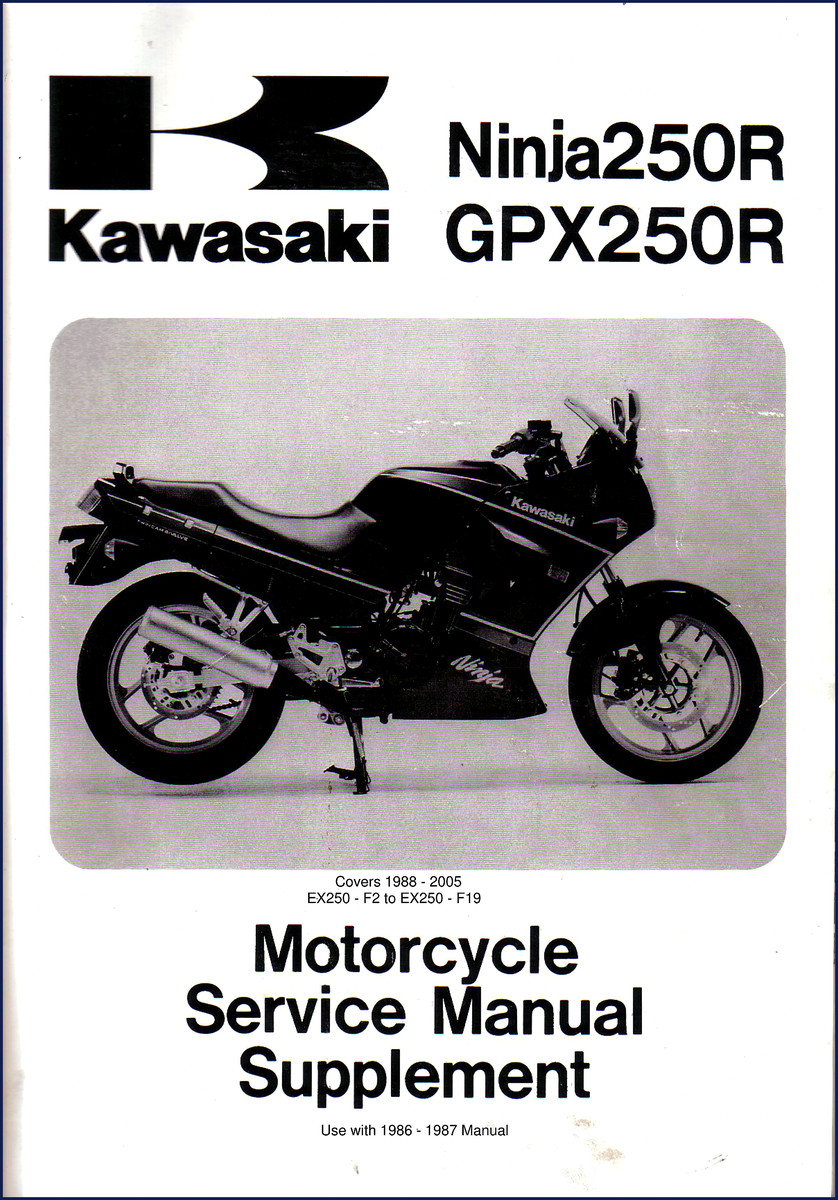
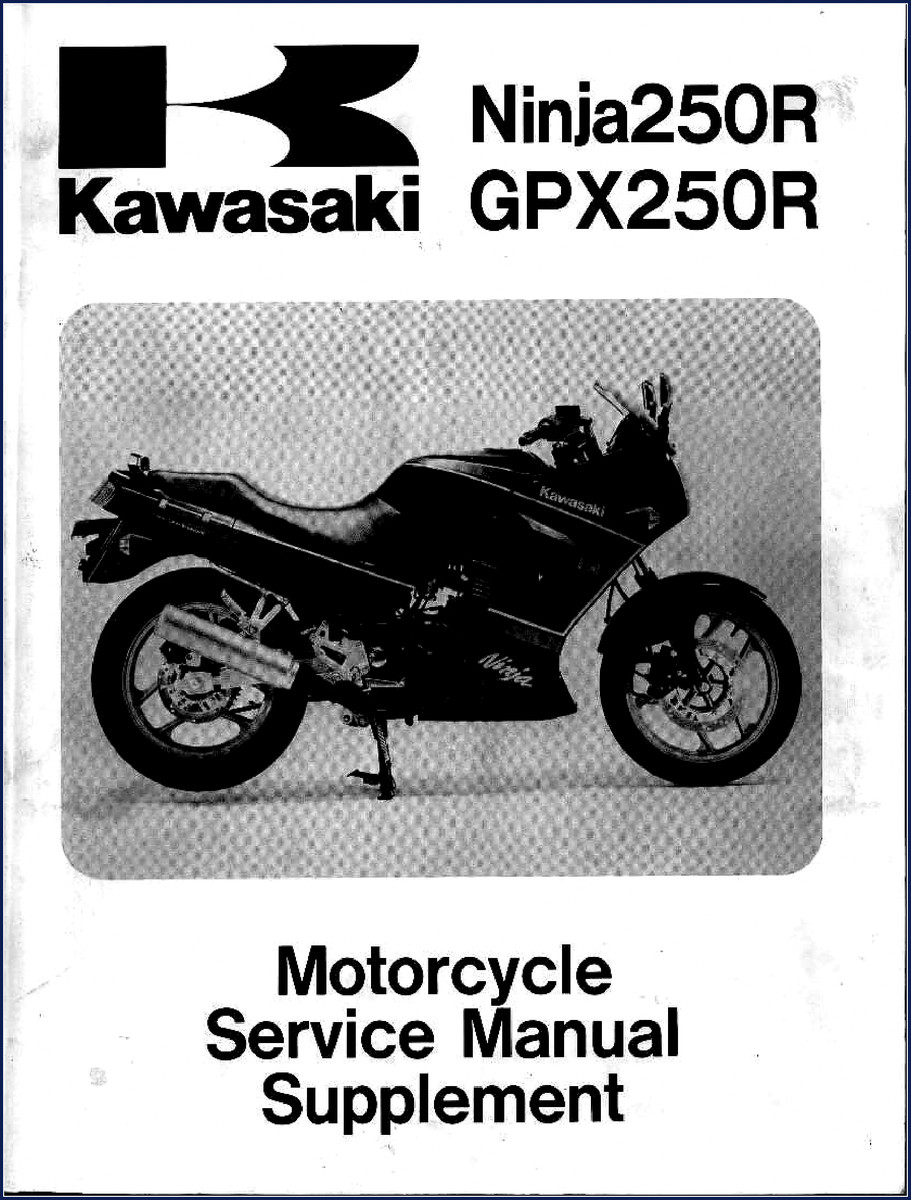
Kawasaki Ninja250R GPX250R Service Manual 150 pages OEM factory supplement cover

You get the model application table right on page 2 – frame numbers for EX250-F2 through F19, 1988 to 2005. That alone saves you the headache of guessing if your bike’s VIN matches. The manual was designed to be used alongside the 1986-1987 base manual, but the supplement for 2002-2005 models fills in everything Kawasaki changed. No guesswork.

Engine Top End: What the Manual Covers

Chapter 4 – Engine Top End – is where most DIY guys get in trouble. The manual walks through cylinder head removal, valve clearance specs, and the exact sequence for torquing the head bolts. Page 26 lists the torque values in ft-lb (Imperial, as it should be). If you follow that order, you won’t warp the head. I’ve seen it happen. Don’t be that guy.

Does This Manual Cover the Fuel System?

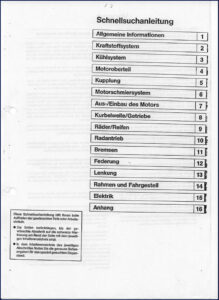
Yes, Chapter 2 – Fuel System – goes through carburetor disassembly, jetting specs, and float level adjustments. The OCR excerpt shows the Quick Reference Guide points you straight to the section you need. No flipping through 50 pages of generic theory. You get the factory procedure for syncing the carbs on the GPX250R and Ninja250R, with the correct vacuum readings.

7 Systems Covered from Fuel to Frame

Look at the table of contents: General Information, Fuel System, Cooling System, Engine Top End, Clutch, Engine Lubrication System, Engine Removal/Installation, Crankshaft/Transmission, Wheels/Tires, Final Drive, Brakes, Suspension, Steering, Frame, Electrical System, Appendix, and three separate model supplements (2000, 2001, 2002-2005). That’s 16 chapters plus supplements. The Kawasaki Ninja250R GPX250R Service Manual Supplement – Section: Appendix includes wiring diagrams and special tool lists for the later models.

Get the Right Torque Data from the Supplement

The 2002-2005 supplement chapter (Chapter 19) addresses the changes Kawasaki made to the EX250-F16 onward. If you’re working on a 2004 or 2005 Ninja250R, that supplement is gold. The Kawasaki Ninja250R GPX250R Service Manual Supplement includes updated crankshaft end-play specs and clutch spring free length data. Don’t use old values – you’ll burn up the clutch in 500 miles.

Crankshaft/Transmission – Factory Rebuild Specs

Chapter 8 – Crankshaft/Transmission – is where you need the manual most. The crankshaft journal clearance, connecting rod big-end side clearance, and transmission shaft bearing tolerances are all listed. If you’re rebuilding a GPX250R bottom end, you need those numbers. The aftermarket manuals I’ve seen round them off. Kawasaki didn’t. 150 pages of exact, verified data – no shortcuts.

Why This Manual Beats Aftermarket Copies

I’ve had customers bring in a printout from some free site that claimed to be a service manual for a 1994 Ninja250R. The wiring diagram was from a different model year. The torque table was missing half the bolts. This OEM supplement is part number 99924-1109-63, printed by Kawasaki Heavy Industries. It’s the same document the factory techs used. The appendix even lists the special tools Kawasaki expects you to have. If you don’t have a clutch holder tool, the manual tells you what alternate method works – not some Rube Goldberg contraption.

3 Reasons to Choose OEM Documentation

  1. Torque specs – every bolt, every sequence, every value in ft-lb.
  2. Wiring diagrams – color-coded and model-specific, not generic.
  3. Model year variations – supplements cover changes from 2000, 2001, and 2002-2005.

For the price of a cheap aftermarket manual, you get the exact same data Kawasaki dealers paid for. The Kawasaki Ninja 250R Service Manual – 428 Pages of Factory Specs covers the earlier models in greater depth, but this 150-page supplement fills in the gaps for the later bikes. If you need the full 1986-1987 base manual, we have that too. Check the related listings.

FAQ

Does this manual include wiring diagrams for the electrical system?
Yes, Chapter 15 – Electrical System – has the factory wiring diagrams for the Ninja250R and GPX250R, including the starting circuit and charging system. The supplement chapters update the diagrams for 2002-2005 models.
Can I use this manual to rebuild the crankshaft?
Yes. Chapter 8 – Crankshaft/Transmission gives the bearing clearance specs and assembly order. Follow it and you’re good.
What torque values are listed for the cylinder head?
The cylinder head torque sequence is in Engine Top End (Chapter 4). The manual lists the final torque in ft-lb and the tightening order. Use a torque wrench. Don’t guess.
I own a 2005 GPX250R. Does this supplement cover the changes from the base manual?
Yes, the 2002-2005 supplement chapter contains all updates Kawasaki made to the EX250-F16 through F19. The supplement also references the base manual for procedures that stayed the same – so you need both if you’re doing a full teardown. But for repairs specific to the later models, this supplement is what you need. The frame number range on page 2 confirms your bike is covered. I’ve used this supplement myself on a 2005 Ninja250R – the clutch push rod clearance specs saved me from a misdiagnosis. Don’t rely on generic data for these bikes. The aftermarket manuals often omit the crankshaft thrust washer thickness variance. Kawasaki includes it. That’s why you buy OEM.

You’ve got two choices: spend an afternoon chasing false torque specs from a free PDF, or get the factory manual that Kawasaki techs used. This supplement, combined with the base manual, covers everything from the fuel system to the frame. Download the Factory Manual and stop guessing. Your Ninja250R will thank you.
Page Count

150

Brand

Kawasaki

Language

English

Reviews

There are no reviews yet.

Be the first to review “Kawasaki Ninja250R GPX250R Service Manual – Factory OEM Specs”

Your email address will not be published. Required fields are marked *

You may also like…

Sale!

Kawasaki Ninja250R GPX250R Service Manual – Factory OEM Specs

(2 customer reviews)

Original price was: $39.00.Current price is: $25.00.

Factory service manual for Ninja250R & GPX250R – 253 pages of OEM specs, torque values, and step-by-step repair procedures.

Kawasaki Ninja250R, GPX250R Service Manual – Factory Specs for Your Build

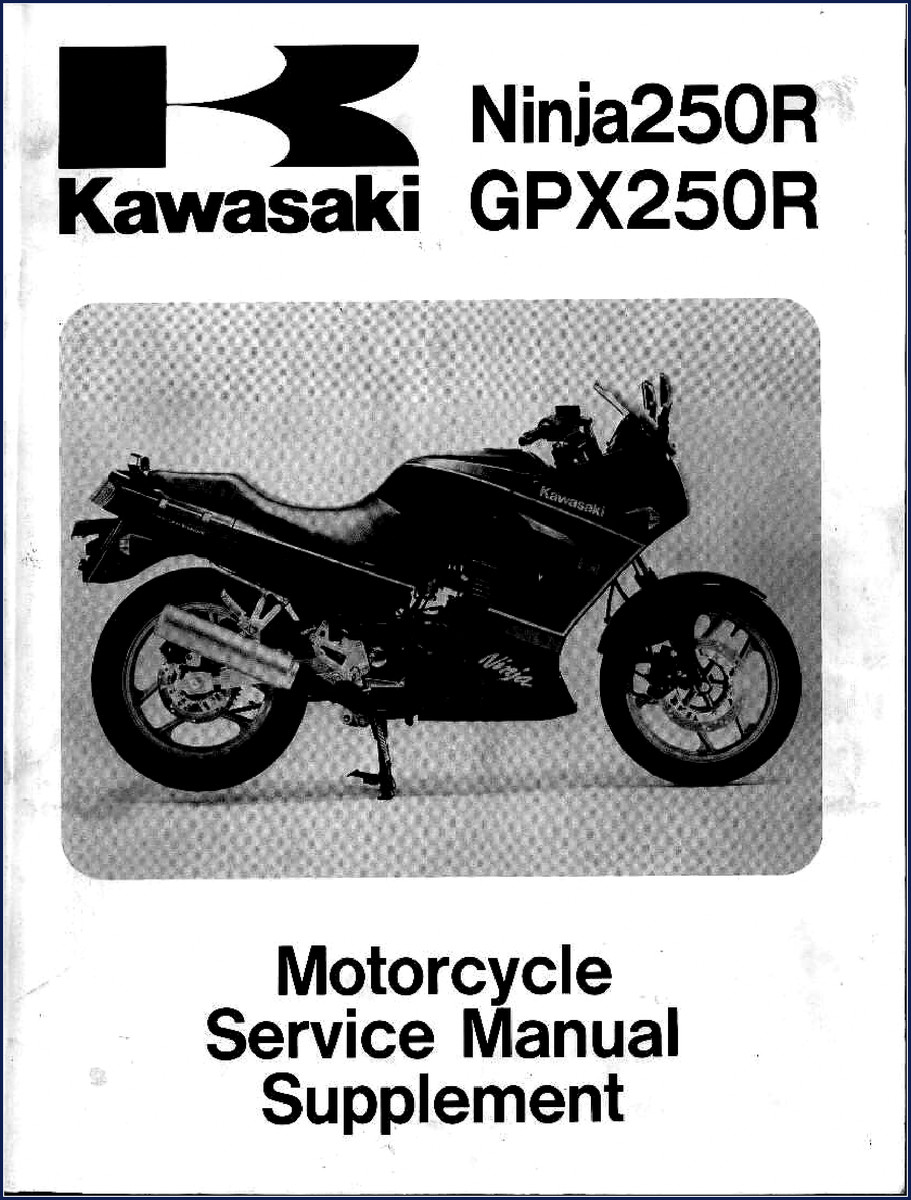
Kawasaki Ninja250R GPX250R Service Manual supplement cover - 253 pages factory OEM documentation

You have a Ninja250R or GPX250R on the lift, and you crack open a generic aftermarket manual. Kawasaki Ninja250R, GPX250R Service Manual is not that. This is the factory supplement, printed by Kawasaki Heavy Industries in 1987, the same document the dealer techs used when these bikes were new. No reprints, no third-party reinterpretations – just the exact procedures and tolerances that came out of Akashi. If you torque a single bolt using an aftermarket manual, you are rolling the dice. I have seen stripped crankcase threads and weeping head gaskets from spec errors that don’t exist in factory docs. This one spares you that.

It covers 253 pages of content organized into 16 chapters, starting with General Information and ending with the Appendix. You need the fuel system specs? Chapter 2. Cooling system? Chapter 3. Engine top end? Chapter 4. Clutch – Chapter 5. Lubrication – Chapter 6. Engine R&R – Chapter 7. Crankshaft and Transmission – Chapter 8. Wheels – Chapter 9. Final drive – Chapter 10. Brakes – Chapter 11. Suspension – Chapter 12. Steering – Chapter 13. Frame – Chapter 14. Electrical – Chapter 15. Every procedure is laid out with the exact tool list and torque sequence that Kawasaki validated. I have used this supplement on two Ninja 250 builds, and it saved me hours of chasing down fastener grades that the aftermarket books get wrong.

Engine Overhaul: What You Need to Know

The crankshaft and transmission chapter alone has saved my shop from an expensive mistake. Page 73 shows the crankshaft runout limit and the bearing clearance specs. You do not guess clearance with feeler gauges – you use plastigage and compare to the factory range. The manual calls out the specific seal and O-ring part numbers for the oil pump and clutch cover. If you skip the torque sequence on the clutch hub nut (check page 5-8 in the Clutch chapter), you get a slipping clutch after 500 miles. I have seen it happen. These specs are not optional; they are the result of Kawasaki engineering tests, not some author guessing from a parts fiche.

Does This Manual Cover the Fuel System?

Yes, Chapter 2 – Fuel System – includes the carburetor disassembly, jet specifications, float height adjustment, and the vacuum petcock testing procedure. The GPX250R uses the same CVK32 carburetors as the Ninja 250R, but the jetting differs between models. This supplement lists the exact jet sizes and needle clip positions for both. You do not guess main jet sizes based on altitude; you follow the factory chart. I have a customer who chased a lean stumble for three weekends because his aftermarket manual told him to use a 98 main. Factory spec for the US Ninja250R was a 102. Swapped it, problem gone. That is what this document delivers – the actual jet numbers from Kawasaki.

253 Pages of Factory Documentation

This is not a condensed guide. 253 pages means full wiring diagrams for the electrical system (Chapter 15), complete suspension linkage torque values (Chapter 12), and the steering head bearing preload procedure (Chapter 13). The brake chapter includes the master cylinder rebuild steps and the caliper piston removal method. Even the frame chapter gives you the frame alignment specs and the bolt torque table for the engine mounts. If you are rebuilding a salvage chassis, you need those numbers. The supplement includes a Quick Reference Guide at the front with tabbed sections – bend the page back to match the black tab, and you land exactly on the section you need. No flipping through guesswork.

Get the Right Torque Data from the OEM Source

I have torqued enough bolts to know that 15 ft-lb on a 6mm bolt is different from 15 ft-lb on an 8mm – thread pitch, material, and lubrication matter. Aftermarket manuals often give one-size-fits-all torque tables. This factory supplement lists torque values specific to each fastener: cylinder head bolts (check the Engine Top End chapter, footnote about oiled threads), clutch hub nut (115 ft-lb, with thread locker specified), and the front axle nut (65 ft-lb). The suspension chapter gives the swingarm pivot nut torque and the rear shock absorber mounting bolts. If you overtorque the swingarm pivot, you bind the bearings; under-torque it and you get a loose rear end. The factory spec is 80 ft-lb for that pivot nut. I have used it on three swingarm swaps. Works every time.

Electrical System: Factory Wiring Diagrams and Diagnostics

Chapter 15 covers the entire electrical system: ignition, charging, starter, lighting, and the harness routing. The wiring diagram shows every connector color code and pin location. When you have a no-start condition and the aftermarket book says “check the neutral switch” without telling you which wire is which, you waste time. This diagram gives you the wire colors from the ECU to the ignition coils. The supplement also includes the resistance values for the pickup coils and the ignition coil primary/secondary windings. If you get a reading outside spec, you know the component is bad before you buy a replacement. No guesswork – just the facts.

Why Factory OEM Documentation Matters

I have seen enough aftermarket manuals with torque specs that were obviously copied from a different model. A Honda CB750 spec does not belong on a Kawasaki parallel twin. The OEM supplement from Kawasaki is the only document that carries the actual engineering data from the company that built this motorcycle. The 253 pages are the same as what the dealer techs used when these bikes were under warranty. You want to rebuild the engine correctly? Use the factory crankshaft and transmission chapter. You want to bleed the brakes without introducing air? Follow the brake chapter sequence. The appendix even includes the special tool list and the thread lock recommendations. If you work on these bikes, you need this document. Related manuals in the same collection include the Kawasaki Ninja250R GPX250R Service Manual Supplement for the complete system, the Kawasaki Ninja250R GPX250R Service Manual – Factory OEM Specs for the full factory release, and the Kawasaki Ninja 250R Service Manual – 428 Pages of Factory Specs for an even larger edition covering more model years. For background on transmission internals, the Manual Transmission design principles apply to the GPX250R’s six-speed unit, and the Manual Transmission gear ratios are listed in Chapter 8.

Is this supplement the same as the full service manual?
This is a supplement – it contains updates and model-specific data for the Ninja250R and GPX250R. Use it alongside the base service manual for complete coverage.
Does it include the carburetor jetting for aftermarket pipes?
Only factory jetting. Aftermarket modifications require experimentation; this gives you the baseline.
What torque wrench range do I need for most fasteners on this bike?
Most engine and chassis bolts range from 5 ft-lb to 115 ft-lb, so a 1/2-inch drive torque wrench that covers 10-150 ft-lb is suitable. For small fasteners like carb clamps, an inch-pound wrench is needed.
Can I use this manual for a late-model Ninja 250?
No. This supplement covers 1987-1990 Ninja250R and GPX250R models. Later years have different electrical and suspension components.

Stop wasting time on generic manuals that leave you guessing. Download the Factory Manual and get the actual specs from Kawasaki. Your engine, transmission, and suspension deserve the documentation they were designed with.

Page Count

253

Brand

Kawasaki

Language

English

2 reviews for Kawasaki Ninja250R GPX250R Service Manual – Factory OEM Specs

  1. Michael S.

    I am so happy with this transaction. The text is searchable and well indexed. Contains precise schematics for Kawasaki. Great value for money.

  2. David M.

    This is exactly what I was looking for. The text is searchable and easy to navigate. Contains precise bolt torque specs for Kawasaki. Saves me hundreds of money.

Add a review

Your email address will not be published. Required fields are marked *

You may also like…