Kubota RTV1140CPX 2009 Workshop Manual
Kubota RTV1140CPX 2009 Workshop Manual is the only document I’ll use when I’m inside one of these utility vehicles. I’ve seen guys tear into a RTV1140CPX using a third-party manual and end up with a stripped head bolt or a wiring harness that looks like a rat’s nest. That’s because those aftermarket jobs don’t give you the factory sequence or the exact torque values. This 379-page manual is the real thing – it’s what Kubota’s own engineers wrote for the RTV1140CPX. It’s not a reprint or a scan. It’s the original OEM PDF, and it starts with safety decals and cylinder number identification before you even touch a wrench. That’s the right way to begin.
The specifications section on page I-12 gives you the exact dimensions, traveling speeds, and fluid capacities.
Safety First: Why the Manual Starts on Page I-1
Page I-1 of this manual has the “SAFETY FIRST” section. That’s not filler. It lists the specific safety decals on the machine and tells you what each one means. If you skip this, you might miss a warning about hot surfaces or pinch points. The manual also includes “GENERAL PRECAUTIONS” and handling precautions for electrical parts – all before you get to any mechanical procedures. I’ve seen too many guys get zapped because they didn’t disconnect the battery properly. This manual walks you through that.
Tightening Torques – Metric and American Standards
You want to know why some RTV1140CPX engines leak oil after a rebuild? It’s because the tech used the wrong torque on the cylinder head bolts. This manual has a dedicated “TIGHTENING TORQUES” section in the General chapter. It covers general use screws, bolts, nuts, stud bolts, metric screws, and American standard screws with UNC or UNF threads. It even has a subsection for plugs. If you’re working on a machine that uses both metric and imperial fasteners, this manual saves you from guessing. The torque values are from Kubota, not some aftermarket database.
Electrical System: Handling Precautions for Wiring and Connectors
Electrical problems on the RTV1140CPX can be a nightmare if you don’t have the right wiring diagram. The manual includes “HANDLING PRECAUTIONS FOR ELECTRICAL PARTS AND WIRING” with subsections on wiring, battery, fuse, connector, handling of circuit tester, and color of wiring. It tells you how to check connectors without damaging the pins and how to use a circuit tester properly. This is the kind of detail that separates a proper repair from a fire hazard. I’ve seen guys probe a connector with a test light and short out a control module. This manual shows you the correct way.
Engine Overhaul: Cylinder Head and Valve Servicing
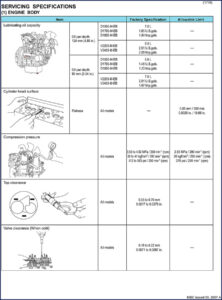
The engine section is where this manual really shines. It breaks down the servicing into checking, disassembling, and assembling. The “Cylinder Head and Valve” subsection covers disassembly, inspection, and reassembly. It includes the valve clearance adjustment procedure and the tightening torque sequence for the head bolts. The manual also has a “Cylinder” subsection for checking bore wear and piston ring gap. If you’re doing a top-end rebuild, you need the factory specs – not a generic “tighten until snug”.
Transmission: Hydrostatic System Oil Flow and Servicing
The RTV1140CPX uses a hydrostatic transmission (HST). The manual has a full “MECHANISM” section that explains the structure, oil flow, and function of components. The servicing section includes troubleshooting, specifications, and tightening torques. If you’re chasing a loss of power or a sluggish drive, the troubleshooting chart will point you to the right check. The HST is a sealed unit, but you still need to know the correct oil level and filter replacement intervals. The manual covers that.
Who Needs This Factory Manual?
If you’re a DIY owner who changes their own oil and wants to attempt a brake job, this manual is not for you. It’s for the person who is comfortable pulling the engine or tearing into the transmission. It’s for the shop that sees a RTV1140CPX come in with a no-start condition and needs to diagnose it correctly the first time. The manual expects you to have basic mechanical knowledge and the right tools. It lists the required special tools for both engine and machine. That’s a level of detail aftermarket manuals skip.
Why Only OEM Documentation Works for the RTV1140CPX
I’ve seen aftermarket manuals that claim to cover the Kubota RTV1140CPX but are actually photocopies of a generic service manual for a different model. They have wrong torque values, missing wiring diagrams, and no safety decal information. This 2009 Workshop Manual is the OEM document. It’s the same one Kubota dealers use. It has the original part numbers, the correct disassembly sequence, and the official tightening torques. If you’re serious about repairing this machine, you don’t want a reprint. You want the original factory manual.
Related manuals you might need:
- Kubota RTV1140CPX Workshop Manual
- Kubota RTV1140CPX 2009 Workshop Manual
- Kubota R420B R520B Workshop Manual – Factory Specs for Wheel Loaders
For understanding the hydrostatic transmission, compare it to a standard Manual Transmission in terms of maintenance. Unlike a Manual Transmission, the HST uses oil flow for power transfer.
Frequently Asked Questions
- Does this manual cover the fuel system?
- Yes, the fuel system section includes troubleshooting and servicing specifications.
- What torque values are listed for the engine?
- The manual provides tightening torques for the engine body, lubricating system, cooling system, and fuel system. Both metric and American standard fasteners are covered.
- How do I identify the cylinder number on the RTV1140CPX?
- The manual includes a dedicated subsection under “Product Identification” called “Cylinder Number.” It explains exactly where to find the stamped number on the engine block, which is necessary for ordering correct service parts. Without this, you risk buying wrong pistons or rings. The procedure is described with illustrations, and it’s one of the first things you should check before disassembly. This is the kind of detail aftermarket manuals skip. I’ve seen guys order a full set of rings only to find they bought the wrong size because they didn’t check the cylinder number. That’s a waste of time and money.
- Can I use this manual for the RTV1140CPX with a different engine?
- This manual is specific to the RTV1140CPX chassis with the Kubota diesel engine. If your vehicle has been repowered, you will need the engine-specific workshop manual. The manual references the engine mechanism from the latest diesel engine workshop manual (Code No. 9Y021-01870). So for engine service, you may need that additional manual.
Don’t trust your repair to a copied PDF from a forum. Get the real thing. Download the Factory Manual now and have the correct specifications on your bench.
Reviews
There are no reviews yet.