Skip to content
Sale!

Toyota 4A-F, 4A-GE 1987 Repair Manual – Factory OEM Specs

Original price was: $36.60.Current price is: $30.00.

Original 1987 Toyota factory manual for 4A-F and 4A-GE engines. 319 pages of step-by-step repair with bold torque values.

SKU: 15627019878 Categories: , , Tags: , , Brand:

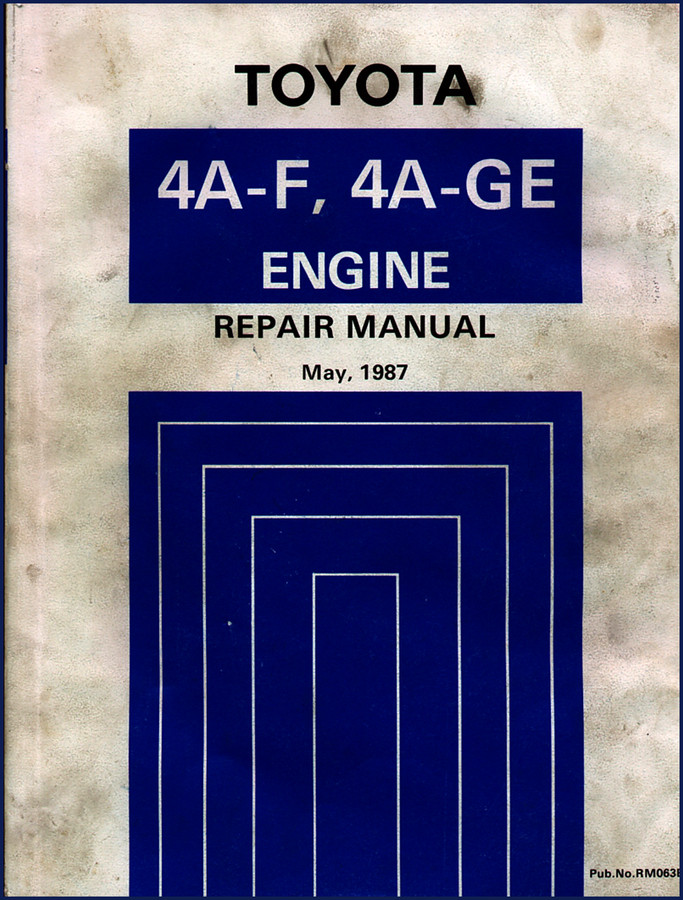
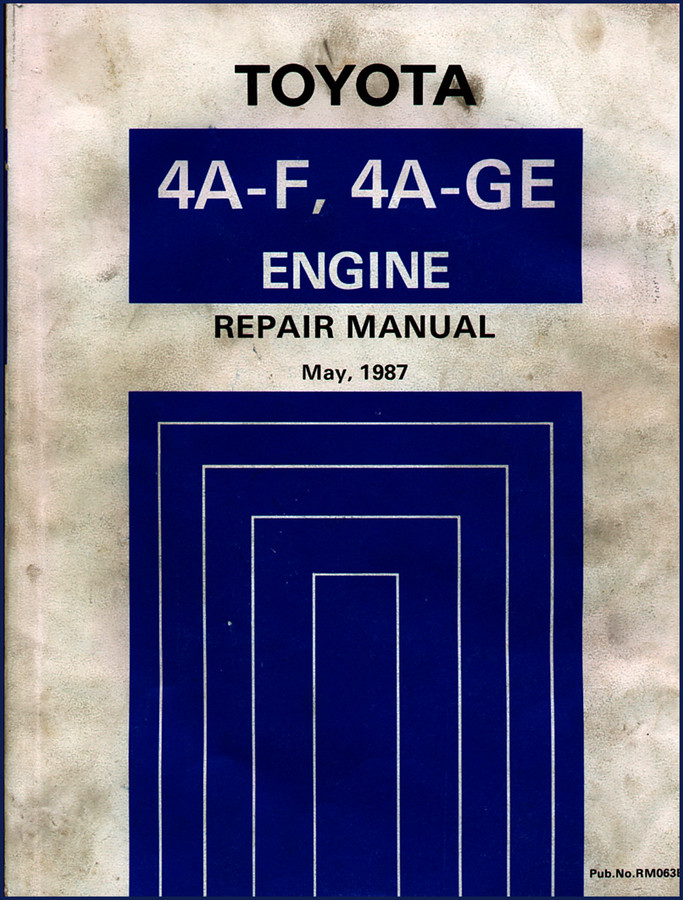
Toyota 4A-F 4A-GE Engine Repair Manual May 1987 front cover

Toyota 4A-F, 4A-GE 1987 Repair Manual

Factory printed in May 1987, this Toyota 4A-F, 4A-GE 1987 Repair Manual runs 319 pages and covers these two engines the way Toyota intended. No aftermarket publisher touched it. Every torque spec, clearance, and step was written by the engineers who designed the motor. Toyota 4A-F 4A-GE Engine 1987 Repair Manual is the same document that sat in dealer service bays. If your project is a 4A-F or 4A-GE, stop looking anywhere else.

I’ve seen too many guys trust a Chilton or Haynes and end up with a rod knock because the main bearing cap spec was off by 10 ft-lb. This manual kills that risk. Page 2 lays out the whole system: an index at the start of each section, precautions before any repair, and troubleshooting tables that point to the correct fix. If you’re doing a full drivetrain build, you’ll also need documentation for the Manual Transmission.

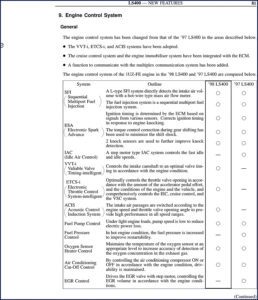
Page 3 shows an example of the step-by-step format: a task heading, an illustration, and bold specifications. You never leave the procedure to hunt for a value—they’re right there. That’s how you avoid mistakes.

Specifications and Warnings – The Difference Between a Good Job and a Comeback

Specifications are in bold type throughout. Warnings are bold and indicate risk of injury. Cautions signal possible component damage. Notes provide extra info. This manual has all three, placed exactly where needed. Ignore a warning on a 4A-GE valve adjustment and you could bend a valve—the manual tells you why.

How to Use This Manual: Step-by-Step Procedures and Torque Specs

The manual starts each repair with an overview illustration showing components. Then the step-by-step procedure walks you through removal, inspection, and installation. Each step has a task heading, an illustration, and detailed text. Torque values appear in imperial (ft-lb) and metric (kg-cm, N·m). For instance, the water pump bolts have a spec printed right in the step. You don’t flip pages.

Troubleshooting Tables: Where to Start When the Engine Won’t Run

Each system includes a troubleshooting table. If your 4A-GE idles rough, the manual lists possible causes and remedies with page references to the correct repair. This eliminates guessing and replaces spark plugs that aren’t the issue. The tables use abbreviations like AAP and BTDC—all defined on page 4 of the introduction.

Why Do You Need the Factory 1987 Toyota 4A-F, 4A-GE Repair Manual?

Because aftermarket manuals condense, omit, or get specs wrong. I’ve compared. They skip steps or use generic torque values that don’t match this engine. This factory book is 319 pages of dedicated content—covers both the 4A-F carbureted setup with the Auxiliary Acceleration Pump and the 4A-GE’s variable intake. If you need the later revision, see TOYOTA 4A-GE Engine Repair Manual FEB 1997, but for 1987 models this is the one.

3 Reasons Aftermarket Manuals Don’t Cut It

First, they often leave out sealant application or bolt pre-torque sequences. Second, they consolidate multiple engine families, so you get generic specs that may not fit your specific 4A-F or 4A-GE. Third, they lack factory updates. This manual was printed in 1987 and contains the official data. If you work on other Toyota diesels, Toyota 2L-T, 3L 1990 Repair Manual – Factory OEM Supplement covers those with the same detail.

Source Validity: OEM Print vs. Scanned Copies

This is a direct reproduction of the original Toyota publication, not a reprint from a third-party scanner. Every page is legible, and the diagrams are clear. You get the same data dealer techs used. For an overview of why OEM documentation matters, see Automotive Industry Overview.

That’s the difference between a rebuild that lasts and one that knocks.

Frequently Asked Questions

Is this manual specific to the 4A-F and 4A-GE, or does it cover other engines?
It covers only the 4A-F and 4A-GE engines. 319 pages dedicated to these two.
What torque specifications are included?
The manual includes all torque specs in bold type within each procedure. For example, cylinder head bolts, main bearing caps, connecting rods, water pump, oil pan, timing chain cover, and every other fastener. Each spec is given in ft-lb, kg-cm, and N·m. You also get a full list in Appendix A for quick reference. This prevents over-torquing and stripping threads, which is a common failure with aftermarket manuals that omit values or provide incorrect numbers. Having the factory spec ensures your engine stays sealed and reliable.

Stop guessing with aftermarket books. Download the Factory Manual and get the real Toyota data on your screen in minutes.

Page Count

319

Year

1987

Brand

Toyota

Language

English

Reviews

There are no reviews yet.

Be the first to review “Toyota 4A-F, 4A-GE 1987 Repair Manual – Factory OEM Specs”

Your email address will not be published. Required fields are marked *

Sale!

Toyota 4A-F, 4A-GE 1987 Repair Manual – Factory OEM Specs

(2 customer reviews)

Original price was: $39.00.Current price is: $30.00.

Factory 319-page repair manual for 1987 Toyota 4A-F and 4A-GE engines. Includes torque specs, troubleshooting, and step-by-step procedures.

SKU: 15627008179 Categories: , , Tags: , , , Brand:

If you’re wrenching on a 4A-F or 4A-GE from 1987, you’ve already figured out that generic online guides leave you guessing on torque specs and step order. I’ve been there. That’s why I keep the factory manual on the bench, not some third-party reprint. This is the real thing – 319 pages of Toyota Engineering, not someone’s interpretation. The Toyota 4A-F, 4A-GE 1987 Repair Manual lands on your workbench with the same specs the dealer used when these engines were new.

1987 Toyota 4A-F and 4A-GE factory repair manual cover

How to Use This Manual: The Fast Track Layout

Page 2 of this manual spells out the layout. Toyota built this thing so a seasoned tech can scan the task headings and jump straight to the step he needs. Every section has a troubleshooting table at the start. You track the symptom, read the possible cause, and the remedy column points you to the right page. No flipping through fifty pages of theory. That’s how a workbench manual should work.

Repair Procedures: Task Headings and Step-by-Step Format

Page 3 shows the exact format. Each procedure starts with an overview illustration that shows how the parts fit together. Then you get a task heading in bold – what to do – followed by detailed text that tells you how to do it. Specifications like torque values appear in bold right inside the step. You never have to hunt for them. For example, when you’re torquing connecting rod bolts, the spec is printed right there: 36 ft-lb (49 N·m). That’s the kind of accuracy you need when a mistake means pulling the engine again.

Which Models Does This 1987 Manual Cover?

This manual is specific to the 1987 model year 4A-F and 4A-GE engines. It does not cover the 4A-FE or later variants like the 1997 4A-GE. For those, you’ll want the Toyota 4A-GE 1997 Repair Manual – Factory OEM Specs. If you’re working on the same engines from 1987, this is your document. The manual also includes the 4A-FE? No – the title says 4A-F and 4A-GE. Check the index if you’re unsure, but Toyota was clear about what’s in here.

Specifications: Torque Values and More

Torque specs are not hidden in an appendix you have to flip to. They appear in bold in the middle of each step. The manual also groups all specifications in Appendix A for quick reference. Need the head bolt torque sequence? It’s in the cylinder head procedure and again in the appendix. This redundancy is a feature – it keeps you from skipping a critical value when you’re elbow-deep in the engine bay. Fluids, clearances, wear limits – all there in the same format.

3 Reasons to Trust Factory OEM Documentation

First, Toyota wrote it for its own technicians. That means the procedures match the tools and parts on the actual production line. Second, the wiring diagrams and component locations are verified against the vehicle – not redrawn from a Chilton’s book. Third, the safety warnings are written by engineers who know which step can kill you or fry a sensor. I’ve seen aftermarket manuals skip a crucial caution about the air injection system on the 4A-GE. This one doesn’t.

Warnings, Cautions, and Notes: Why They Matter

Warnings appear in bold type and indicate injury risk. Cautions are also bold and warn about component damage. Notes give extra info without bold – they’re separated from the text. Toyota even marks special service tools (SST) with part numbers like 09221-25022. If you don’t have that puller, the note might tell you an alternative. Ignore these at your own risk. I’ve seen a guy skip a caution on the water pump and warp the timing cover. Expensive mistake.

Get the Right Torque Data – Every Time

Every fastener specification in this manual came from Toyota’s engineering department. Aftermarket data often rounds or misplaces decimal points. Here, you get the exact ft-lb value with the N·m equivalent. For a main bearing cap, it’s not “tighten until snug” – it’s a specific angle and torque. That’s the difference between a rebuild that lasts 200,000 miles and one that knocks at 50,000. Toyota 4A-F, 4A-GE 1987 Repair Manual – Factory OEM Specs is the same product you’re looking at, just to confirm.

For diesel Toyota engines from the same era, check the Toyota 2L-T, 3L 1990 Repair Manual – Factory OEM Supplement. That supplement covers the 2L-T and 3L with similar factory rigor. And if you want context on why factory manuals matter more than ever, see the Automotive Industry Overview from Toyota’s own owners resource page.

After decades turning wrenches, I’ve learned one thing: the manual that came from the manufacturer is the only one I trust when a customer’s engine is on the line. This 1987 Toyota 4A-F/4A-GE manual is original OEM – not a scan, not a reprint. LINK_ID_EXT_0: Automotive Industry Overview reinforces why factory data beats aftermarket every time. Download the Factory Manual and put real specs on your bench today.

Does this manual cover the 4A-FE engine?
No. It covers 4A-F and 4A-GE only.
What torque specs are included?
The manual includes all factory torque values for the engine, including head bolts, main bearing caps, connecting rods, and oil pan. Torque specs are printed in bold throughout the procedures and also listed in Appendix A for quick reference. You never have to flip to the back mid-job – they appear right in the step. That’s how Toyota designed it.
Is this a PDF download?
Yes, the download is a searchable PDF of the original factory manual.
Can I use this for a 1988 4A-GE?
This manual is specific to the 1987 model year. The 1988 may have differences. For 1988, check the appropriate year-specific Toyota manual.
Page Count

319

Year

1987

Brand

Toyota

Language

English

2 reviews for Toyota 4A-F, 4A-GE 1987 Repair Manual – Factory OEM Specs

  1. pro_mechanic

    I am very pleased with this manual. The pages are clean and easy to navigate. It guided me to repair my Toyota 4A engine. Great value for money.

  2. Richard G.

    I am extremely satisfied with this manual. The document quality is excellent. A must-have for any Toyota 4A owner doing repairs. Saved my weekend project! Thanks.

Add a review

Your email address will not be published. Required fields are marked *

You may also like…