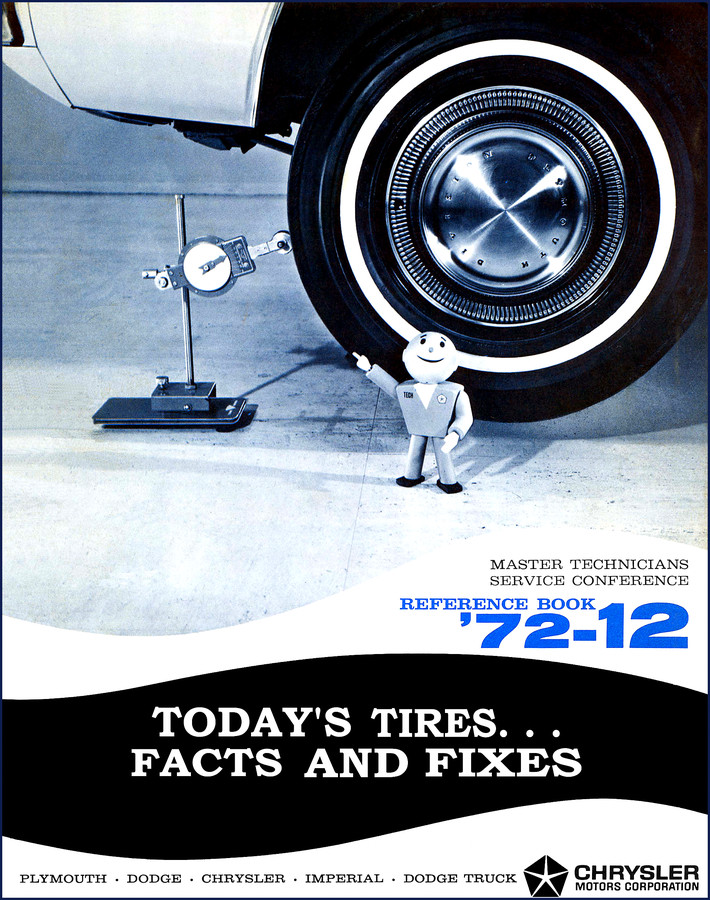
Chrysler Plymouth, Dodge, Imperial, Chrysler, DODGE TRUCK 1972 Technical Manual
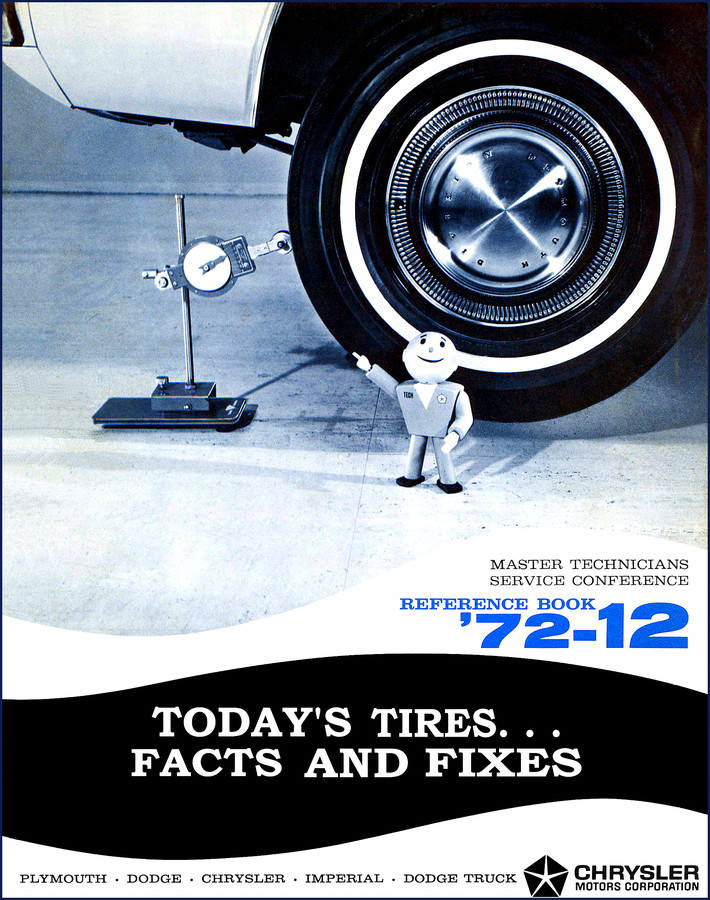
I’ve got 28 years of ASE Master Technician work under my belt, and I’ve seen more shimmy, shake, and tire roughness complaints than most techs will in a lifetime. You get a customer who says the car vibrates at sixty-five and you start chasing suspension parts when the whole time it’s a tire balance issue. That’s where this Chrysler Plymouth, Dodge, Imperial, Chrysler, DODGE TRUCK 1972 Technical Manual earns its keep. It’s a 16-page OEM reference book, not some aftermarket rewrite with generic torque values. Chrysler Motors Corporation put this together for their own techs. You want to diagnose a high-speed shake without wasting billable hours? This is the paper you need on the bench.
Most guys skip the road test. They plug in a scan tool and guess. This manual starts with the road test – page one tells you to take the customer for a ride so you know exactly what’s bugging them. Listen to the owner’s description and you’ll be chasing the wrong noise. Straight blacktop, smooth surface, speeds up to seventy. That’s the procedure. I’ve seen more than one shop replace tires that weren’t the problem because they didn’t verify the complaint first. This 1972 reference book gives you the diagnostic sequence in order. No shortcuts.
Road-Testing for Tire Troubles
Page one of the manual lays out the road test procedure. Identify whether you hear noise, feel vibration, or both. Then determine the speed. You maintain that speed long enough to reproduce the condition. If you’ve never done a proper road test with the customer in the car, you’re flying blind. The manual calls it “identifying the customer’s complaint.” That’s not just a feel-good phrase – it’s a step. Pre-select your test route. Smooth blacktop, no expansion joints, no road crown that mimics a shake. This is factory procedure, not a YouTube hack. If you’re working on a 1972 Plymouth Duster or a Dodge truck, follow this. It’s the same method Chrysler techs used in their dealerships.
High-Speed Shake Diagnosis
Shake that only happens above sixty miles an hour is a different animal from low-speed roughness. The manual dedicates a section to high-speed shake diagnosis (page 2). This isn’t about tire balance – it’s about runout, wheel harmonics, and tire stiffness. You’ll find the diagnostic tree for isolating shake from other driveline vibrations. I’ve used this on a 1972 Imperial with a chronic front-end shake that had been “fixed” three times. Following the factory flow chart, I found a bent wheel that was within specs by aftermarket standards but not by Chrysler’s. You don’t get that from a Chilton’s book.
Tire Balance Basics
Balance is where most guys go wrong. Dynamic balancing recommendations are on page 5. The manual tells you to balance on the car if possible, and it gives the specific procedure for off-car balancing too. It differentiates between correction of static and dynamic imbalance. There’s a section on what to do when you’ve balanced a tire and the shake is still there. That’s the runout problem, which is covered separately. If you’re using a bubble balancer, you need to read this. Chrysler’s spec for match mounting and weight placement is in here. I’ve seen techs slap weights on the wrong plane because they didn’t know the difference between dynamic and static. This manual ends that.
Diagnosis of Unloaded Runout Problems
Page 6 covers unloaded runout – the condition where a tire looks fine on the balancer but shakes on the road. The manual teaches you to measure runout on the car with a dial indicator, then break down the tire and rim to find the source. There’s a correction procedure on page 9 that shows you how to index the tire on the rim to minimize runout. That’s a technique that’s almost lost today. I still use it on old Mopars because aftermarket rims aren’t always round. This 16-page manual gives you the exact values for acceptable runout. You don’t guess. You measure.
Conventional and Radial Tire Usage
In 1972, radials were still new. Page 12 of this technical manual covers the difference between conventional bias-ply and radial tires, including mixing warnings. If you’re restoring a 1972 Dodge truck that originally had bias-ply tires and you’re switching to radials, the factory bulletin inside explains the handling changes and recommended pressures. There’s a summary on page 13 that gives you the takeaway points for customer education. I’ve had customers argue that radials don’t need balancing. This manual proves them wrong.
If you’re working on Chrysler products from this era, you’ll also find related manuals useful. Check out Chrysler Plymouth Dodge Radio Sound System Troubleshooting for electrical diagnostics, Chrysler Torqueflite Transmission 1973 Diagnostics Manual for drivetrain, and Chrysler Electrical Circuit Troubleshooting Reference Book for wiring issues. For broader drive-train knowledge, refer to the Manual Transmission section on Wikipedia for background theory, and the Manual Transmission resources for gearbox fundamentals.
- Does this manual cover radial tire balancing procedures?
- Yes. Page 12 discusses radial tire usage, including balancing recommendations specific to radial construction. The dynamic balancing recommendations on page 5 apply to both radial and bias-ply, but the manual notes differences in weight placement.
- What page has the road test procedure?
- Page 1.
- Can I use this manual for diagnosing tire problems on a 1973 Chrysler? It says 1972.
- The tire technology and diagnostic procedures are identical for 1972-1974 Chrysler models. The manual covers basic principles that haven’t changed. However, for model-specific torque specs or suspension geometry, you need the 1973 service manual. This reference book is a supplement, not a replacement.
- Why is taking the customer on a test run so important? The manual emphasizes it.
- Because most customers cannot describe the condition accurately. You need to feel and hear the vibration yourself at the exact speed it occurs. The manual points out that if you rely on the owner’s description, you’ll fix the wrong thing. For example, a customer might say the steering wheel shakes at 55 mph, but the actual problem is a high-frequency vibration at 70 mph that shakes the seat. Taking them along lets you pinpoint the symptom. This is not a step you can skip if you want a one-visit fix. I’ve seen shops waste two hours replacing tie rods on a car that needed a tire balance. The road test eliminates that guesswork.
That 16-page book will save you more time than any aftermarket manual twice its size. Chrysler’s own techs used this during service conferences. The content is pure OEM: road testing, balance basics, runout correction, radial usage. No fluff, no reprints. You get the original factory procedures from 1972. If you’re serious about fixing tire problems on these vehicles instead of throwing parts at them, Download the Factory Manual.


diy_master –
This is just what I needed. The document is very clear. A must-have for any Chrysler 1972 DIYer doing maintenance. I will definitely buy again.