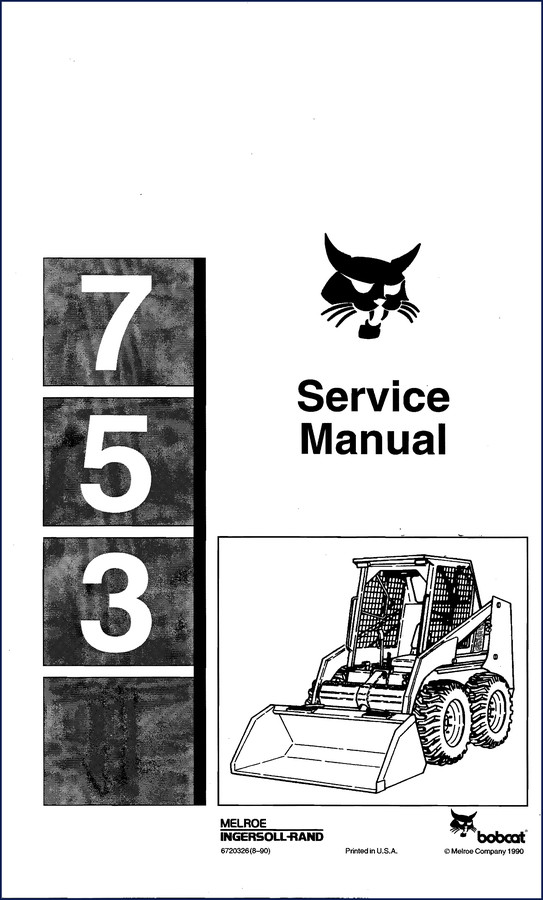
Bobcat 753 1990 Service Manual
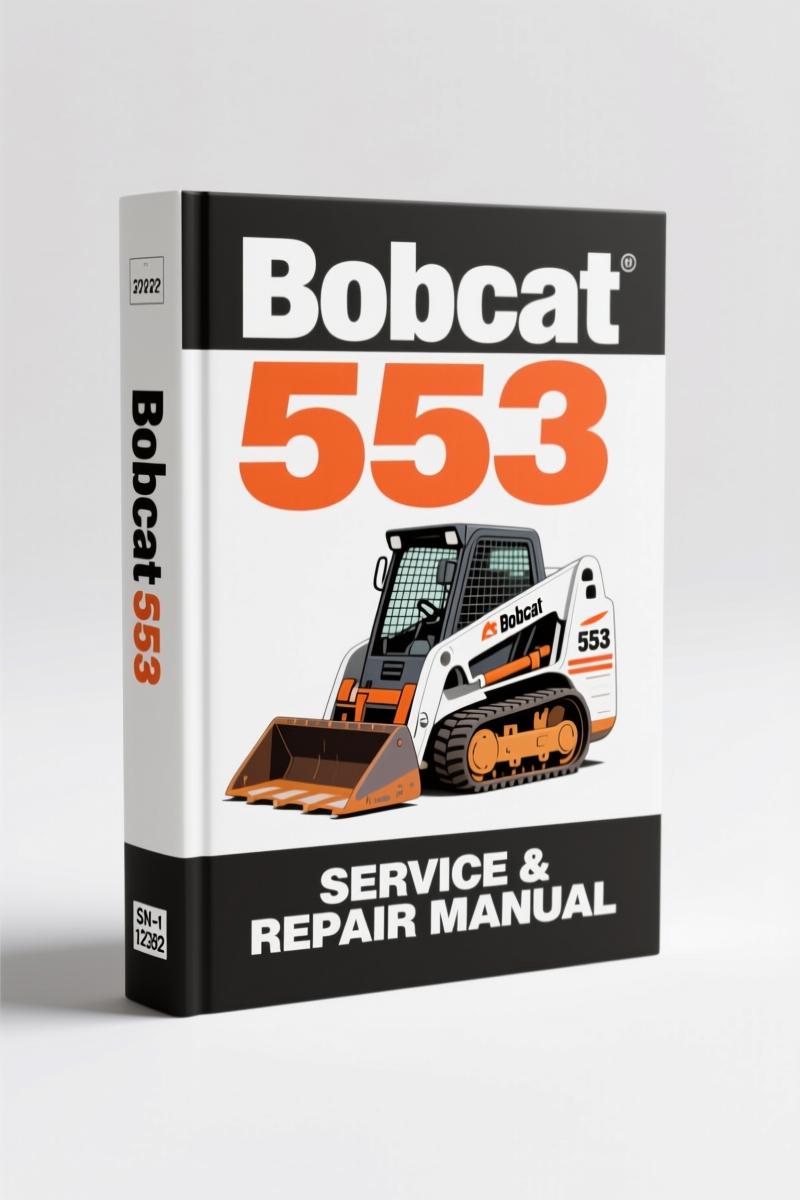
I’ve seen more aftermarket manuals that belong in a shredder than I care to count. If you’re holding a Bobcat 753 with a hydrostat that’s acting up or a boom that won’t lift, you need OEM factory data—not someone’s photocopied notes. This Bobcat 753 1990 Service Manual is the real deal: 404 pages of Melroe Company specs, torque values, and safety procedures that keep you from turning your loader into a lawn ornament.
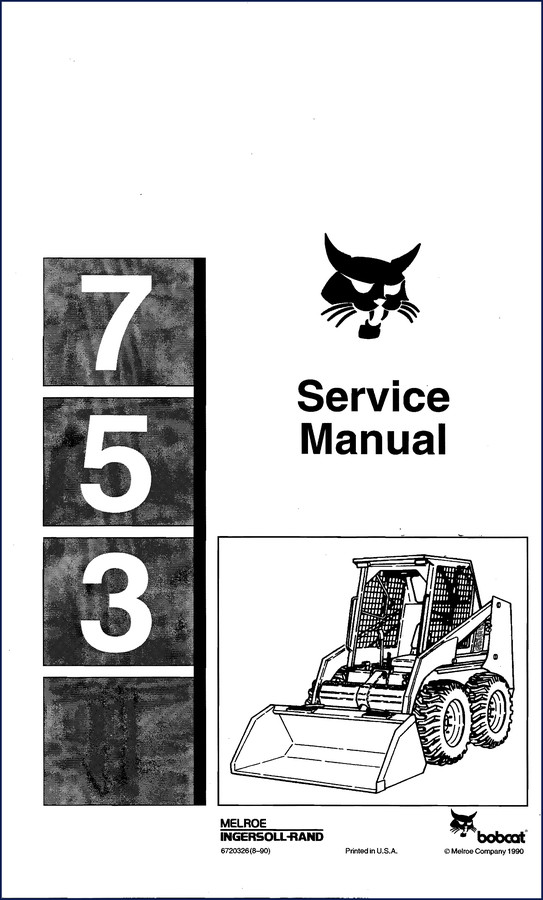
Bobcat 753 Service Manual: 404 Pages of Factory Data
Every page in this manual comes straight from the Melroe press—no photocopy, no third-party rewrite. Page 1 alone spells out the Safety Alert Symbol and the “CORRECT” vs. “WRONG” procedures that separate a safe job from a trip to the ER. I’ve had techs tell me they’d rather have this manual than a lift arm support device—but you need both. The book covers every system: engine, hydraulic, drivetrain, electrical, and the loader frame itself. If you’re working on a 753, this is the only reference that guarantees you’re using 1990 factory tolerances.
Maintenance Safety – The Rules You Can’t Skip
Page 2 starts with “MAINTENANCE SAFETY” and a warning that untrained operators and failure to follow instructions can cause injury or death. That’s not lawyer-speak—that’s Melroe telling you to read the Operation & Maintenance Manual first. The service manual repeats critical warnings: never service the loader without instructions, keep lift arms supported with an approved device, avoid pressurized fluid injection, and never modify equipment. I’ve seen a guy lose a hand because he ignored the “stop, cool, and clean engine of flammable materials” rule. This manual prints it in bold. Don’t skip it.
Hydraulic Pressure Checks – Where the Manual Saves Your Skin
The hydraulic system section gives you charge pressure specs and relief valve settings. No aftermarket book I’ve seen lists the exact pressures for a 753’s tandem pump. This one does. You’ll find the procedure for checking case drain flow, testing the drive motor, and adjusting the control spools. And yes—torque values for every hose fitting are listed. I can’t tell you how many leaks I’ve traced back to a guy using a “close enough” spec from a website forum. Close enough blows a seal at 2,500 PSI. Use the manual.
Does the Manual Help with Electrical Diagnostics?
Wiring diagrams are in the electrical section—full color-coded schematics for the ignition, starting, charging, and auxiliary circuits. The manual walks you through continuity checks and component testing with a multimeter. If you’ve ever chased a short in a 1990 loader without a diagram, you know it’s a black hole of time. This book gives you the paths and the expected readings. Follow them, and you’ll find the bad wire or relay in under an hour.
3 Reasons to Trust OEM Documentation Over Aftermarket
First, the OEM manual contains factory torque sequences—not just a number, but the tightening order and step increments. Second, the safety warnings are specific to the 753, not generic OSHA boilerplate. Third, the part numbers match your Bobcat dealer’s catalog exactly. Aftermarket manuals often use generic part numbers or omit critical notes like “use thread locker on these bolts.” That difference can cost you a weekend and a new engine block. I’ve been turning wrenches since 1985, and I still keep the OEM book on my bench for every machine.
If you need a companion manual for a different year or model, check out the Bobcat 753 753H 1999 Service Manual or the Bobcat S175 2008 Service Manual – OEM Factory Repair Specs. For larger frame machines, the Bobcat S185 2008 Service Manual – 998 Pages of Factory Specs covers the S185 platform with the same detail. For transmission-specific procedures, verify your setup against the Manual Transmission or Manual Transmission resources if you’re swapping a gearbox.
Download the Factory Manual and put the right data on your bench. Your loader—and your paycheck—will thank you.
- Is this manual just a reprint of the OEM book?
- No. This is a direct scan of the original 1990 Melroe publication, not a third-party rewrite.
- Does the manual include torque specs for the engine and hydraulic system?
- Yes. The manual contains factory torque values for every major fastener, including cylinder head bolts, hydraulic line fittings, and wheel lug nuts. Torque sequences are listed in the appropriate sections. If you don’t use the correct spec, you risk stripping threads or causing a leak that could fail under pressure. That’s why we only sell OEM – aftermarket manuals often round numbers or skip the bolt tightening order entirely. This one gives you the exact values Melroe used on the assembly line.
David M. –
This is exactly what I was looking for. Instant access after checkout. Contains precise schematics for Bobcat. I will definitely buy again.