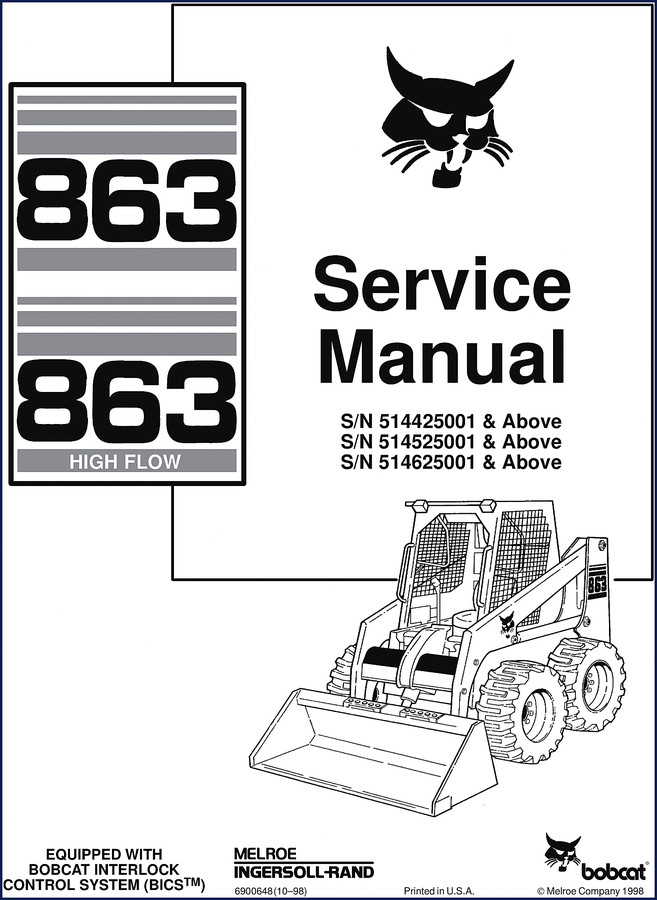
Bobcat 863 1998 Service Manual – Factory Specs for the 863 Skid-Steer Loader
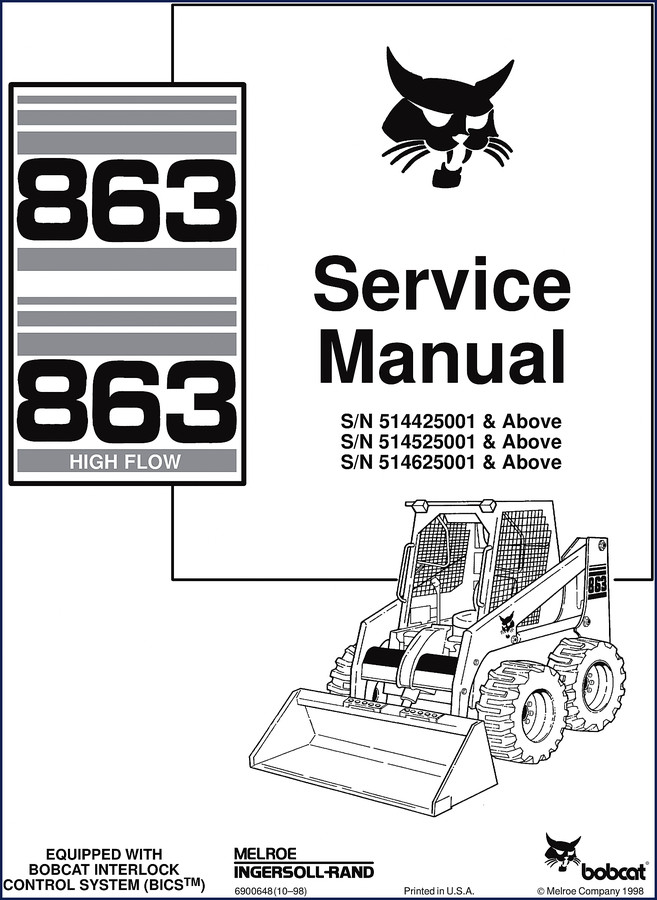
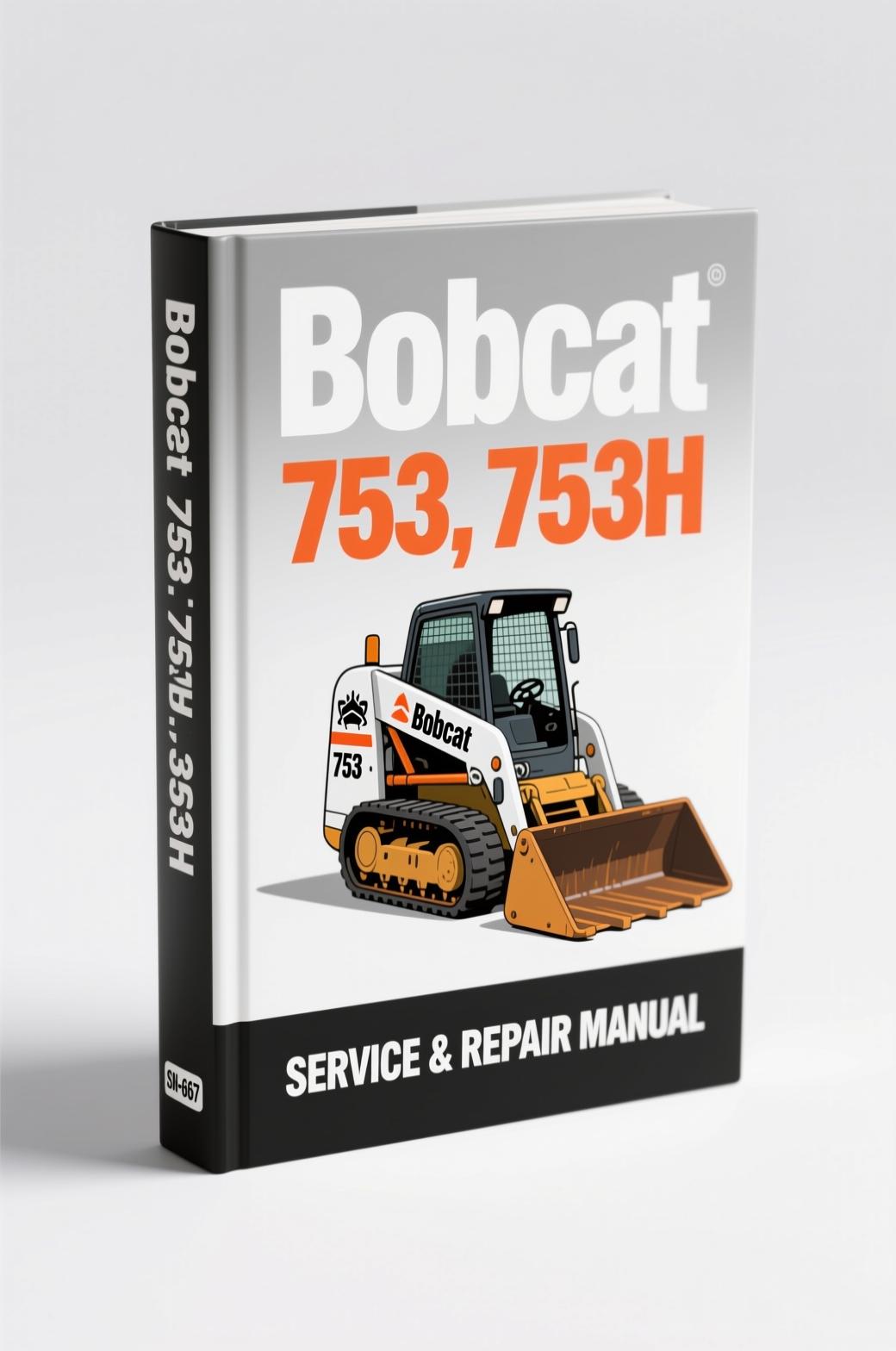
I’ve been turning wrenches for 28 years. ASE Master. San Antonio heat. Six bays. I’ve seen more head gaskets fail because some guy grabbed a generic torque chart off the internet than I’ve had hot meals. When you’re pulling the cylinder head on a Deutz engine in a Bobcat 863, you don’t guess the bolt pattern or the sequence. You get the factory sheet. That’s what this Bobcat 863 1998 Service Manual is — the same book Melroe printed in 1998 for dealer techs. 534 pages. No reprint. No missing pages. If you’re working on a Bobcat 863 with serial numbers 514425001 and above, this is the document you need.
534 Pages of Factory Documentation – What’s Inside
The manual splits the machine into ten major sections. Preventive Maintenance (1–1) gives you the service schedule and fluid specs. Hydraulic System (2–1) covers the pump, control valve, and cylinder rebuilds. Hydrostatic System (3–1) dives into the pump and motor. Drive System (4–1) covers chaincase, axles, and parking brake. Main Frame (5–1) handles the lift arms, cab, and fuel tank. Electrical System (6–1) includes wiring schematics, alternator, starter, and relay switches. Engine Service (7–1) is the meat — cylinder head, camshaft, connecting rod, timing belt, turbocharger, and full reconditioning instructions. Systems Analysis (8–1) walks through the BOSS diagnostic tool and PWM troubleshooting. Specifications (9–1) lists torque values, fluid capacities, and bolt specs. Advanced Hand Control System (10–1) covers the AHC handle and solenoid testing.
You want the torque for loader bolts? Page 9–1. Standard torque specs for bolts. Also engine torque values. I’ve seen guys strip a bellhousing bolt because they used a generic table. Don’t be that guy.
Engine Service (Section 7–1): The Core of This Manual
Section 7–1 runs from engine removal to valve clearance adjustment. It covers cylinder liners, piston and pin, connecting rod, camshaft bearings, crankshaft gear mounting bolt, flywheel, timing belt, and valve timing. The manual tells you the exact sequence for torquing the cylinder head — no ambiguity. If you’re rebuilding a Deutz engine in a Bobcat 863, you need these pages. The manual even lists the required Deutz engine tools. That’s the difference between a factory manual and a third-party rewrite: they tell you which special tool to rent or buy before you start.
Electrical System Diagnostics – Section 6–1
Wiring schematics. Alternator. Starter. Battery. Relay switches. Standard instrument panel. Front lights. The electrical section covers troubleshooting for the BICS interlock system. If the machine won’t start or the dash lights go dead, you trace it through the factory diagram. There’s no guessing which wire is which — the pinouts are right there. Section 8–1 also includes PWM troubleshooting and BOSS diagnostic tool procedures. You’ll find monitor service codes and sensor tests.
What Makes This Manual Different from Aftermarket Reprints?
Aftermarket manuals — I’ve seen them. They take a PDF, strip the formatting, and call it a service manual. Then they miss a torque spec or a safety notice. This 1998 Bobcat manual was printed by Melroe Company, Ingersoll-Rand. It includes the original safety instructions, the serial number locations, and the delivery report. It tells you that the BICS valve must be tested with the factory procedure. It warns you about lift arm support devices. Aftermarket copies often skip those warnings. If you’re working on a Bobcat 863, you want the real thing.
Who Needs This 534-Page Manual?
If you own a Bobcat 863 — skid-steer loader with high flow option — and you plan to do your own repairs, this is the manual. It’s for the home garage enthusiast who doesn’t want to pay dealer rates. It’s for the independent mechanic who needs to get a loader back running without chasing electrical gremlins for three hours. The manual assumes you have basic tools and can read a torque wrench. It does not assume you’ve rebuilt a hydrostatic pump before — it gives you step-by-step disassembly and reassembly for the M46 and M44 pumps. That’s valuable.
The hydrostatic drive system in the 863 functions differently from a traditional Manual Transmission. If you’re more familiar with a Manual Transmission, the hydrostatic system is a different beast. The manual explains the charge pump, drive belt, and motor carrier in plain language.
Related Manuals
- Bobcat 863 1998 Service Manual
- Bobcat 863 863H 1996 Service Manual
- Bobcat S175 2008 Service Manual – OEM Factory Repair Specs
Frequently Asked Questions
- Does this manual cover the hydrostatic system?
- Yes. Section 3–1 covers the hydrostatic system including pump, motor, drive belt, and steering levers.
- What torque values are listed for the loader?
- Section 9–1 (Specifications) provides standard torque specs for bolts, engine torque values, hydraulic connection specs, and U.S. to metric conversion. Use these values, not generic charts. A wrong torque on a main relief valve can cause a hydraulic leak that will cost you a pump. The manual also lists torque specs for the chaincase, axle seals, and final drive transmission. If you’re rebuilding the drive system, check page 9–1 for every fastener. Safety first.
Stop wasting time chasing specs from forum posts. Download the Factory Manual, print the pages you need, and get that Bobcat 863 back in the field.



pro_mechanic –
Outstanding! The text is searchable and well indexed. A must-have for any Bobcat 863 mechanic doing repairs. I will definitely buy again.
John D. –
Great buy! The document quality is excellent. A must-have for any Bobcat 863 mechanic doing maintenance. Saves me so much dollars.
workshop_guy –
This is just what I required. The download quality is excellent. A must-have for any Bobcat 863 mechanic doing repairs. Saves me so much money.