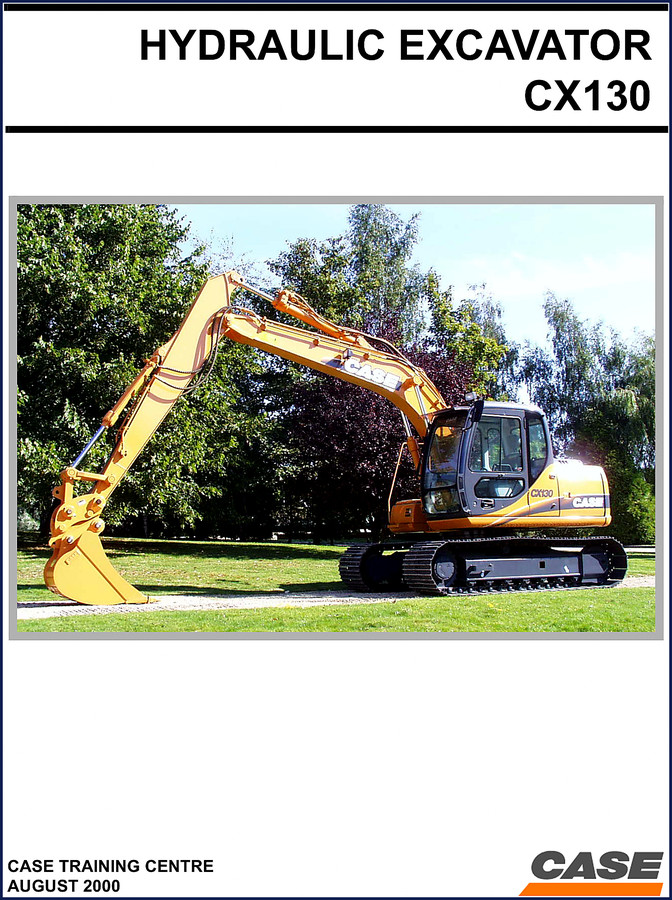
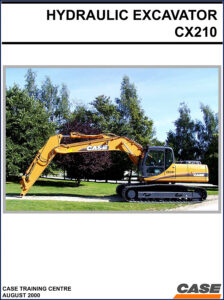
Case CX130 2000 Training Manual – What You Get When You Stop Guessing
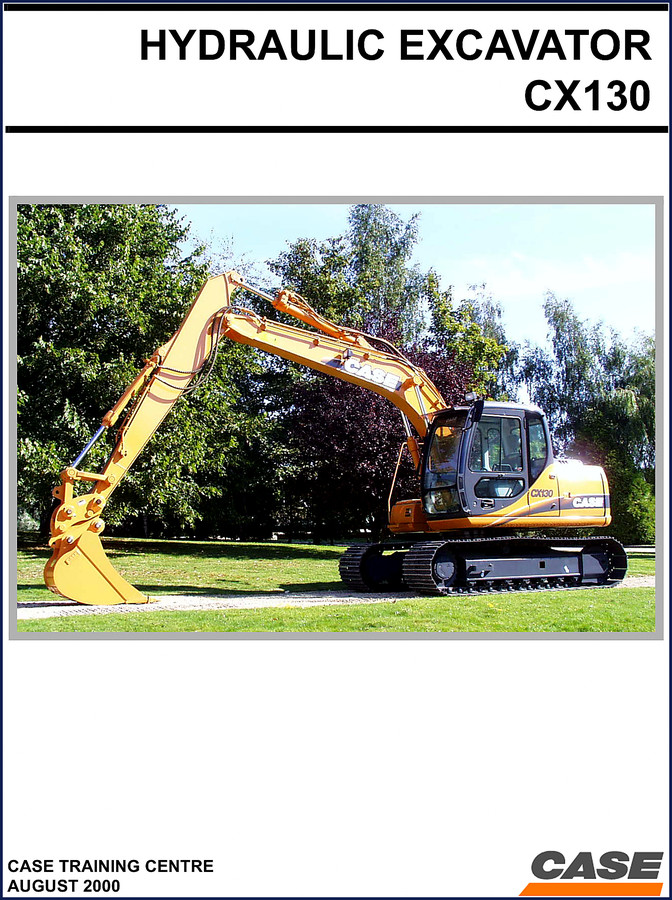
You got a CX130 on the lot with hydraulic leaks, worn bearings, and you’re guessing at clearances? I’ve seen this too many times. The Case CX130 2000 Training Manual puts factory specs in your hands instead of guesswork. 262 pages of Case training centre material, not aftermarket garbage. This is what the Case training centre handed out in August 2000 – the real deal.
General Information: Cleaning and Inspection from the Factory
Page 5 covers the basics that most guys skip. Clean all metal parts except bearings with solvent or steam – no caustic soda, they’re specific about that. After cleaning, dry and oil everything. Clean oil passages with compressed air. Bearings get cleaned separately and air-dried. DO NOT dry bearings with compressed air – that’s a direct warning from the manual. That kind of detail keeps your rebuild from failing inside 100 hours.
Bearings and Needle Bearings: What the Manual Specifies
Needle bearings get their own procedure. Before pressing new ones into a bore, remove any metal protrusions. Then put petroleum jelly on both inside and outside diameters before pressing. That’s the difference between a bearing that seats correctly and one that binds after a week. The training manual covers inspection of all bearings for loose fit or rough action – replace them if you feel any drag. You don’t get that level of specificity from a generic repair PDF.
Oil Seals, O-Rings, and Gaskets: Factory Replacement Rules
Every time you crack a joint on a CX130 you should replace the seals. Page 5 says always install new oil seals, O-rings, and gaskets. Put petroleum jelly on seals and O-rings before fitting. That prevents tearing during installation and ensures a leak-free joint. Skimp on that and you’ll be pulling the cylinder back off in a month.
Service Parts and Lubrication: Use Genuine Case Only
Warranty is void if you slap in aftermarket parts. The manual states failures due to non-genuine Case replacement parts are not covered. Same for lubricants – only use oils and lubricants specified in the Operator’s or Service Manuals. That’s page 5 again. If you’re working on your own equipment, you can ignore warranty, but the manual still tells you which parts and fluids keep the machine running right. For basic understanding of manual transmission theory, refer to Manual Transmission on Wikipedia – the CX130’s drivetrain is similar in principle.
Who Needs This Training Manual?
Home garage enthusiasts who own a CX130 and want to do their own undercarriage work. Shop owners who need a reference for their techs. Beginners who are tired of watching YouTube videos that skip the torque specs. This manual assumes you read it before you touch the machine. It’s not a step-by-step novel – it’s a training document that tells you how Case expects the work to be done. If you’ve ever had a track adjuster blow because you didn’t know the correct seal face orientation, this manual is for you. The 262 pages cover everything from general inspection to specific component service. Case CX160, CX210, CX240, CX130 2001 Training Manual – OEM Specs is a related document if you need later model data.
OEM Source vs Aftermarket Copies
I’ve seen third-party manuals with wrong torque values and missing pages. This is a direct scan of the Case Training Centre document from August 2000 – not a reprint, not a rewritten version. You get the exact cleaning procedures, bearing inspection criteria, and genuine Case parts requirements that the factory teaches. For operator-level guidance, check Case CX160, CX130 Operators Manual – OEM Factory Document. If you need electrical diagnostics for the CX130, Case CX210 CX130 2000 Training Manual – Electrical Diagnostics covers the wiring schematics and sensor checks.
Another external reference: Manual Transmission – the same Wikipedia article has basic gearbox theory that applies to the CX130’s transmission. Always cross-reference with the factory manual for actual specs.
Frequently Asked Questions
- Does this manual cover the entire CX130 hydraulic system?
- Yes – hydraulic system cleaning, inspection, and seal replacement are covered. Full system procedures are in the training manual.
- Can I use this for maintenance on other Case models?
- This manual is specific to the CX130. While some general cleaning and bearing procedures apply to other hydraulic excavators, torque specs, part numbers, and hydraulic circuit details are unique to the CX130. Using it on a CX160 or CX210 could lead to wrong clearances or seal sizes. Stick with the correct model manual. For example, Case CX160, CX210, CX240, CX130 2001 Training Manual – OEM Specs covers later models if you need cross-reference.
Stop wasting time on forum advice and generic PDFs. Download the Factory Manual and get the training that Case built for their own techs.
Reviews
There are no reviews yet.