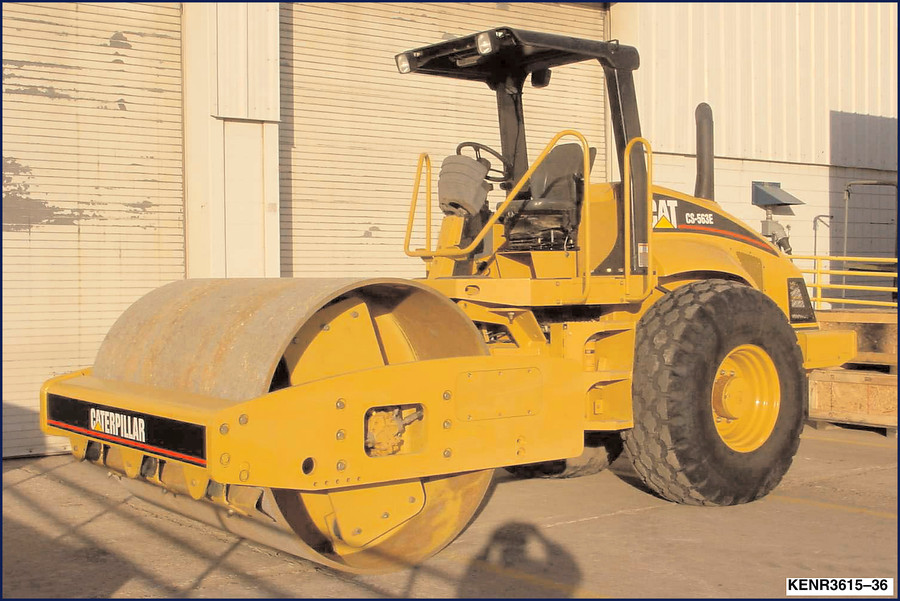
Caterpillar CS-563E, 500E Technical Manual – What You Actually Need on the Bench
I’ve seen more missed torque specs on roller drum interlock valves than I care to count. A guy skips the factory data, uses a generic number, and then the machine won’t hold pressure. That’s why this Caterpillar CS-563E, 500E Technical Manual exists. It’s 51 pages of original OEM documentation – not a third-party rehash. The kind of book you keep open next to the hydraulic test kit.
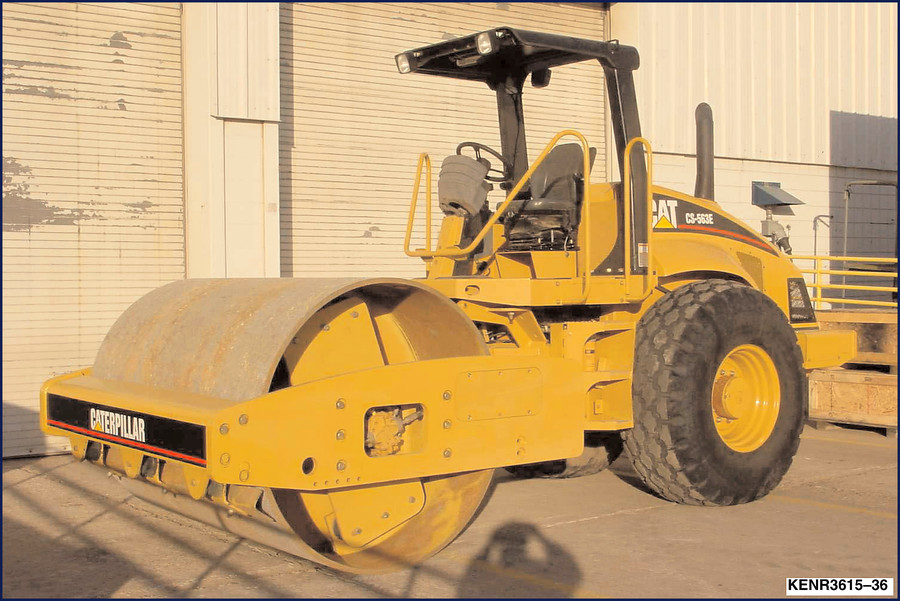
Charge Pressure and System Pressure – Page 2 Tells the Story
Page 2 breaks down the hydraulic circuit: drum propel pump (6) feeds the drum interlock valve (8). You’ve got system pressure (AA), first pressure reduction (AE), charge pressure (AB), sump (AC), and activated components (AD). If you need charge pressure for the 500E, that’s where you look. The manual doesn’t assume you know which line is which.
Propulsion Range Switch – Wiring That Matters
Page 4 covers the 500E PROPULSION SYSTEM and the PROPULSION RANGE SWITCH. Positions 2, 5, 1, 4, 6 – each one ties to a specific speed range. If the machine won’t shift, you check the switch continuity against the diagram. No guessing. You’ll also find the thermal bypass valve and return manifold (3) on page 2, right next to the oil cooler tank (2).
Vibration Data at Hand – V.P.M. x 100
Page 3 shows a vibration chart: V.P.M. x 100 on the axis, with values from 5 to 40. That’s for diagnosing drum vibration issues. If the CS-563E is shaking harder than it should, you compare the reading to the chart. The manual gives you the factory acceptance range.
Does This Manual Include Assembly Torques?
It does – but you need to follow the book. The PDF bookmarks (if present) lead you to the torque tables. For the drum interlock valve and propel pump lines, always use OEM specs. Aftermarket manuals often list generic values that don’t account for the 500E’s dual-stage pressure reduction.
Why the 51-Page Length Matters
Short manuals are either incomplete or hyper-focused. This one is the latter – it covers the propulsion and hydraulic systems for both models. For the CS-563E, you get the same hydraulic diagrams and switch logic. No coverage of the engine or cab interior, so if you need piston specs or the full machine tear-down, look at the related manuals below.
Related Manuals:
- Caterpillar CP-563E CS-563E CS-573E CS-583E 2002 Service Manual
- Caterpillar 3116, 3044C, 3114, 3408 Technical Manual | Piston Specs
- Caterpillar 30A1, 4KC1, 8SZ1, 2WB1, 2WN1 1999 Technical Manual
For background on hydraulic systems and Manual Transmission diagnostics, check the external resources. This manual is specific to the propulsion circuit – it won’t help with transmission tear-down beyond the range switch.
FAQ
- What models does this manual cover?
- It covers the Caterpillar CS-563E and the 500E. Both are compact rollers with similar hydraulic propulsion systems.
- Will this manual help me troubleshoot a vibration issue on the CS-563E?
- Yes. Page 3 includes a vibration chart measured in V.P.M. x 100. You can compare your readings to the factory curve. If the vibration exceeds 20 V.P.M. at normal operating speed, you need to inspect the drum bearings and the interlock valve circuit. The manual also shows how the charge pressure (AB) feeds the propel pump, so low charge pressure can cause vibration. Check the thermal bypass valve (3) for plugging – that’s a common problem on high-hour machines. The manual doesn’t replace a fully loaded engine overhaul manual, but for the propulsion system it’s the only OEM source you should trust.
You can get this document now and keep it on your tablet next to the roller. Download the Factory Manual and stop relying on forum guesses.

Reviews
There are no reviews yet.