Cummins ISB, ISBe2, ISBe3, ISBe4, QSB4.5 2014 Troubleshooting Manual
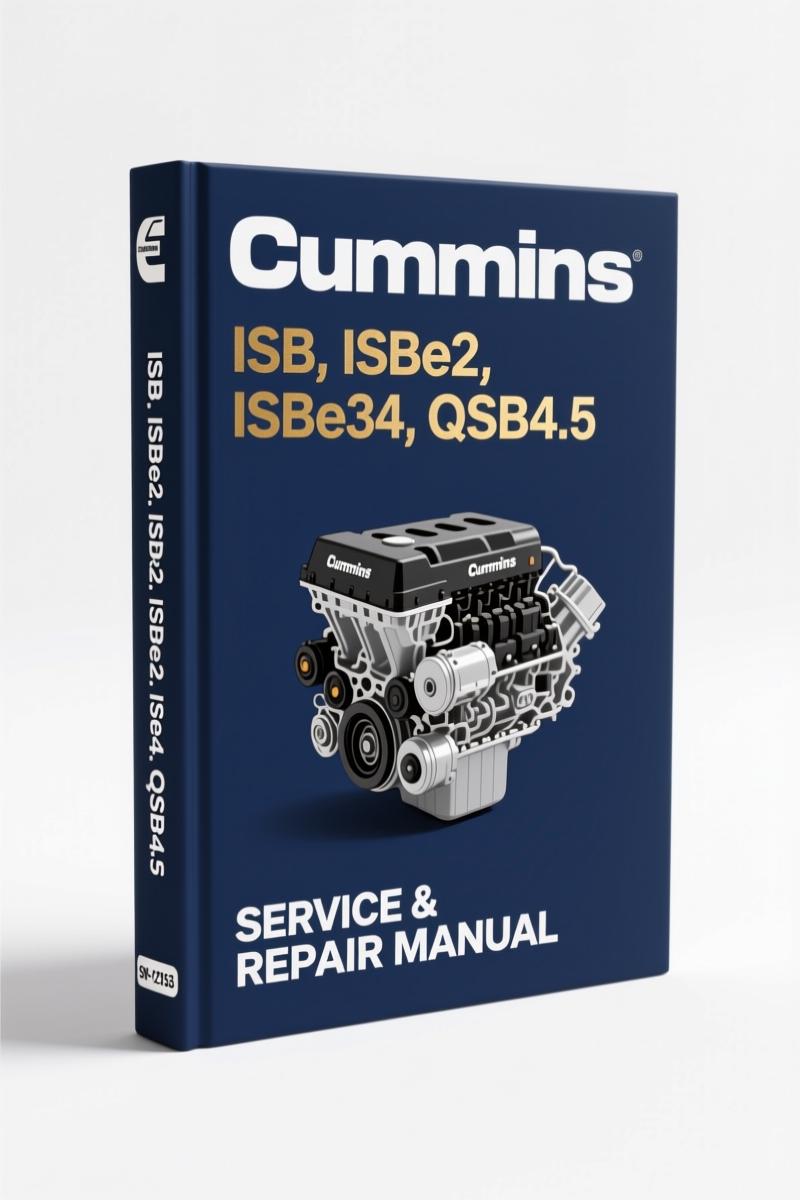
I’ve seen too many techs waste a Saturday chasing a ghost because they relied on some free PDF from a forum. The Cummins ISB, ISBe2, ISBe3, ISBe4, QSB4.5 2014 Troubleshooting Manual – 824 pages of factory procedure – is what you need. Not a reprint. Not a scan of a scan. This is the same binder you’d get if you walked into a Cummins dealer and asked for the real thing. That matters when you’re staring at a CM850 that won’t clear a code.
Coolant Temperature Above Normal – Factory Diagnostic Flow
Flip to page 1 of the symptom table. You see a list: low coolant level, collapsed radiator hose, high or low engine oil level, too much fuel, dirty engine exterior, loose fan drive belt, radiator shutter controls. Each one has an “OK” arrow pointing to the next check. That’s the kind of logical step‑down you don’t get from a third‑party manual. The manual expects you to verify each cause in order, not jump to conclusions. If you’ve ever swapped a thermostat only to find a loose belt, you know why this sequence saves you hours.
CM850 Electronic Control System: Which Fault Codes Are Listed?
The table of contents shows “Troubleshooting Fault Codes (FC1669 – FC)”. That means fault code coverage starts at FC1669 and goes through the entire FC series. For the CM850 system, that covers everything from injector circuit faults to ECM power supply issues. The manual organizes them numerically, so when a code pops up, you find it fast. No cross‑referencing a forum thread. No guessing what “miscellaneous” means. Page references lead you straight to the correction.
3 Reasons to Choose OEM Documentation Over Third‑Party Reprints
First, the torque specs. Aftermarket manuals often round or copy old data. This one prints the same numbers Cummins uses on the assembly line. Second, the wiring diagrams. The CM850 diagrams in this manual are color‑coded and show pin‑by‑pin voltage readings. Third, the safety warnings. The Foreword says “Read and follow all safety instructions” and points you to Section i. A reprint might skip those pages entirely. You want the full document, not a stripped version.
Section i – Introduction: Safety and Manual Navigation
The Foreword states this manual is “organized to guide a service technician through the logical steps of identifying and correcting problems related to the engine.” It also tells you component rebuild procedures are in the separate engine shop manual – this one is for chassis troubleshooting. Section i includes instructions on how to use the manual, general safety warnings, and a list of required special service tools. If you skip this section, you miss the tool list. Don’t be that guy who starts a job without the right adapters.
Get the Diagnostic Procedure from the Symptom Table
Instead of reading code descriptions alone, the manual gives you symptom‑based entry points. Example: “COOLANT TEMPERATURE ABOVE NORMAL”. You start at the top of the table, check your coolant level, verify the hose isn’t collapsed, then move to oil level, fuel rate, engine cleanliness, belt tension, and shutter controls. Each step has a “Refer to Section” note. That means you don’t flip pages randomly – you follow the thread. This is the kind of structure that keeps a rookie from replacing parts that weren’t broken.
Related manuals for other engine variants: Cummins ISB Engine 2001 Diagnostics Manual”>Cummins ISB Engine 2001 Diagnostics Manual, Cummins ISB and QSB5.9 Troubleshooting Manual”>Cummins ISB and QSB5.9 Troubleshooting Manual, Cummins ISB QSB ISC QSC ISL QSL Troubleshooting Manual”>Cummins ISB QSB ISC QSC ISL QSL Troubleshooting Manual.
This manual covers the engine only – not the vehicle’s Manual Transmission”>Manual Transmission or driveline. If you’re chasing a powertrain vibration, check the Manual Transmission”>Manual Transmission specs from the vehicle OEM. Engine faults? Start here.
- Does this manual include wiring diagrams for the CM850?
- Yes.
- How does the fault code section work? I’m used to reading generic OBD2 P‑codes.
- This manual uses Cummins factory fault codes, not generic SAE codes. The TOC lists “Troubleshooting Fault Codes (FC1669 – FC)”, so FC‑series codes are covered. Each fault code has a dedicated page with a description, possible causes, and a step‑by‑step diagnostic flow. You won’t find “P0219” here; you’ll find “FC1669” with a circuit test procedure. If you need to convert, cross‑reference with a Cummins‑specific scan tool output. The manual gives you the exact resistance values, voltage checks, and connector pin locations for each code. That level of detail is why a professional can clear a hard fault in under an hour instead of chasing ground paths all afternoon.
This is the manual you want on your bench. Don’t settle for a knock‑off that might have the wrong spec for your ISBe4 or QSB4.5. Download the Factory Manual and get the 2014 edition that matches your engine.
Reviews
There are no reviews yet.