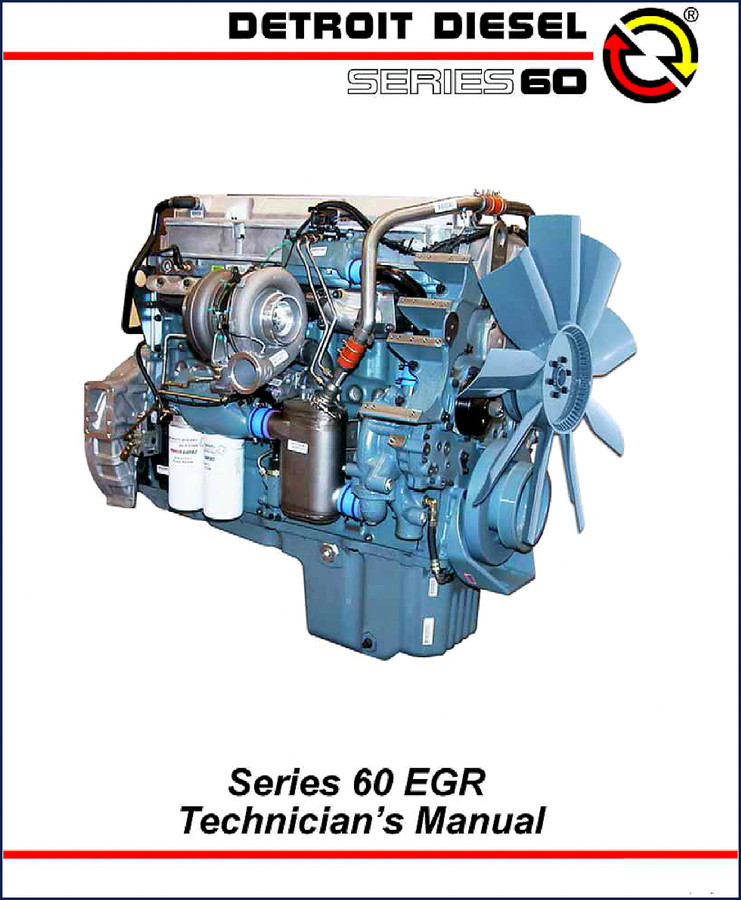
Detroit Diesel Series 60 Technical Manual – What You Need on the Bench
You’re staring at a Series 60 with an EGR code. The generic manual you bought off some forum says “check sensor voltage” but doesn’t tell you what pin on the VPOD connector to probe. That’s lost billable time. This Detroit Diesel Series 60 Technical Manual is the factory documentation – 195 pages of exactly what the dealer techs use. No rewrites, no third-party guesses.
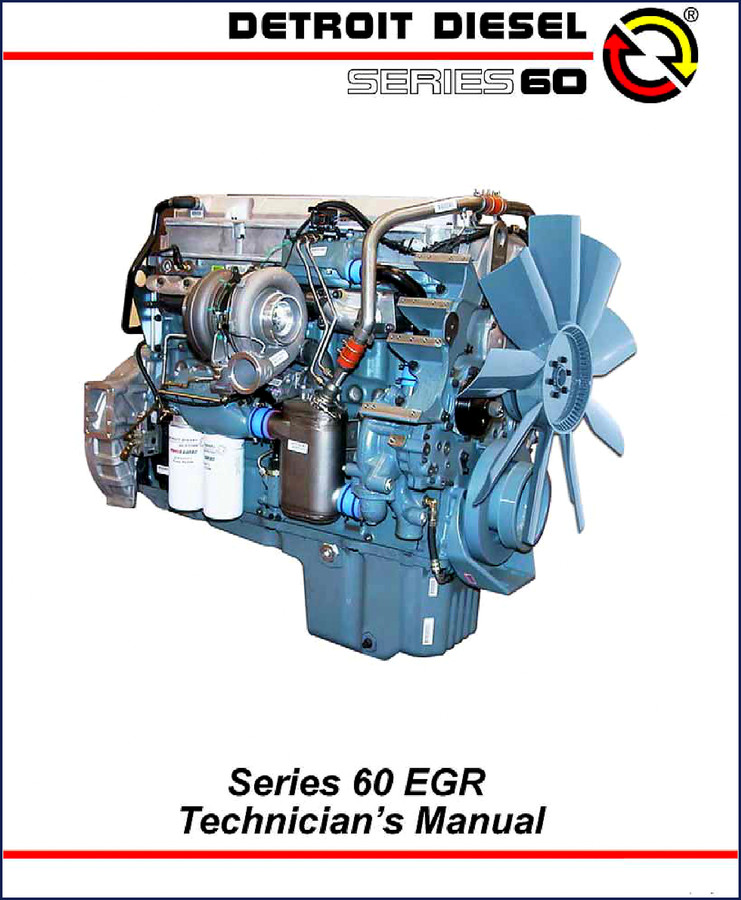
Detroit Diesel Series 60 Technical Manual: What’s Inside
The table of contents splits into ten chapters plus five appendixes. Chapter 1 is the introduction – but skip that and go straight to Chapter 2: DDEC IV Components. That’s where you find the ECM pinouts, VPOD pressure specs, and the EGR valve actuator logic. Chapter 3 covers operational modes – cold start, warm-up, cruise, and what triggers a derate. If you’ve ever had a 6W93 code and no idea why the engine wouldn’t rev past 1200 rpm, that chapter is your answer.
Chapter 4 lists all DDEC IV diagnostic codes with the exact failure criteria. Not the vague “EGR flow insufficient” you get from aftermarket scanners – this tells you the pressure delta threshold in inches of mercury and the time window for the fault to set. That’s the difference between replacing a valve and finding a plugged EGR cooler.
Chapters 5 through 7 walk you through DDEC IV testing with DDDL snapshots. Chapter 5 gives the step‑by‑step for key‑on engine‑off and engine‑running tests. Chapter 6 explains how to capture a snapshot, and Chapter 7 shows you three real snapshot examples with annotated pressure traces. If you want to understand what the ECM sees, those pages are worth the price alone.
DDEC IV Diagnostic Codes – What They Tell You
Fifty‑some pages of code tables. Each code has the SAE J1587 number, the lamp status, and the troubleshooting tree reference. For example, code 45 – EGR valve position error – links to the VPOD test procedure in Chapter 5. You don’t flip back and forth guessing. The manual cross‑references everything. I’ve seen a shop swap three ECMs on a 6V92 because they didn’t have the factory code definitions. That’s thousands in parts for a 15‑minute wire check.
Appendix D includes service information letters – factory bulletins about known issues and field fixes. One of those bulletins might save you from chasing a ghost problem that was solved by a harness reroute in 2004.
Operational Modes: Cold Start, Warm-Up, and Cruise
Chapter 3 explains the four operational modes: Startup, Warm‑Up, Normal, and Derate. Each mode has a different EGR flow target and a different VPOD duty cycle. The manual spells out the transition conditions – coolant temperature, engine speed, time since start. If you’re troubleshooting a rough idle that only happens in Warm‑Up mode, you need to know that the EGR valve is commanded to 80% open below 60°F coolant. That’s on page 3‑12. Guesswork gets you a tow bill.
DDEC V Testing: Step-by-Step from the Factory
Chapters 8 through 10 cover DDEC V components, codes, and testing. Same density as the DDEC IV sections but with the CAN‑based protocol and the different connector pin assignments. If your shop works on both generations, this manual is one book that covers both – no separate purchase for a V edition. The testing chapter includes barometric pressure sensor checks, turbo boost sensor voltage curves, and the exhaust pressure sensor correlation tests. All with the factory pass/fail criteria.
Appendix B has the full wiring schematics – DDEC IV and V, both standard and EGR harnesses. The diagrams are the same ones Detroit Diesel issued to dealers. I’ve used them to pin out a swapped injector harness that was causing a misfire on cylinder 3. Took me twenty minutes. Without them, you’d be continuity‑checking every wire.
Wiring Schematics and Appendixes: Tools You Need
Appendix A is the acronym list – handy if you’re new to DDEC and don’t know what VPOD, VEP, or EGRTP stand for. Appendix C is a diagnostic questionnaire: a checklist to run through before you plug in a scan tool. It asks about coolant loss, oil consumption, cruise history. That sheet alone has caught more neglected maintenance than any code reader.
This manual is 195 pages, spiral‑bound in the original print. If you need the companion base engine overhaul data, grab the Detroit Diesel Series 60 Technical Manual separately. For the DDEC software–specific troubleshooting, the Detroit Diesel Series 60 Technician’s Manual overlaps these chapters but adds the full fault tree logic. And if you’re deep into V electronics, the DETROIT DIESEL SERIES 60 DDEC V Troubleshooting Manual expands the CAN diagnostics. Want a primer on how these engines work? Read this Wikipedia article on diesel engines to understand the two‑stroke ancestor, but this manual is all four‑stroke EGR.
Specs are specs.
I’ve torqued head bolts on more Series 60s than I care to count. The difference between a come‑back and a job that stays fixed is using the right data. This manual gives you the right data. No fluff, no reprints, no third‑party interpretations. If you’re a shop owner, put it in the bay. If you’re a DIY guy with a truck that has a DDEC IV or V, you’re going to need it the first time you get a code 46. Download the Factory Manual and stop burning diag time on incorrect specs.

Robert T. –
Great workshop guide. It is very easy to read on my laptop without losing quality. It assisted me to troubleshoot my Detroit Diesel Series transmission. Saved my repair job! Thanks.
Alex K. –
Great factory service manual. It is easily zoomable on my laptop without blur. Contains detailed wiring diagrams for Detroit Diesel. Great value for money.