Deutz Fahr Agrovector 2013 Service Manual
I’ve pulled more wrenches on Deutz Fahr equipment than I care to count, and I’ve seen aftermarket manuals that couldn’t tell you the right way to start the engine. The Deutz Fahr Agrovector 2013 Service Manual is the real thing – 144 pages straight from the factory. This isn’t some reprinted copy. It’s the original OEM document that came with the machine, and it covers everything from hazard classification to the 250-hour lubrication schedule. If you run an Agrovector, you need this on the seat box.
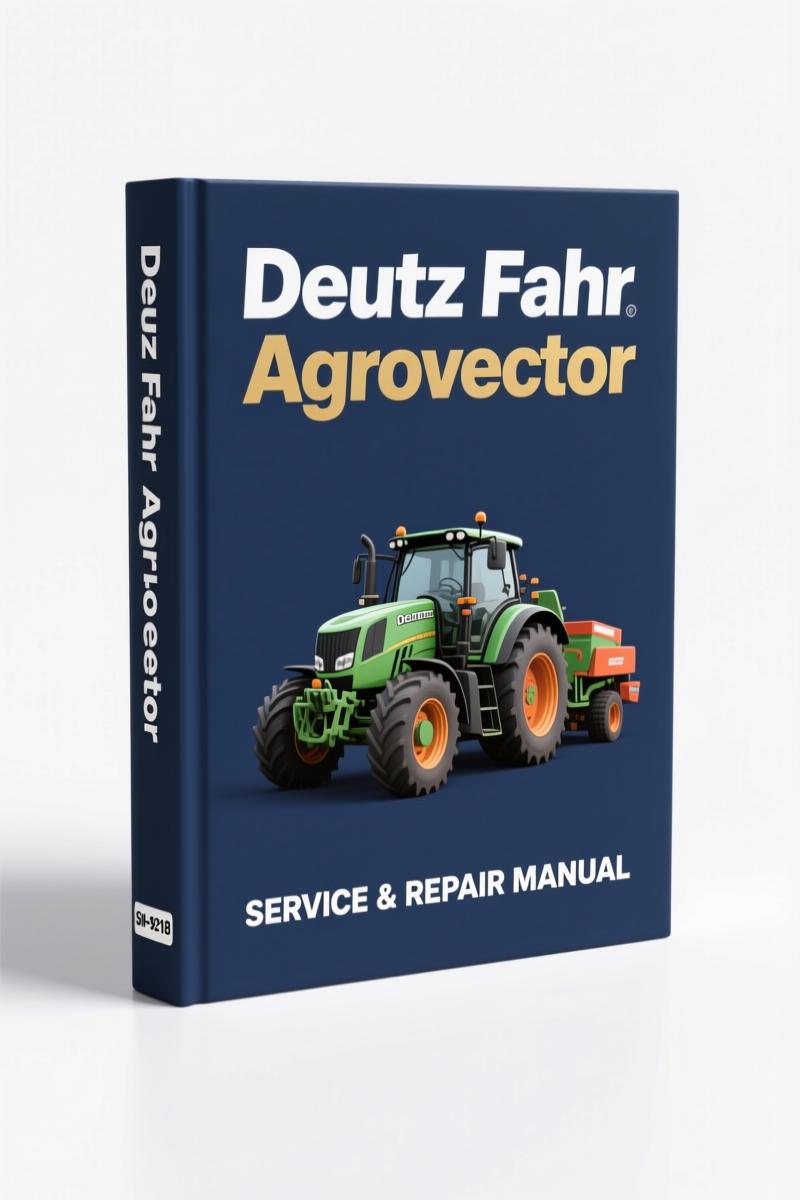
Deutz Fahr Agrovector 2013 Service Manual: What You Get
Section 1 – General Safety Practices alone is worth the download. It covers electrical hazards (yes, that’s your “Electrical” content right there), tip-over hazards, pinch points, and chemical hazards. If you’re training a new operator, this section is mandatory reading. Section 2 dives into pre-operation inspection: walk-around checks, safety decals, warm-up procedures. Skip that and you’re asking for a load to drop.
Safety First: Section 1 General Safety Practices
The hazard classification system on page 4 spells out signal words and what they mean. The manual doesn’t assume you know the difference between a warning and a danger. It lists specific hazards for the Agrovector – load falling, driving on slopes, lifting personnel. I’ve seen shops ignore these and get OSHA visits. This section alone makes the manual worth having. The OEM factory data is consistent across all 144 pages, no guesswork.
Pre-Operation Inspection: Don’t Skip Section 2
Section 2.1 – Pre-Operation Check and Inspection gives you a checklist. Section 2.3 – Walk-Around Inspection tells you exactly what to look at. If you’re a home garage enthusiast running a telehandler, you might think you can go by feel. You can’t. The manual lists the safety decal locations and what each one means. It also details warm-up and operational checks. Do it by the book every time – that’s how you avoid picking up a load and having the boom drop because you missed a hydraulic leak.
Load Handling Procedures for the Agrovector
Section 4 – Operation covers starting the engine, battery boosted starting (jump-start procedure), normal operation, and shut-down. But the real meat is in non-suspended and suspended load handling. The manual walks through lifting a load safely, transporting, leveling, placing, and disengaging. For anyone working in agriculture or construction, knowing how to handle a suspended load (CE) is critical. The load stability indicator system is explained in Section 8. If that indicator starts blinking and you don’t know why, the manual tells you what to do.
7 Systems Covered in the Maintenance Section
Section 7 – Lubrication and Maintenance is where this manual really earns its keep. It includes the 10-hour, 50-hour, 250-hour, 500-hour, 1000-hour, and 1500-hour maintenance schedules. The 250-hour lubrication schedule shows exactly which grease points to hit. Operator maintenance instructions cover fuel system, engine oil, hydraulic oil, tires, air intake, cooling system, battery, brake system, and windshield washer system. That’s 7 systems with step-by-step procedures. No guesswork – just OEM instructions.
Does This Manual Cover Electrical Systems?
Section 1.3 includes a specific Electrical Hazards subsection, and Section 3 – Controls and Indicators covers the instrument panel, joystick, and LSI (Load Stability Indicator) override switch. There’s no full wiring diagram in this manual – that’s in the workshop manual – but the operation and safety manual gives you enough to understand what each control does and how to respond to electrical malfunctions. For deeper work, get the SAME DEUTZ FAHR 26.6 30.7 Workshop Manual and the FAHR HD 300 Parts List. The SAME Deutz FAHR EXPLORER3 90 & 105 2012 Operators Manual is a similar reference for other models.
Source Authenticity: OEM vs Aftermarket
Aftermarket manuals often skip the safety sections or condense them. This one has nine hazard categories in Section 1 alone. The specs – capacities, tire sizes, performance data in Section 9 – are factory-verified. If you need to know fluid capacities, see page 73 (Section 9.1). The manual even includes the declaration of vibration and noise emission levels for CE compliance. That’s data you won’t find in a generic PDF. If you’re working on a transmission rebuild, you’ll need a Manual Transmission specific guide – this manual doesn’t cover internal transmission repair, but it does cover operation and routine service. For Manual Transmission basics, that’s a different document.
FAQ
- Is this the workshop manual or the operation manual?
- It is the factory Operation & Safety Manual, but it includes all maintenance schedules and specs.
- Does this manual cover engine rebuild procedures?
- No. This manual focuses on safe operation, pre-op checks, controls, load handling, and scheduled maintenance (lube, fluid changes, inspections). For engine or transmission internal repair, you need the separate workshop manual. But for daily use and routine service, this is the correct document. The 144 pages include Section 7 with 250-hour and 1000-hour service intervals, fluid capacities, and tire specs. Don’t expect torque values for head bolts – that’s not here. Expect load charts, safety warnings, and cab controls.
Download the factory manual and keep it with the machine. The OEM data is accurate, the sections are numbered, and the procedures are tested. Stop using third-party reprints. Get the real thing.

Robert T. –
Great workshop guide. It is easily zoomable on my tablet without blur. A must-have for any Deutz Fahr Agrovector mechanic doing maintenance. Saves me a lot of time.
David M. –
Great buy! The PDF is very clear. It helped me to fix my Deutz Fahr Agrovector engine. Saves me hundreds of money.
workshop_guy –
Great factory service manual. Quick download after checkout. Every torque spec is included for Deutz Fahr Agrovector. I will recommend this shop to others.