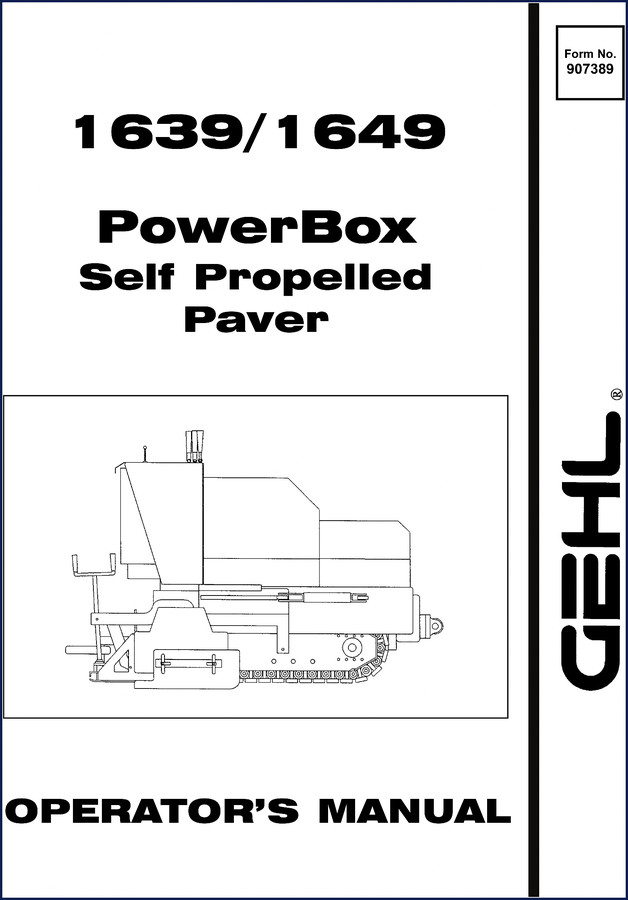
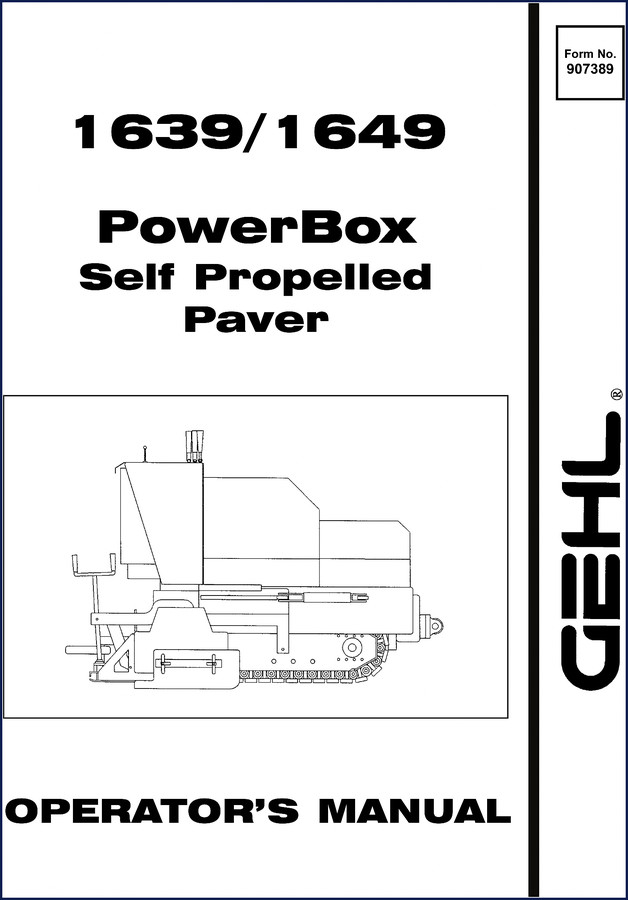
You’ve got a GEHL 1639, 1649 Operators Manual in your hands? Good. The shop floor is where torque specs live or die, and the 1639 and 1649 Power Box pavers demand factory numbers – not some aftermarket guess. This 72-page document is the real deal from GEHL, not a reprint.
The manual breaks down into clear chapters: Introduction, Specifications, Check Lists, SAFETY, Controls & Attachments, Operation & Adjustments, Lubrication, Trouble Shooting, Service & Storage, Decal Locations, and Maintenance. Every section is written for the guy turning wrenches, not the marketing department. Torque values? They’re in a dedicated section – you’ll find them referenced throughout the service chapters.
Torque specs protect your equipment. One wrong number on a steering arm bolt and you’re pulling a replacement out of the parts room. This manual gives you the OEM values for every critical fastener on the 1639 and 1649.
If you need part numbers to order, pair this manual with the GEHL 1639 1649 Parts Catalog for a complete reference. For other GEHL equipment, check the GEHL RS10-44 2009 Operators Manual – Factory Specs & Procedures or the GEHL RS10-44, RS10-55, RS12-42 2011 Operators Manual – Factory Specs.
GEHL 1639 and 1649 Operators Manual: What You Get
Every chapter is laid out with the technician in mind. The table of contents lists 11 chapters plus an alphabetical index – you find what you need without flipping through a binder. The Specifications chapter gives you engine data, hydraulic capacities, and dimensions. The Check Lists chapter is for daily, weekly, and monthly inspections – skip this and you’ll miss a dry joint.
Torque Specifications: The Difference Between a Tight Joint and a Leak
There is a dedicated Torque Specifications section. It lists OEM values for all critical fasteners – engine mounts, hydraulic lines, screed hardware, and drive components. Without these numbers, you risk stripping threads or causing oil leaks that cost time and money. The manual also references torque values in the Service & Storage chapter when disassembling components like the auger assembly. Always use a calibrated torque wrench and follow the tightening sequence given.
Does This Manual Cover Lubrication and Troubleshooting?
Yes. Chapter 7 (Lubrication) details every grease point, oil type, and interval. Chapter 8 (Trouble Shooting) is where you’ll save real time on the job. Instead of chasing a no-start condition by replacing parts, the manual walks you through a logical diagnostic flow – check fuel system, electrical connections, sensors. Each symptom has a list of possible causes and corrective actions. For example, if the paver won’t steer straight, the manual tells you to check the steering cylinder linkage for wear before touching the control valve. That kind of specific guidance separates a factory manual from a generic one. The trouble shooting chart covers engine, hydraulic, electrical, and drive issues.
11 Chapters of Factory-Documented Procedures
From the warranty inside front cover to the maintenance schedules in Chapter 11, this Operators Manual gives you the same information a dealer technician gets. The safety chapter (Chapter 4) is not filler – it covers proper operation, hazard decals, and precautions specific to the 1639 and 1649 Power Box pavers. I’ve seen guys skip safety and end up with a hand in the auger. Don’t be that guy.
SAFETY: The Chapter That Keeps You Employed
Chapter 4 includes warnings for maintenance procedures, like when to disconnect hydraulic lines before removing components. Page references in the service chapter tie back to these safety notes. Understanding the drive system is different from a Manual Transmission – this paver uses hydrostatic drive. The hydraulic motor is not a Manual Transmission, but the fluid flow principles are similar. Pay attention to the torque values when reassembling the hydrostatic loop.
- Is this the official factory manual for the 1639 and 1649 models?
- Yes, OEM factory manual for both models.
- What torque values are included in this manual?
- The Torque Specifications section lists OEM values for all critical fasteners on the 1639 and 1649 – engine mounts, hydraulic lines, screed hardware, and drive components. Without these numbers, you risk stripping threads or causing oil leaks that cost time and money. The manual also references torque values in the Service & Storage chapter when disassembling components like the auger assembly. Always use a calibrated torque wrench and follow the tightening sequence given. Page references are included for each assembly, so you can find them fast.
- Does the manual cover routine maintenance like oil changes?
- Chapter 7 (Lubrication) and Chapter 9 (Service & Storage) detail all maintenance intervals, grease points, and fluid specifications. You’ll find checklists in Chapter 3 as well.
- Can I use this manual for other GEHL models?
- No. This is model-specific for the 1639 and 1649 Power Box Pavers. Using it for other models will give you wrong specs. Get the correct manual for your machine.
Stop guessing. Download the Factory Manual.

Reviews
There are no reviews yet.