Skip to content
Sale!

GMC Safari 1999 User Manual – Factory Owner’s Guide

Original price was: $10.87.Current price is: $7.99.

Factory 1999 GMC Safari owner’s manual – 392 pages covering seats, features, maintenance, and roadside procedures from General Motors.

SKU: 2945236015085 Categories: , , Tags: , , Brand:

GMC Safari 1999 User Manual – Factory Specs and Owner Guidance

I’ve been turning wrenches since before some of you were born, and I’ve seen what happens when someone trusts an aftermarket summary over the factory book. That’s why I’m telling you straight: if you own a 1999 GMC Safari, this GMC Safari 1999 User Manual is what you need stuck in the glovebox and on your workbench. It’s 392 pages of the exact information General Motors published when this van was new – not some watered-down reprint.
1999 GMC Safari Owner's Manual cover showing vehicle and manual title

Seats and Restraint Systems: Factory Safety Instructions

The seats and restraint systems chapter (1-1) tells you how to use the safety belts properly and explains the air bag system. Page 1-1 covers the correct belt routing and the air bag warning symbols. If you’re installing a child seat, the manual shows the exact latch positions. Ignoring those can get a child hurt.

Features and Controls – Starting and Operating Your Safari

Chapter 2-1 explains the ignition switch, transmission shift pattern, and instrument panel. Need to know what that “SERVICE ENGINE SOON” light means? It’s in there. The manual also covers the cruise control buttons and the horn – stuff a generic manual might skip.

Problems on the Road: Step-by-Step Emergency Procedures

Chapter 5-1 covers flat tires, overheating, and what to do if the battery dies. The jacking points are diagrammed so you don’t crush the rocker panel. I’ve pulled more than one van out of a driveway where someone used the wrong jack point. The wheel nut torque specification is right there in the tire change procedure – 100 ft-lbs if memory serves, but check the manual.

Service and Appearance Care – Routine Maintenance Guidelines

Chapter 6-1 tells you how to check the engine oil, transmission fluid, and rear axle lubricant. It gives bulb replacement part numbers and fuse ratings. If you’re tracking down a parasitic drain, the fuse box diagrams save you hours of poking with a test light.

Maintenance Schedule – When to Do What

Chapter 7-1 lays out the intervals for oil changes, coolant flushes, and belt inspections. This is the schedule GM used at the factory. Follow it, and your Safari will outlast the payments. The fluid capacities are listed – use the exact Dexron specified, not a generic substitute.

OEM Authority: Why the Factory Manual Trumps Aftermarket Copies

Aftermarket manuals often skip footnotes and warnings. This one was printed by General Motors in 1998. Page 2 says it includes the latest information at the time of printing. You get the correct procedure for extinguishing a fire under the hood, the proper way to jump-start the battery, and the gear shift pattern for the Manual Transmission version if your Safari has one.

Don’t rely on a third-party reprint. I’ve been burned by aftermarket manuals that had wrong pinouts for the radio connector. With the OEM user manual, you get the same information the dealer tech had when the vehicle was new.

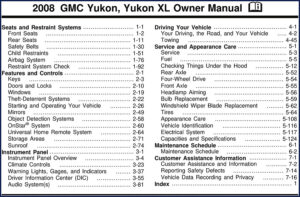
For related year models, check the 2000 GMC Safari Owner’s Manual for any running changes. If you’re working on a different platform, the GMC Canyon 2003 User Manual – Factory Specs & Diagrams might be useful. And for airbag specifics on larger SUVs, see the 2008 GMC Yukon Yukon XL Owner Manual – Section: Airbag System.

One more external reference – if you need to understand the basics of a Manual Transmission system, the internet has plenty of generic articles, but the only spec that matters for your van is the one in this book.

Frequently Asked Questions

Does this manual include torque specifications for the wheel nuts?
Yes, the wheel nut torque is listed in the tire changing procedure. The index will help you find it fast.
Is this a service manual or an owner’s manual?
It’s the owner’s manual. Covers operation, maintenance, and basic troubleshooting.
Does it cover the air bag system in detail?
Chapter 1-1 explains air bag system operation, warning labels, and proper seating positions. The manual includes safety warnings about deploying air bags and what to do after a crash. It also tells you how to disable the passenger air bag if you install a rear-facing child seat – but only if your vehicle is equipped with that feature. This is critical for any owner with children.
How do I find information quickly?
Use the index starting on page 9-1. Topics are alphabetical.

Stop relying on vague internet summaries. The right torque spec, the correct fluid type, the exact procedure – it’s all in one place. Download the Factory Manual for your 1999 GMC Safari and keep it in your toolbox.
Page Count

392

Year

1999

Brand

GMC

Language

English, French

Reviews

There are no reviews yet.

Be the first to review “GMC Safari 1999 User Manual – Factory Owner’s Guide”

Your email address will not be published. Required fields are marked *

Sale!

GMC Safari 1999 User Manual – Factory Owner’s Guide

(3 customer reviews)

Original price was: $12.46.Current price is: $7.99.

Factory 1999 GMC Safari Owner’s Manual – 391 pages of OEM specifications, safety warnings, and maintenance schedules.

SKU: 2945236015086 Categories: , , Tags: , , Brand:

GMC Safari 1999 User Manual – Factory Owner’s Guide

1999 GMC Safari User Manual cover – OEM factory owner's manual for GMC Safari van

If you are working on a GMC Safari 1999 User Manual and need the actual factory documentation instead of some aftermarket summary that leaves out critical warnings, this is the one. The 1999 GMC Safari Owner’s Manual runs 391 pages, published by General Motors in 1999. That means every safety symbol, every diagram, every capacity number was approved by the engineers who built the van. I have seen too many DIYers trust a third-party guide and end up with a misrouted seatbelt or an air bag that won’t deploy because they missed the “Safety Warnings and Symbols” section. This manual puts those warnings front and center, because GM knows a mistake there costs more than a repair bill.

Seats and Restraint Systems – Factory Instructions for Air Bags

Section 1 covers everything from manual front seats to the air bag system. It includes how the air bag system works and what you need to know before servicing it. One thing that gets overlooked: the “Servicing Your Air Bag‑Equipped Vehicle” subsection. If you are removing the steering wheel or dashboard, you need to read this. The manual also details child restraint positioning for both cargo vans and passenger vans. That is the kind of specific guidance you won’t find in a generic manual. For the full coverage of restraint system parts after a crash, check page 1‑26 (data needed for exact page).

Features and Controls: Keyless Entry, Passlock, and All‑Wheel Drive

Section 2 gets into the quirks of the GMC Safari. You get the programming procedure for the keyless entry transmitter, battery replacement steps, and the Passlock theft‑deterrent system. The manual explains torque lock when parking on a hill and how to properly shift into PARK. If your Safari has the all‑wheel drive option, there is a dedicated section for that. Also covered: the engine coolant heater (if equipped) and the tow/haul mode selector switch on the automatic transmission. These details matter when you are preparing for winter or hauling a trailer. For those using a Manual Transmission in another vehicle, this manual does not cover it, but the related 1999 GMC Safari Owner’s Manual companion service manual will have transmission specs.

Problems on the Road – Jump Starting, Towing, and Flat Tire

Section 5 is what you reach for when the van leaves you stranded. The factory procedure for jump starting a GMC Safari includes battery location and cable routing specific to this model. Towing your vehicle: the manual tells you which axle to lift and whether a flatbed is required. Changing a flat tire: the jack points are illustrated. If you are stuck in sand or snow, the “If You’re Stuck” section tells you how to rock the vehicle without damaging the drivetrain. All of this is written with the assumption that you have the factory jack and spare tire tools. Aftermarket manuals skip these details.

1999 GMC Safari User Manual – 391 Pages of Real‑World Guidance

The full table of contents covers eight sections plus a service station guide. Beyond the safety and driving sections, you get Section 6 on service and appearance care: fuel, fluids, bulb replacement, wiper blades, tires, fuses and circuit breakers, and capacities. That includes the specific bulb part numbers and fuse ratings. Section 7 is the maintenance schedule with required inspections and recommended fluids and lubricants. Section 8 has customer assistance information if you need warranty or recall help. This manual expects you to read it before you drive, not after something breaks. The 391 pages are printed in the U.S.A., part number X2010 A. For a deeper dive into another GMC model, check the GMC Canyon 2003 User Manual – Factory Specs & Diagrams which follows the same OEM philosophy.

3 Reasons a Factory User Manual Beats Aftermarket Copies

First: the copyright. This is General Motors Corporation, 1999. Aftermarket reprints often omit the safety warnings and symbols page because it takes up space. Second: the diagrams and labels match your actual vehicle. Third: the maintenance schedule is based on GM’s engineering tests, not a generic interval. If you have a question about the airbag system, refer to the 2008 GMC Yukon Yukon XL Owner Manual – Section: Airbag System for a later generation – but always use the model-specific manual for your year. You need the original document, not a scanned reprint with missing pages.

You need the facts, not fluff. This is that.

FAQ

Does this manual include the air bag system removal procedure?
Yes, Section 1 covers air bag system operation and servicing.
Can I find the torque specifications for the engine or transmission in this owner’s manual?
This owner’s manual, published by General Motors in 1999, provides the factory-recommended fluid capacities, bulb replacement specs, and normal maintenance replacement parts. For exact torque values on major components like cylinder head bolts or transmission fasteners, you would need the GMC Safari 1999 Service Manual. The user manual focuses on safe operation, warning lights, and owner-level maintenance. However, it does include the specifications for fuses, circuit breakers, and capacities (Section 6). If you are doing a repair that requires torque specs, pair this with the service manual. The related Manual Transmission guide from GM can help for other models.

Stop hunting through forum posts and copied PDFs. Get the actual factory documentation that GM assembled for your van. Download the Factory Manual now from AutoRepairManuals and have the complete 391‑page reference on your workbench or tablet.

Page Count

391

Year

1999

Brand

GMC

Language

English

3 reviews for GMC Safari 1999 User Manual – Factory Owner’s Guide

  1. pro_mechanic

    This is just what I needed. The pages are clean and well indexed. Every wiring layout is provided for GMC Safari. Saves me so much money.

  2. Alex K.

    Great buy! Instant access after checkout. It assisted me to fix my GMC Safari transmission. Saved my weekend project! Thank you.

  3. workshop_guy

    Excellent factory service manual. The document looks clean. A must-have for any GMC Safari mechanic doing maintenance. Saves me hundreds of money.

Add a review

Your email address will not be published. Required fields are marked *