Skip to content
Sale!

Hitachi Sumitomo 330, 330LC, 350H, 350LCH, 370MTH Workshop Manual – 752 Pages

Original price was: $79.20.Current price is: $60.00.

Factory workshop manual covering Hitachi Sumitomo 330, 330LC, 350H, 350LCH, 370MTH excavators. Includes OEM torque specs, disassembly/assembly steps, and maintenance standards.

Hitachi Sumitomo 330, 330LC, 350H, 350LCH, 370MTH Workshop Manual

You ever pull a swing motor off a 350H and find aftermarket torque values that are 30 ft-lbs off? I have. That kind of mistake costs you a seal, a bearing, and an afternoon. This Hitachi Sumitomo 330, 330LC, 350H, 350LCH, 370MTH Workshop Manual is the factory document. Not a summary. Not a reprint from someone who never touched a wrench. 752 pages of what Hitachi actually wrote for their technicians. If you work on these excavators, you need the real spec – not a guess.
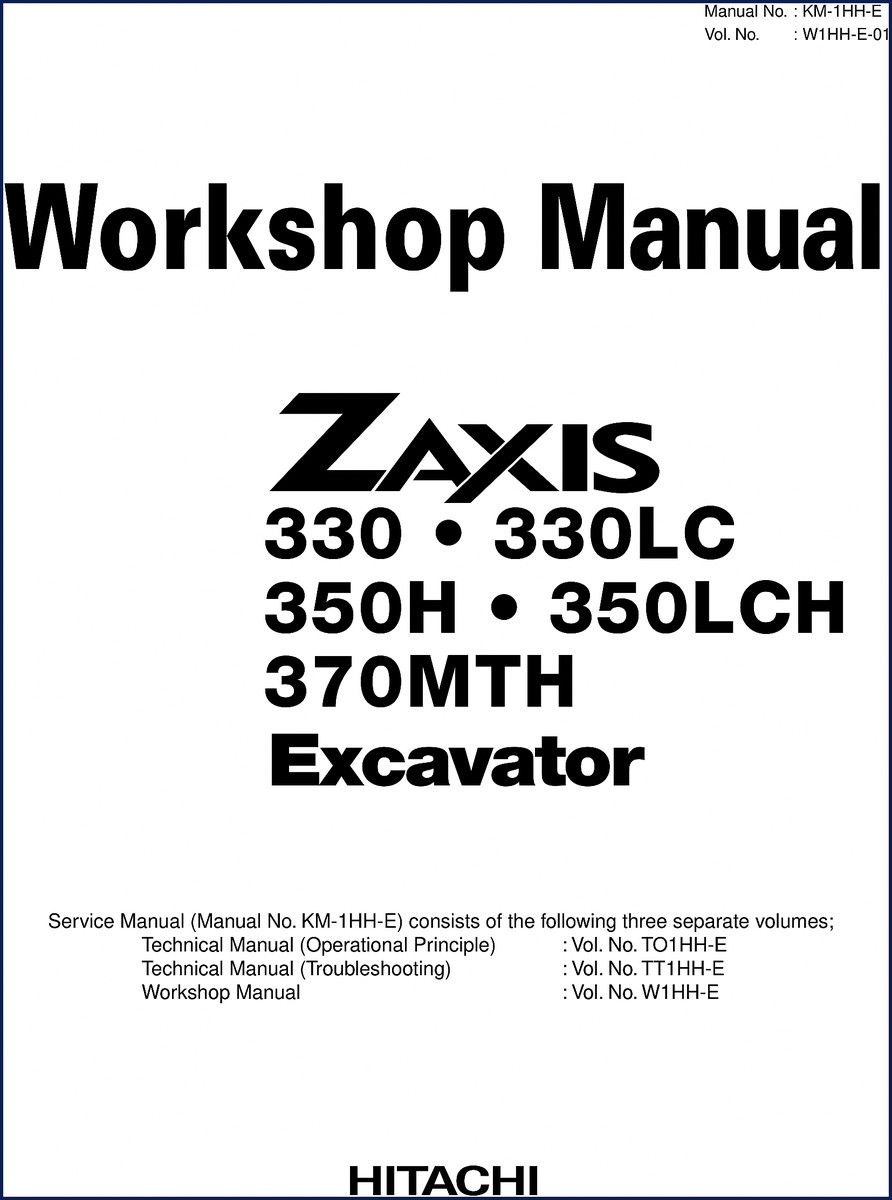
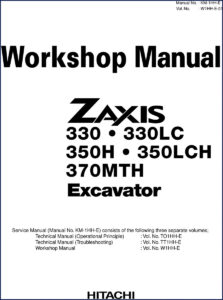
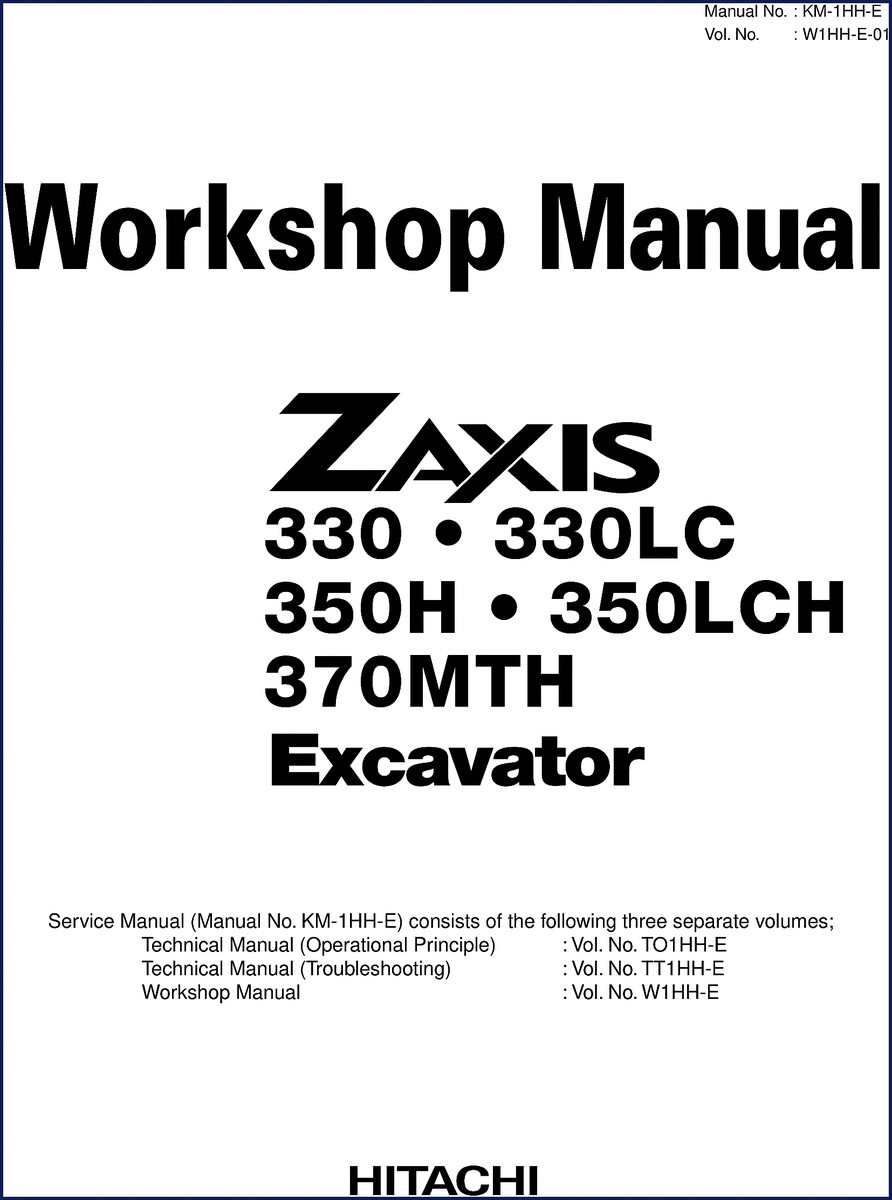
Hitachi Sumitomo 330 350 370 Series Workshop Manual cover - factory OEM service manual

Tightening Torque: Not a Suggestion

Section 1 of the manual devotes an entire subsection to Tightening Torque – TIGHTENING TORQUE SPECIFICATION, TORQUE CHART, PIPING JOINT, and PERIODIC REPLACEMENT OF PARTS. You get the numbers Hitachi stamped into the engineering drawings, not what some forum poster remembered. Torque on hydraulic fittings is not optional. Under-torque a pump discharge line and you get leaks. Over-torque and you crack the flange. The manual tells you exactly what to use for every threaded connection on the machine.

7 Major Sections Covering the Whole Machine

This Workshop Manual breaks down into seven main sections: General Information, Upperstructure (complete cab, counterweight, main frame, pump device, control valve, swing device, pilot valve, pilot shut-off valve, shockless valve, solenoid valve), Undercarriage (swing bearing, travel device, center joint), and more. Each section walks you through remove and install, disassemble and assemble, and maintenance standards. If you are rebuilding the control valve on a 330LC, you have six separate disassembly/assembly procedures to follow depending on the valve variant. That level of detail is why you buy the factory manual.

Pump Device Rebuild: Disassembly and Assembly Steps

The Pump Device chapter covers everything: remove and install the complete pump device, then tear down the main pump, the regulator, and the pilot pump. Every step is documented. You get the maintenance standard tables with wear limits and clearances. The manual does not skip the regulator – that little valve stack controls your pump output pressure. Miss a shim or mix up the springs and you lose power or overspeed the engine. The factory sequence prevents that.

Why Are There Different Procedures for Different Serial Numbers?

Hitachi updated the travel device design mid-production. The manual separates procedures for ZAXIS330, 330LC, 350H, 350LCH up to serial No.31357 and from serial No.31358 onward. Same for the 370MTH – its own travel device section. If you are working on a 350H with serial number 31360 and you use the earlier brake valve assembly steps, you will install parts that do not fit. The manual keeps you straight because it comes from the factory, not a generic aftermarket publisher. Related manual: HITACHI ZAXIS 330/350/370 Workshop Manual covers the same series with different binding.

Swing Device and Travel Motor Procedures

The Swing Device chapter includes removal/installation of the swing device, disassembly/assembly of the swing motor, and the parking brake release valve. The Travel Device chapter for the 370MTH has its own brake valve assembly steps. If you ever get into the center joint, that section is there too. Every hydraulic component – pilot valves (right, left, travel), pilot shut-off valve, shockless valve, solenoid valves – has a dedicated remove/install and disassemble/assemble procedure. The manual even splits pilot valve procedures by serial number and manufacturing date (before March 2003 vs after April 2003). That is what you call manufacturing-specific documentation. For additional reference, see Hitachi Sumitomo 330LC, 350H, 350LCH, 370MTH, ZX330 Technical Manual for troubleshooting and operational principle, and Hitachi Sumitomo SH330 SH330LC 350HD-3B 2006 Workshop Manual – Factory Specs for similar late-model coverage.

Safety and Source Validity – Why OEM?

This manual carries the Hitachi logo and manual number KM-1HH-E. It is part of a three-volume set: Technical Manual (Operational Principle), Technical Manual (Troubleshooting), and this Workshop Manual. The safety sections at the beginning use the standard alert symbol and strict handling instructions for component weights. Aftermarket documentation often skips the weight warnings because they are not liable. OEM manuals do not skip them. You want the real thing when you are lifting a counterweight or supporting a 1,200-pound swing motor. For context on why factory documentation matters compared to generic manuals, read about Manual Transmission rebuilds or any precision assembly – the difference is knowing tolerances versus guessing. Hitachi specified every torque, every clearance, every step. Use that.

FAQ

Does this manual include wiring diagrams?
No. Wiring diagrams and electrical troubleshooting are in the Technical Manual (Troubleshooting), sold separately. This Workshop Manual focuses on mechanical disassembly, assembly, and maintenance standards.
Will it work on a ZAXIS 370MTH?
Yes. The 370MTH has its own dedicated travel device chapter within this manual. All other sections apply.
What about the engine?
The manual references the Operation Manual of the Engine and Parts Catalog of the Engine separately. You get removal/installation procedures for the pump device and related systems, but engine internal repair is not covered in this volume. Use the engine manufacturer’s manual for that.
Is this a reprint or a PDF?
Digital download of the original factory PDF, 752 pages, full searchable text, vector diagrams. No reprints, no copy-paste jobs. You get the same file Hitachi distributes to dealers.

You have a choice: trust a forum post or use the actual Hitachi Sumitomo factory document. This manual gives you the data you need to pull a pump, rebuild a travel motor, or torque a swing bearing correctly. Download the Factory Manual and stop chasing phantom specs.
Page Count

752

Brand

Hitachi Sumitomo

Language

English

Reviews

There are no reviews yet.

Be the first to review “Hitachi Sumitomo 330, 330LC, 350H, 350LCH, 370MTH Workshop Manual – 752 Pages”

Your email address will not be published. Required fields are marked *

You may also like…

Sale!

Hitachi Sumitomo 330, 330LC, 350H, 350LCH, 370MTH Workshop Manual – 752 Pages

(2 customer reviews)

Original price was: $85.80.Current price is: $65.00.

OEM factory workshop manual for Hitachi Sumitomo 330, 330LC, 350H, 350LCH, 370MTH excavators. 752 pages covering upperstructure, undercarriage, torque charts, and full rebuilding procedures.

Hitachi Sumitomo 330, 330LC, 350H, 350LCH, 370MTH Workshop Manual

If you are wrenching on any of these excavators — Hitachi Sumitomo 330, 330LC, 350H, 350LCH, 370MTH — and you don’t have this particular Workshop Manual open on the bench, you are working blind. That is not an opinion. That is what happens when a swing motor seal leaks and you start guessing which o-ring goes where. I have seen guys turn a two-hour regulator job into a full day because they used a third-party spec sheet and the pump compensator fought them the whole way. This is the factory manual. 752 pages. Written for experienced technicians. It assumes you know which end of a wrench to grab, but it does not assume you have memorized every torque value from memory.

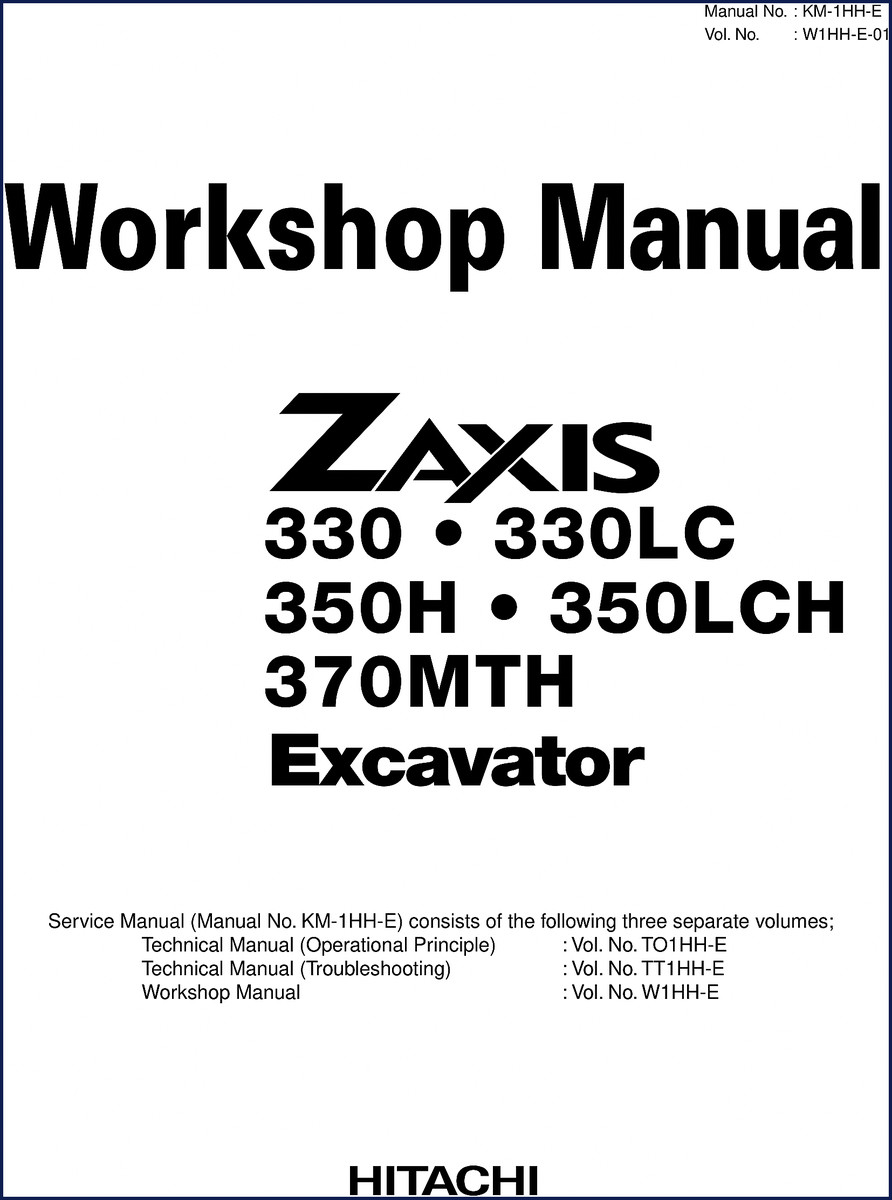
Hitachi Sumitomo 330, 330LC, 350H, 350LCH, 370MTH Workshop Manual cover - factory OEM service documentation

Tightening Torque: Where Most Failures Start

Page 1 lists the manual number and volume. But the real meat is in Section 1 General Information, right where it says Tightening Torque. That section includes a TORQUE CHART, PIPING JOINT specs, and PERIODIC REPLACEMENT OF PARTS. You need the factory tightening Torque for every bolt on the control valve, swing device, and travel motor. Aftermarket manuals often round to the nearest five. That five lb-ft difference is enough to crack a valve body or strip an M12 into an aluminum housing. This manual gives you the exact spec. Use it.

Pump Device Disassembly: Don’t Skip the Regulator Sequence

Under Section 2 Upperstructure, the Pump Device chapter walks you through remove, disassemble, assemble — including DISASSEMBLE MAIN PUMP, ASSEMBLE MAIN PUMP, then the REGULATOR sub-assemblies. The regulator is where 90% of pump complaints live. If you skip the order of shims or mis-index the servo piston, the machine will not respond to load sensing. The manual separates DISASSEMBLE REGULATOR and ASSEMBLE REGULATOR with maintenance standards. Follow it exactly. No skipping steps.

Control Valve: 6 Sub-Sections for a Reason

CONTROL VALVE has six separate disassemble/assemble pairs — (1) through (6) — plus a STRUCTURE OF VALVES section. That is because the main control valve on these Hitachi Sumitomo machines is a stack of individual sections. Each spool, each relief valve, each check has its own sequence. The manual accounts for serial number breaks and production dates. For example, the Pilot Valve section splits procedures by serial number (up to 320880 and 320881 and up) because the internal porting changed. You do not want to mix parts between those groups. The manual tells you which applies to your machine.

Travel Device: Two Serial Number Splits for 330/350 and a Separate Section for 370MTH

Under Section 3 Undercarriage, the travel device gets three distinct sub-sections: one for ZAXIS330, 330LC, 350H, 350LCH (Up to serial No.31357), one for the same models from serial 31358 and up, and a dedicated ZAXIS370MTH section. Each includes REMOVE AND INSTALL TRAVEL DEVICE, DISASSEMBLE TRAVEL DEVICE, ASSEMBLE TRAVEL DEVICE, plus separate TRAVEL MOTOR and BRAKE VALVE procedures. The 370MTH brake valve is different internally — larger pistons, different spring rates. If you use the 330 spec on a 370MTH brake, you risk brake drag or complete lockup. Page 3 of the manual’s introduction explains the manual composition: three volumes — Technical Manual (Operational Principle), Technical Manual (Troubleshooting), and this Workshop Manual. This volume covers only maintenance and repair. It does not cover troubleshooting logic. You need the troubleshooting volume for that. But if you are pulling parts apart, this is the one.

Source Validity: OEM Factory Documentation vs. Aftermarket Knockoffs

I have seen reprints that claim to be “factory spec” but the TORQUE CHART on page 26 (of the original) is missing the pivot pin torque specs. This manual is a direct scan of the Hitachi Construction Machinery Co., Ltd. publication (Manual No. KM-1HH-E). It includes the SAFETY ALERT SYMBOL AND HEADLINE NOTATIONS (page 4) and the ADDITIONAL REFERENCES list directing you to the Operator’s Manual and Parts Catalog. Third-party manuals never include those references. They also skip the MAINTENANCE STANDARD TERMINOLOGY section, which defines terms like “standard” and “limit” for wear measurements. That terminology saves you from misinterpreting clearance specs. Do not trust aftermarket documentation on this. Get the OEM file.

Does This Manual Cover the Fuel System and Engine?

It covers everything on the machine except the engine internals. The engine operation manual and parts catalog are separate (referenced in the introduction). You get the complete upperstructure cab removal, counterweight, main frame, pump, control valve, swing device, pilot valves, solenoid valves, shockless valve, and pilot shut-off valve. Undercarriage includes swing bearing and travel device with brake valve assemblies. All hydraulic system disassembly is here. Torque specs for all hydraulic fasteners are in the TIGHTENING TORQUE SPECIFICATION subsection.

FAQ

Does the manual include torque specs for the swing motor mounting bolts?
Yes. The torque chart in Section 1 covers all hydraulic component fasteners, including swing motor bolts. Use the specification for each bolt grade and size.
What about the serial number splits for the travel device — how do I know which section applies to my machine?
The manual clearly separates travel device procedures into three groups: ZAXIS330/330LC/350H/350LCH up to serial No.31357, the same models from serial No.31358 and up, and a dedicated section for ZAXIS370MTH. Locate your machine’s serial number on the data plate (usually on the cab door frame or near the swing bearing). Compare it to the header in the manual. If you are working on a 370MTH, use the third section. The brake valve, travel motor, and center joint are all different. Using the wrong procedure can damage the brake valve piston or cause improper travel speed. The manual also includes separate maintenance standard tables for each group, so you get the correct wear limits.

Related manual: Hitachi Sumitomo 330, 330LC, 350H, 350LCH, 370MTH Workshop Manual – 752 Pages. For the troubleshooting companion, see Hitachi Sumitomo 330LC, 350H, 350LCH, 370MTH, ZX330 Technical Manual. Another variation: Hitachi Sumitomo SH330 SH330LC 350HD-3B 2006 Workshop Manual – Factory Specs. Also read about Manual Transmission basics if you need general drivetrain theory, and the external guide on Manual Transmission for clutch and gear concepts.

Download the Factory Manual — do not waste time with file-share copies that miss pages or have blurred torque charts. This is the real OEM PDF from AutoRepairManuals, verified factory specifications, complete 752 pages.

Page Count

752

Brand

Hitachi Sumitomo

Language

English

2 reviews for Hitachi Sumitomo 330, 330LC, 350H, 350LCH, 370MTH Workshop Manual – 752 Pages

  1. Charles W.

    Excellent OEM spec sheet. The text is searchable and easy to navigate. It helped me to fix my Hitachi Sumitomo 330, electrical connector. Saves me so much dollars.

  2. Michael S.

    Great factory service manual. The text is searchable and well indexed. It helped me to rebuild my Hitachi Sumitomo 330, engine. Great value for money.

Add a review

Your email address will not be published. Required fields are marked *