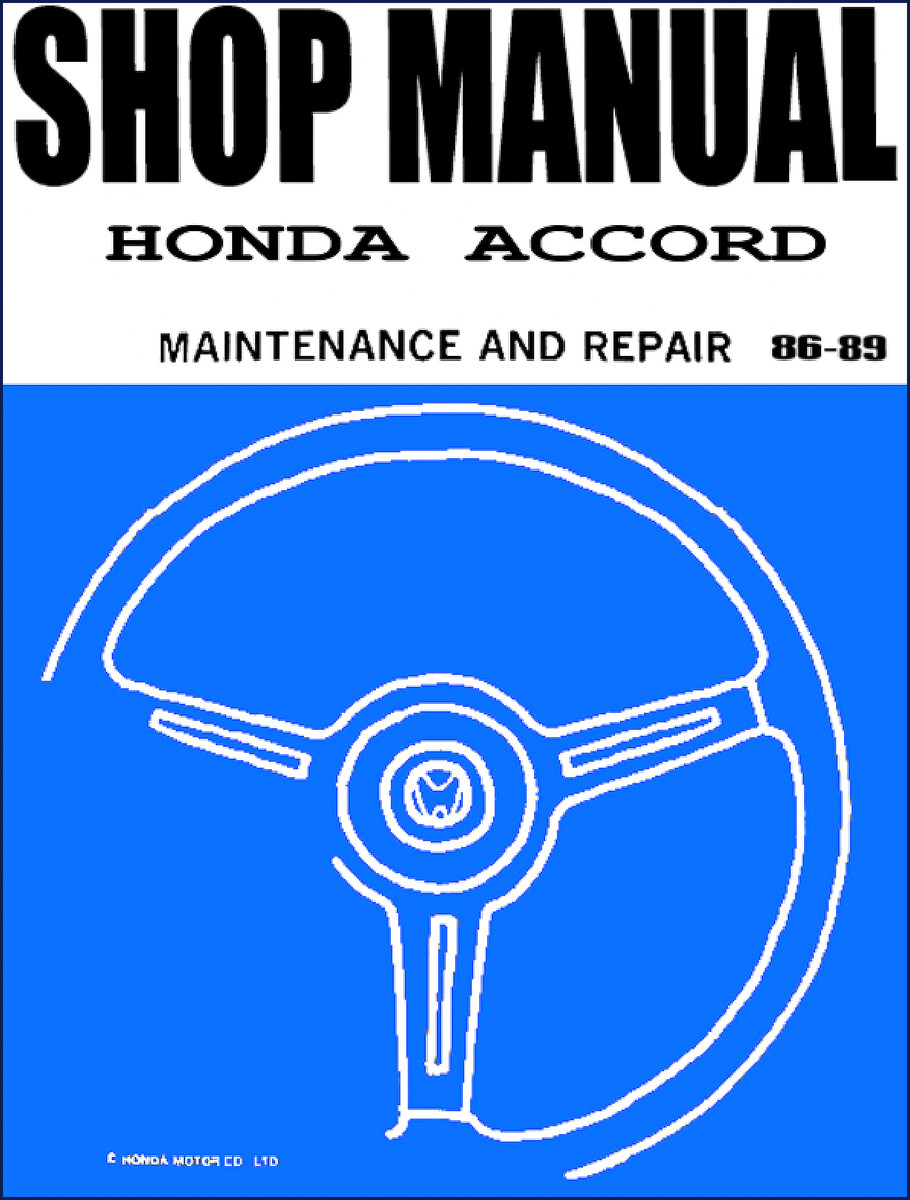
Honda Accord Workshop Manual (1986-1989) – OEM Factory Torque Specs, Wiring, and Step-by-Step Repairs
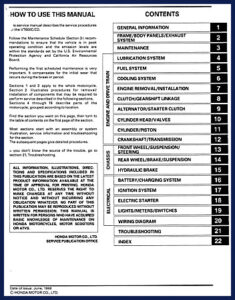
If you’re tired of aftermarket manuals that tell you “remove the bolts” without telling you the torque, you’re not alone. I’ve seen guys strip head bolts on an Honda Accord Workshop Manual because they trusted a reprint with a rounded-off torque value. This manual is the real OEM factory book – 1711 pages covering the 86-89 Accord. Page 2 shows you how it’s organized: 14 sections with thumb tabs. You can find the engine removal procedure without flipping through a table of contents. That’s proper shop manual design, not some scanned reprint.
Engine Overhaul: Cylinder Head Torque and Valve Train Specs
The Engine section covers removal/installation, cylinder head, valve train, engine block, lubrication, and intake/exhaust. Page 3 lists identification number locations so you know exactly which engine code you’re working with – BA, BT, or something else. The cylinder head bolt torque sequence is laid out in the Specs section. Don’t use a generic “tighten to 60 ft-lbs” from a forum. This manual gives you the exact procedure for the A20A and B20A engines, including the angle-tightening steps if applicable. The Valve clearance adjustment specs are right there. I’ve had techs skip the cold-to-hot offset and burn a valve. Don’t be that guy.
From Cylinder Block to Cooling System: What’s Inside
The Engine Block section includes bore and ring gap specs, main bearing clearances, and oil pump inspection. The Cooling section covers thermostat testing, water pump replacement, and radiator flow checks. These aren’t generic steps – they’re written for the specific radiator cap pressure and coolant capacity of the 86-89 Accord. The manual also includes the full Fuel and Emission Controls chapter split into carbureted and fuel-injected engines. If you’re working on a fuel-injected model, the harness pinouts and ECU troubleshooting are in the supplement sections for 87, 88, and 89. That’s why the manual is 1711 pages – it’s not a condensed cheat sheet, it’s the full factory documentation.
Transmission and Suspension: Factory Rebuild Procedures
The Transaxle section covers clutch, manual transmission, automatic transmission, differential, and driveshafts. For the manual, you get the synchronizer ring thickness specs and shift fork wear limits. The automatic transmission overhaul includes clutch pack clearance and band adjustments. Suspension gives you strut removal, alignment specs, and control arm bushing torque. I’ve seen aftermarket manuals skip the differential pinion preload spec – this one doesn’t. Every bolt torque is listed in foot-pounds with the thread size. The Steering section includes rack and pinion overhaul and power steering pump rebuild. If you’re replacing a tie rod end, the manual tells you the exact torque so you don’t collapse the inner joint.
Electrical Section: Don’t Trust Aftermarket Wiring Diagrams
The Electrical chapter splits into engine electrical (alternator, starter, ignition) and body electrical (lights, wipers, power windows). The wiring diagrams in this manual are color-coded and show connector views as they appear on the actual car. Page 3 of the manual shows the location of the fuse box and relays. Aftermarket diagrams often miss the ground points or use wrong pin labels. I’ve had a customer fry an ECU because he used a reprint that crossed the injector wires. The OEM diagram from Honda is the only safe source.
3 Reasons This Manual Belongs on Your Bench
- Factory torque specs – head bolts, main caps, transmission case bolts, suspension arms. Not a range, the exact value.
- Step-by-step procedures with tool lists – special tools are referenced by Honda part number so you know which Honda-made tool fits.
- Safety warnings – Page 2 has the warning: “Indicates a strong possibility of severe personal injury or loss of life.” This manual takes safety seriously, not like aftermarket PDFs that skip the warnings.
Related manuals: Honda Accord 1990-1993 Workshop Manual – Section: Engine Fuel-Injected Engine, Honda Accord 1998-2002 Service Manual, Honda Accord 1994 Service Manual cover later generations. For a broader look at factory service documentation, see Automotive Industry Overview and Automotive Industry Overview.
Frequently Asked Questions
- Does this manual cover the 1988 Honda Accord LX with the carbureted engine?
- Yes. The 1988 supplement includes both the carbureted engine and the fuel-injected engine (B20A8, A20A3). The Fuel and Emission Controls chapter has separate procedures for each.
- Are the supplements for 1987, 1988, and 1989 included in the 1711 pages?
- Yes. The file includes the base 86-89 shop manual plus separate PDFs for 86 supplement, 87 supplement, 88 supplement, and 89 supplement. Each supplement updates the earlier information with added content like the ALB brake system.
- I only need the transmission rebuild section. Do I have to buy the whole manual?
- This is a single product. You get the entire 1711-page collection. The Transaxle section is about 150 pages covering clutch, manual, automatic, differential, and driveshafts. If you want just the transmission section, this manual has it – and you’ll have the rest when you need it.
- What torque value should I use for the exhaust manifold bolts?
- That value is in the Engine section under Intake Manifold/Exhaust System. The manual lists it in ft-lbs. I won’t quote it here because you need to see the context – the bolt thread size and the step sequence (tighten in stages). Buy the manual and use the exact number from the factory page.
You need the Honda factory data to do this job right. Download the Factory Manual now and get the actual OEM specifications for your 86-89 Accord. No reprints, no generic PDFs – just the factory book that Honda built for its techs.

Reviews
There are no reviews yet.