Skip to content
Sale!

Jaguar XF, XJ 2014 Diagnostics Manual – OEM Factory Specs

Original price was: $38.70.Current price is: $30.00.

OEM 155-page diagnostics manual for 2014 Jaguar XF and XJ. Covers AJ126 engine, OBD II systems, misfire, catalyst, UHEGO. Factory procedures only.

Jaguar XF, XJ 2014 Diagnostics Manual

If you have ever chased a misfire on a 3.0L AJ126 with a generic scan tool and a Chilton book, you know the frustration. The aftermarket wiring diagrams skip half the sensor grounds. The torque values are rounded to the nearest ft-lb and miss the critical angle specs. That is why you need the actual Jaguar factory diagnostics manual for the 2014 XF and XJ. This is the 155-page OEM document that the dealers used. It is not a reprint or a third-party compilation. It is the original JLR publication. The Jaguar XF, XJ 2014 Diagnostics Manual gives you every flowchart and fault table the engineers wrote.
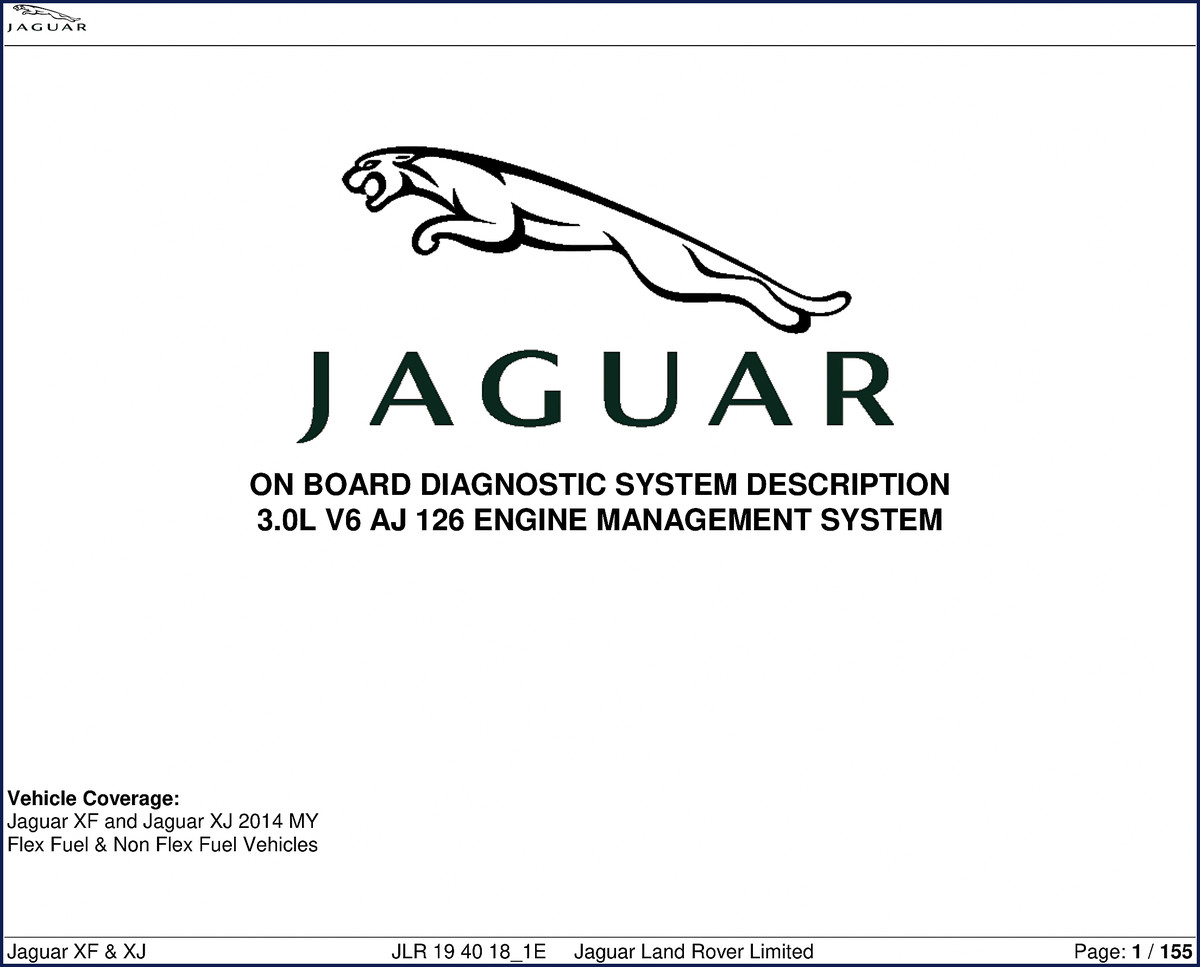
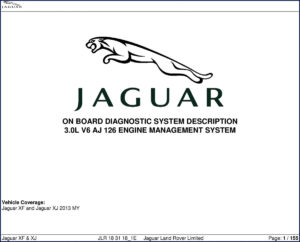
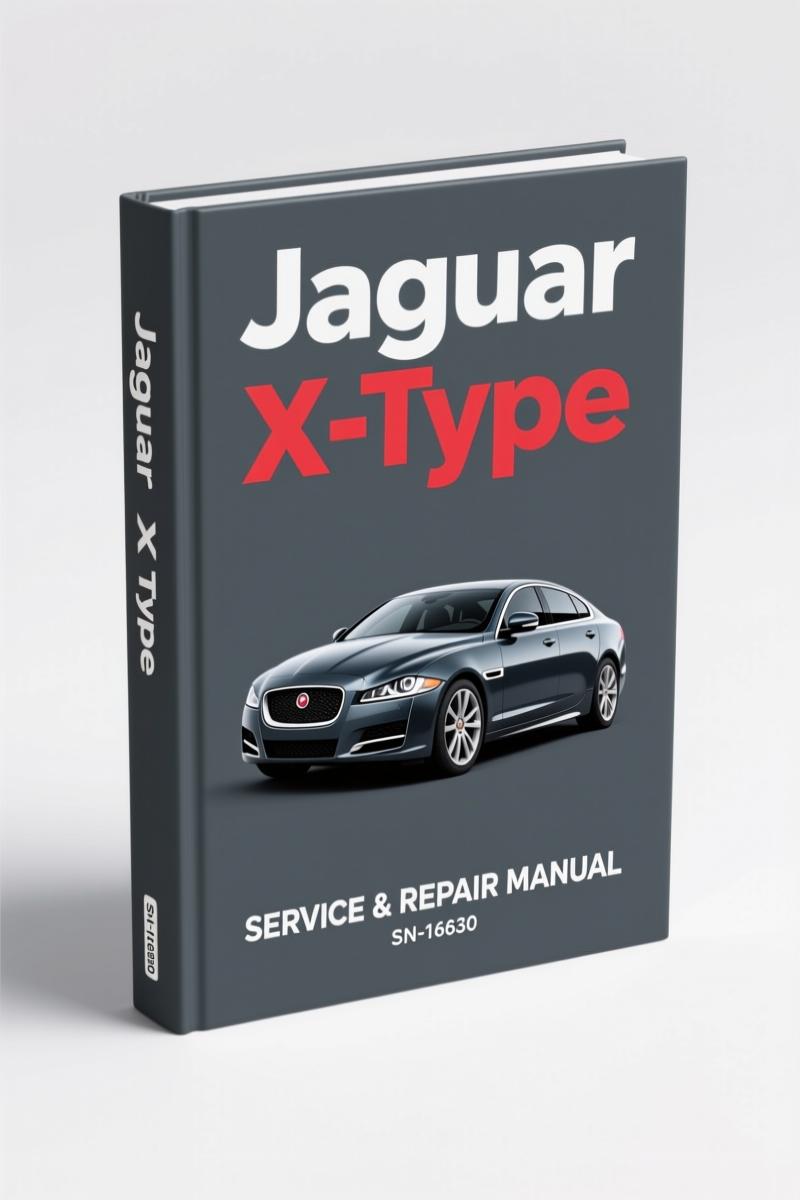
2014 Jaguar XF XJ Diagnostics Manual cover - 155 pages OEM factory diagnostic procedures

Engine Cylinder Numbering and Firing Order

Page 8 spells out the cylinder layout for the 3.0L AJ126. That sounds like trivial information until you are diagnosing a random misfire and need to know which cylinder is bank 2, sensor 1. The manual gives you the firing order and cylinder numbering positions exactly as the ECU sees them. No guessing which coil pack goes where. You get it written down.

Does This Manual Cover the Fuel System?

Chapter 7 covers Fuel System Monitoring. That includes fault codes for fuel pressure, fuel injector electrical tests, and ethanol sensor monitoring tables. If the Jaguar has a flex-fuel badge, the manual accounts for the ethanol content sensor and how it changes the pulse width. The system description on page 7.2 tells you how the ECU calculates fuel trims. You need that when you see a P0171 on a flex-fuel car and the average guy guesses it is a vacuum leak.

Catalyst Monitoring Strategy: Oxygen Storage Capacity and Efficiency

Section 3.3 dives into the catalyst monitoring strategy. The ECU evaluates Oxygen Storage Capacity (OSC) to decide if the catalytic converter is still working. The failure criterion is precise: if the OSC drops below a calibrated threshold, the MIL lights. Page 10 gives you the diagnosis constraints – things like coolant temperature, fuel trim stability, and minimum drive time. The flowchart on page 11 walks you through the decision tree. You do not throw a new converter at it because the scan tool says efficiency below threshold. You check the UHEGO sensor response first. That is what the engineers intended.

Misfire Monitoring – How the ECU Judges a Dead Cylinder

Chapter 4 explains the misfire detection system better than any aftermarket manual I have seen. The ECU records crankshaft segment time and adjusts for crank angle tolerance. It calculates a misfire signal and then decides if the misfire is bad enough to damage the catalyst or just cause excess emissions. The flowchart on page 4.4 shows the monitor execution check. If you are chasing a P0300 on a 2014 XF, you need to understand the rough road detection algorithm. The manual tells you how the ECU compensates for a bumpy road so you do not misdiagnose an engine problem as a bad motor mount.

UHEGO Sensor Heater Diagnostics: A Common Failure Point

Chapter 8 covers the UHEGO sensor (universal heated exhaust gas oxygen). The heater diagnostics section on page 8.5 explains how the ECU measures heater resistance and checks for open circuits or shorts. If the heater fails, the Nernst cell cannot regulate temperature, and the sensor gives false readings. The manual includes a dedicated flowchart for the heater control diagnosis. You do not replace an O2 sensor because the scan tool says heater circuit malfunction without checking the power stage and wiring. Page 8.5.3 tells you how heater influence affects the Nernst cell – that kind of detail is missing from every third-party manual.

3.0L AJ126 Engine Management System Coverage

This diagnostics manual covers the entire OBD II system for the 3.0L V6 AJ126 in the 2014 model year. The table of contents lists 13 chapters: engine start flowchart, cylinder numbering, catalyst monitor, misfire monitor, evaporative system, purge valve, fuel system, UHEGO sensor, HEGO sensor, individual cylinder AFR monitor, and more. Each chapter has fault codes, system overview, strategy description, and drive cycle information. The manual is 155 pages of factory-specific data, not generic OBD II theory. Every flowchart mirrors what the dealership tech sees on the OEM scan tool.

Page 8 shows the cylinder numbering – that matters when you are diagnosing a misfire on bank 2.

If you need supplementary material, the Jaguar XF 2009 Training Manual covers the earlier generation. For the V8 AJ27 engine, check Jaguar XJ XK8 AJ27 Engine Management Diagnostics Manual. And if you are working on an S-Type with the V6, Jaguar S-Type XJ V6 On-Board Diagnostics Manual 2005 is the right doc. External standards organizations like Automotive Industry Overview and Automotive Industry Overview recognize that factory service information is the only reliable source for diagnostics.

Frequently Asked Questions

What torque specs are included in this manual?
This manual is a diagnostics guide, not a torque spec list. Use the separate workshop manual for torque values.
Can I use this manual to fix a check engine light on a 2014 Jaguar XF?
Yes, and that is exactly what it is designed for. The manual walks you through the entire OBD II diagnostics system: catalyst monitoring, misfire detection, O2 sensor response, evaporative leak testing, and purge valve operation. Each system has its own flowchart on pages like 7 and 11 to 14. The fault code tables give you the exact failure criteria. If the ECU throws a P0420, you turn to chapter 3 and follow the Catalyst Monitor Diagnosis flowchart. It tells you what the Oxygen Storage Capacity should be and when to fail it. That is the difference between guessing and fixing it right the first time.

Stop trusting reprints that skip steps. Download the Factory Manual now and get the diagnostic strategy Jaguar engineers wrote for the AJ126.
Page Count

155

Year

2014

Brand

Jaguar

Language

English

Reviews

There are no reviews yet.

Be the first to review “Jaguar XF, XJ 2014 Diagnostics Manual – OEM Factory Specs”

Your email address will not be published. Required fields are marked *

You may also like…

Sale!

Jaguar XF, XJ 2014 Diagnostics Manual – OEM Factory Specs

Original price was: $35.00.Current price is: $25.00.

Factory diagnostics manual for 2014 Jaguar XF and XJ. Covers engine, catalyst, misfire, evap, UHEGO, and more. 183 pages.

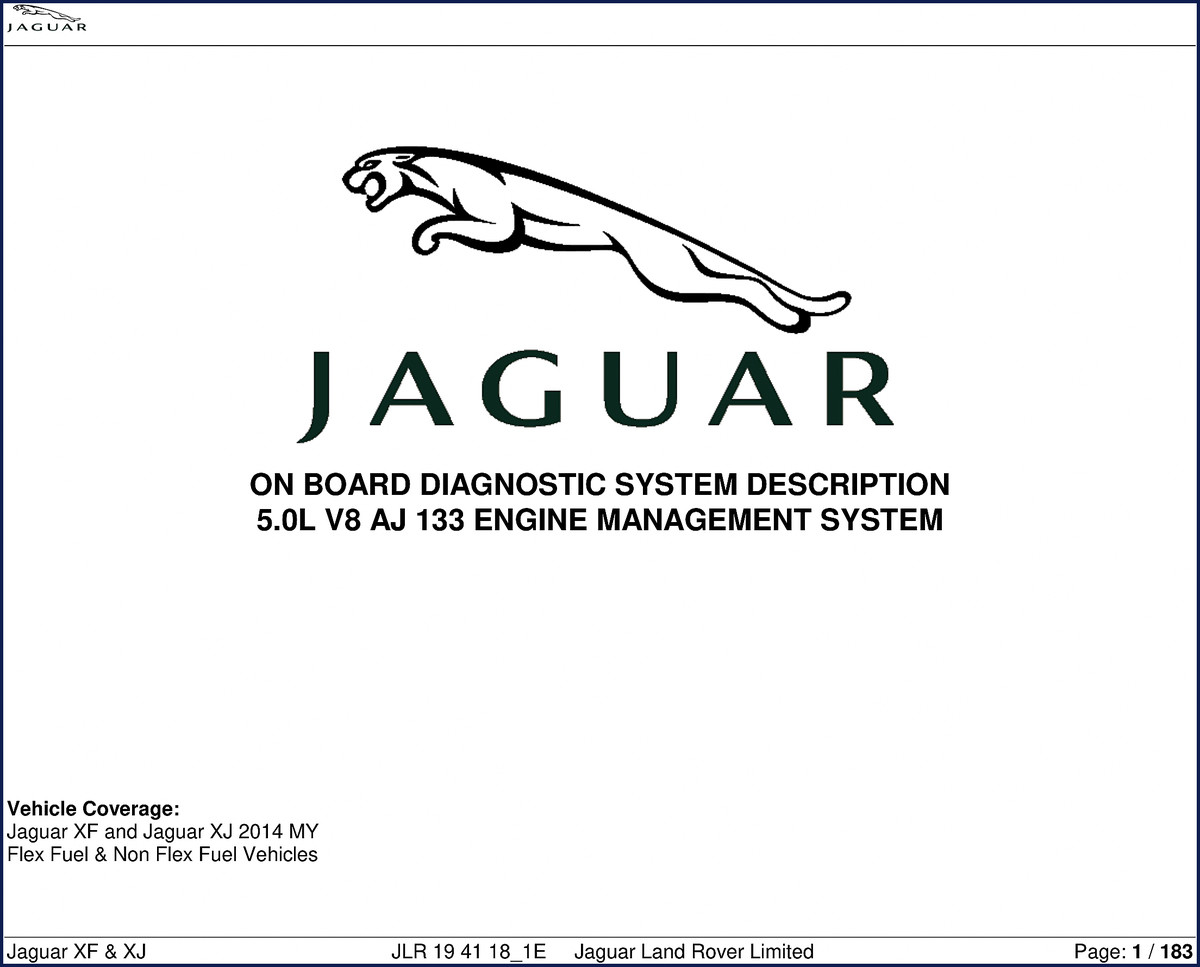
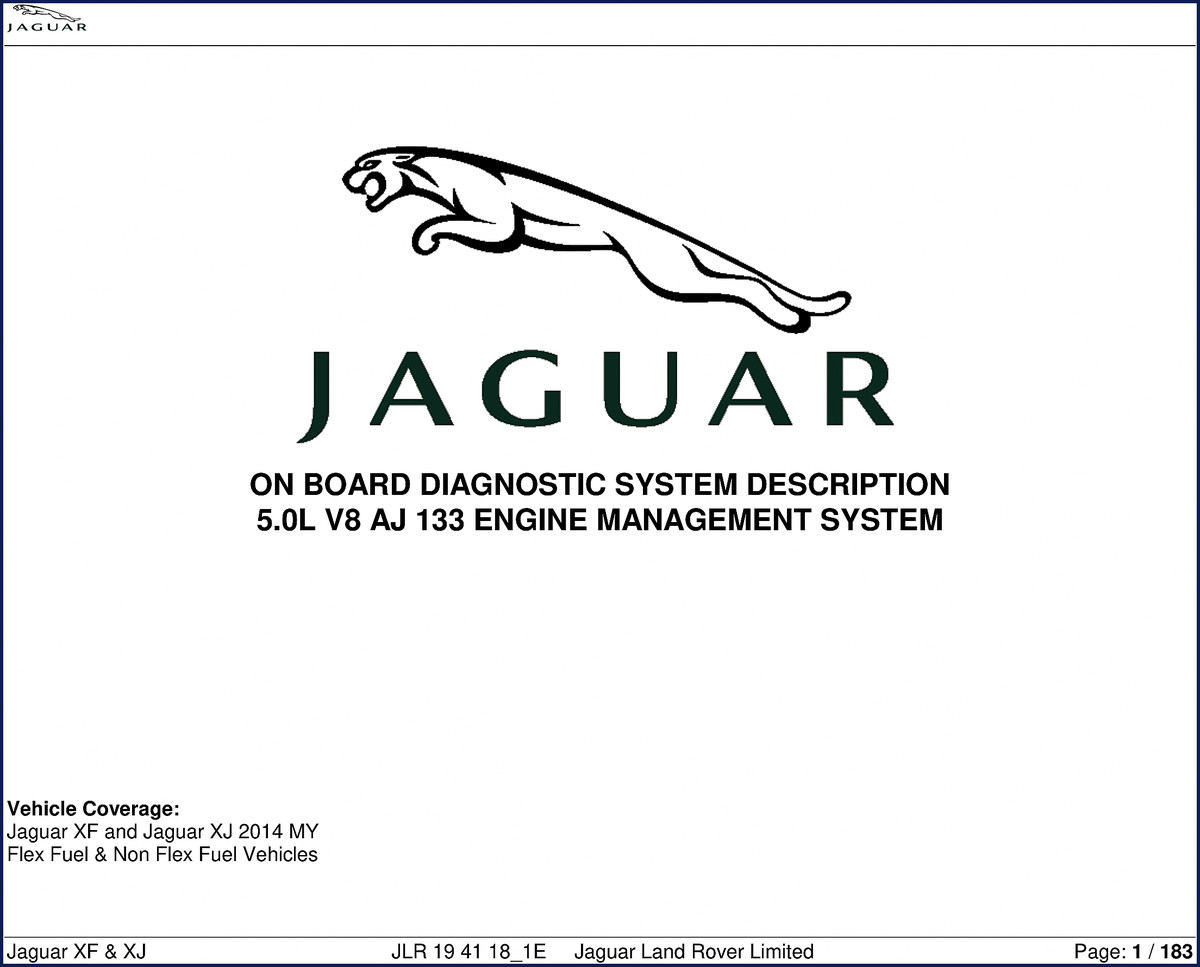
Jaguar XF and XJ 2014 Diagnostics Manual – OEM factory documentation for 5.0L V8 AJ133 engine.

Jaguar XF, XJ 2014 Diagnostics Manual – Don’t Guess, Get the Factory Data

I’ve seen too many techs waste an afternoon chasing a misfire on a 5.0L AJ133 because they used a third-party scan tool and guessed at the monitor strategy. Then they come back and order a downstream manifold because they fried the catalyst. This Jaguar XF, XJ 2014 Diagnostics Manual is the factory document — 183 pages of exactly what JLR wanted you to know. No fluff. No aftermarket interpretation. Just the OEM logic for on-board diagnostics on the 5.0L V8. Need to know why the MIL is on after a fresh catalyst? This manual walks you through the Oxygen Storage Capacity evaluation and the diagnosis constraints. Page 1 gives you the vehicle coverage: XF and XJ, 2014 model year, flex fuel and non-flex fuel. That’s your starting point.

If you’re working on these cars in a real shop or your home garage, you need the diagnostic flowcharts that JLR wrote. Not a rewritten summary. The manual breaks down every monitor: catalyst, misfire, evaporative system, purge valve, fuel system, UHEGO sensors, HEGO sensors, and individual cylinder AFR. Over 20 system flowcharts with tables. That’s the difference between a weekend job and a comeback.

Engine Cylinder Numbering and Firing Order (Page 9)

Before you pull a single plug on this 5.0L V8, get the cylinder numbering right. The manual contains the exact firing order and cylinder layout for the AJ133 engine. I’ve seen guys swap plug wires on the XJ and create a misfire that the ECM couldn’t compensate for. This section eliminates that. It’s a half-page, but it’s the kind of detail that keeps you from chasing your tail. The manual covers both XF and XJ — the engine is the same, but don’t assume without checking.

Catalyst Monitoring: Strategy Description in Detail

Chapter 3 digs into catalyst monitoring. This isn’t a generic OBDII explanation. It covers the Oxygen Storage Capacity (OSC) method, the diagnosis constraints (like what fuel trims need to be in range before the monitor runs), and the failure criterion. You get the actual fault codes, the system flowchart on page 12, and the drive cycle information on page 15. If you’re replacing a catalyst on a 2014 XJ and the light comes back, you need to understand how the ECM evaluates efficiency. This manual gives you the OEM pass/fail logic.

3 Key Diagnostic Systems You’ll Use Repeatedly

  • Misfire Monitoring (Chapter 4): The manual explains how the PCM records segment time and position, adjusts crank angle tolerance, and judges misfire. It covers catalyst damage judgement and excess emissions judgement. If you’ve got a P0300 on an XF, this is where you start.
  • Evaporative System Monitoring (Chapter 5): Includes small leak detection (0.020 inch and 0.040 inch), tank measurement, and the fuel cap warning message. The system schematic and fault assessment tables are factory genuine.
  • UHEGO Sensor Diagnostics (Chapter 8): Covers sensor heater control, heater diagnostics, signal diagnostics, and sensor dynamics. The UHEGO sensor ready conditions and the influence of heater on Nernst cell are documented. This is where many aftermarket manuals fall short.

Each of those chapters includes fault code lists, system descriptions, and flowcharts. You don’t have to guess which pin on the UHEGO connector to probe — the manual tells you. That’s why it’s worth having on the bench.

Use the Misfire Monitor Flowchart Before Replacing Parts

Chapter 4 on misfire monitoring is dense. It covers recording segment time and position, adjustment of crank angle tolerance, storing adaptation values in backup memory, misfire signal calculation, and the rough road detection algorithm. The flowchart on page 16 (I counted) gives you a step-by-step diagnostic path. This is not a theory document. You can follow the flowchart with a scan tool and narrow down which cylinder and under what conditions. The manual also includes the fault codes in section 4.1. If you see P0300, P0301, etc., you can cross-reference the strategy. Much better than throwing parts at it.

Evaporative System Monitoring: Small Leak Detection

The evaporative system chapter (5) is a common pain point on these cars. The manual details the reference leak measurement, the tank measurement, and fault assessment for small leaks (0.020 inch) and very small leaks (0.040 inch). It even covers the fuel cap warning message logic. Page numbers from the TOC: the section runs from page 10 to 15, but the specific fault determination tables are in section 5.4. If you’re chasing an evap code on a 2014 XF, this manual saves you the two hours of reading TSBs.

What This Manual Does for Your Diagnosis

This is the diagnostics manual, not the service manual. That means it focuses on the on-board diagnostic system description for the 5.0L V8 AJ133 engine management system. It does not include step-by-step removal/replacement procedures. What it does give you: system flowcharts, fault codes, monitor strategies, drive cycle info, and sensor monitoring tables. If you’re a professional tech wanting to understand why a monitor won’t run, or a DIYer with a scan tool who wants to verify a repair, this manual is your tool. Pair it with a good wiring diagram and you’re set.

Source Authenticity: OEM vs Aftermarket

This is a scan of the original JLR publication (document reference JLR 19 41 18_1E). I have two aftermarket diagnostic guides on my shelf that claim to cover the AJ133 — both get the evaporative system leak thresholds wrong. One of them lists a 0.040 inch leak as a pass when the factory says that’s a fail. If you rely on that, you’ll replace a purge valve you didn’t need. The OEM manual from AutoRepairManuals is the real thing. 183 pages, no generic rewrite. You can see the header on every page: Jaguar Land Rover Limited. That’s your guarantee.

If you’re working on a 2009 XF, check the related Jaguar XF 2009 Training Manual. For the XJ with the AJ27 engine, grab the Jaguar XJ XK8 AJ27 Engine Management Diagnostics Manual. And for older S-Type or XJ with the V6, the Jaguar S-Type XJ V6 On-Board Diagnostics Manual 2005 might be what you need. For general industry background on OBDII systems, see this Automotive Industry Overview. And if you want a broader understanding of diagnostic strategies, the Automotive Industry Overview is a good starting point.

Does this manual cover the Evaporative System monitoring?
Yes. Chapter 5 covers the evaporative system in depth, including fault codes, system schematic, reference leak measurement (0.020 and 0.040 inch), and the fuel cap warning message. It’s 8 pages of factory data.
Are torque specifications included?
No. This is a diagnostics manual, not a service manual. It focuses on OBDII monitor strategies and fault diagnostics. Torque specs for service procedures are not part of this document.
What about wiring diagrams?
This manual does not contain full vehicle wiring diagrams. It includes system schematics for the evaporative system (section 5.2) and the purge valve system (section 6.2), but not pin-to-pin wiring. For that, you need the JLR wiring manual.
Is this the same as the owner’s manual?
Absolutely not. The owner’s manual tells you how to operate the car. This is the factory diagnostic system description that JLR issued to dealers. It covers monitor strategies, fault codes, and flowcharts for technicians. If you own a scan tool and want to know why a code sets, this is the manual you need.

You already know the difference between guessing and knowing. The factory diagnostics manual for the 2014 Jaguar XF and XJ is the knowing. 183 pages of OEM material, digitized and searchable. Download the Factory Manual now and put it on your tablet or print the key flowcharts. Your diagnostic time just got cut in half.

Page Count

183

Year

2014

Brand

Jaguar

Language

English

Reviews

There are no reviews yet.

Be the first to review “Jaguar XF, XJ 2014 Diagnostics Manual – OEM Factory Specs”

Your email address will not be published. Required fields are marked *