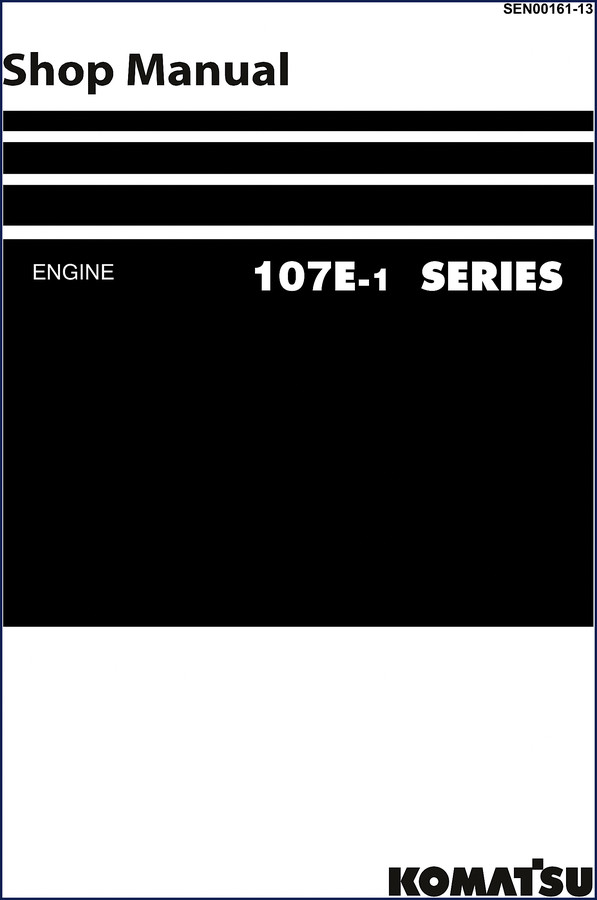
Komatsu 107E-1 Workshop Manual – 361 Pages of What You Actually Need
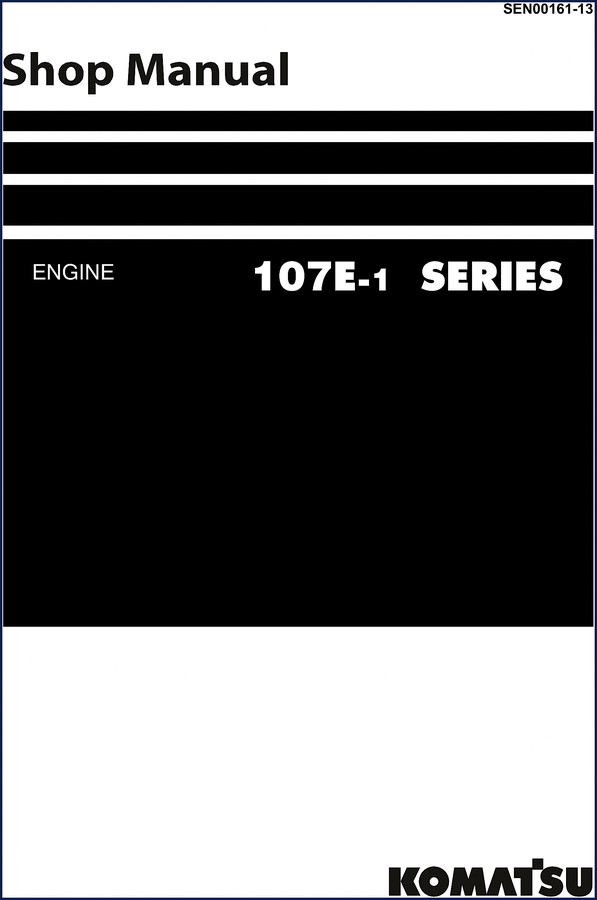
I’ve torqued more head bolts than most people have had hot meals. If you’re working on a Komatsu 107E-1 engine and don’t have the factory documentation, you’re guessing. Guessing costs parts and billable hours. This is the official Workshop Manual – 361 pages, OEM print, not some aftermarket rewrite that leaves out the critical step. I’ve seen shops burn a valve because they used a third-party manual that skipped the compression pressure test sequence. That won’t happen with this.
Section 30: Testing and Adjusting – Tools and Procedures
Page 30 kicks off the testing and adjusting section with a full list of required tools. You need a compression gauge, blow-by meter, fuel pressure tester – the manual tells you exactly which part numbers. Then it walks through each test: air boost pressure, valve clearance adjustment, compression pressure, blow-by, oil pressure. The valve clearance procedure alone is worth the price if you’ve ever had a 107E-1 lope at idle because someone set the intake at .014 instead of .012. The manual doesn’t assume – it gives the spec and the sequence.
Error Code Tables – E-1 Through E-26
When the controller throws a code, you don’t have time to hunt forums. This manual has 26 E-mode error codes spelled out with diagnostic steps. Code [111/CA111] – abnormality in engine controller. Code [271/CA271] – short circuit in IMV/PCV1. Each entry gives the symptom, the likely cause, and the test procedure. No guesswork. You trace the wiring, check resistance, replace. If you’ve ever chased an intermittent [CA238] power supply fault without a diagram, you know why this matters.
Standard Value Table – Page 20 Gives You the Numbers
Every engine needs a reference baseline. The Standard Value Table on page 20 lists compression pressure limits, oil pressure ranges, blow-by rates, and run-in criteria. Need to know the max allowable blow-by at rated speed? It’s there. Torque values for the cylinder head bolts? They’re in the standard tightening torque table in the foreword. Don’t trust the aftermarket conversion app. Use the factory table. I’ve seen a 107E-1 head gasket fail because someone used 90 ft-lbs instead of the spec. That’s a month of downtime.
Why OEM Documentation Beats Aftermarket Every Time
This manual came from Komatsu’s own engineering files. The wiring diagrams match the actual harness colors. The troubleshooting logic follows the factory controller’s fault tree. Aftermarket manuals often generalize across multiple engine families, which is how you end up using the wrong injector timing procedure. The 107E-1 uses a high-pressure common rail system – the fuel pressure release and bleeding steps are specific to this series. The manual even covers handling the controller high-voltage circuit, which most generic books skip because they don’t want the liability. OEM means every spec is traceable. See the related manuals for other Komatsu engine documents: Komatsu 107E-1 Series Engine Workshop Manual, Komatsu 107E-1 Series Engine Shop Manual, and Komatsu 107E-1 Workshop Manual – 382 Pages of Factory Specs. For transmission work on these machines, refer to Manual Transmission and Manual Translation – but that’s another manual.
Who Should Buy This Manual
If you’re a shop owner with a customer’s dozer down, this manual pays for itself in one diagnostic session. If you’re a DIY mechanic with a 107E-1 in your backhoe, do yourself a favor – get the real thing. Beginners should not attempt cylinder head work without factory torque specs and tightening sequence. This manual has the step-by-step disassembly and assembly sections (Part 1 and Part 2) with drawings and clearances. It also includes the full run-in standard and performance test criteria – critical after a rebuild. Don’t let a shortcut cost you a camshaft.
FAQ
- Does the manual cover the E-1 code troubleshooting?
- Yes.
- What torque specs are included in the standard tightening torque table?
- The foreword contains a standard tightening torque table for metric bolts and nuts. However, the manual covers more than generic bolts – it includes specific torque values for the cylinder head, connecting rod, flywheel, and other fasteners listed in the Maintenance Standard section. For example, the cylinder block section has tightening sequence and torque for main bearing caps. The torque table on page 20 gives you the standard service values, but you must follow the exact procedure in section 10 for each component. Do not assume one torque fits all – the manual differentiates between bolts lubricated with oil versus dry, and specifies the tightening angle where required. If you miss that detail, you get a leak.
Download the Factory Manual now and keep it on your shop tablet. It’s a PDF with 361 pages, all searchable, and you can print the pages you need for the job. I’ve been an ASE Master for 28 years – this is the kind of documentation that separates a clean job from a come-back. Don’t trust your engine to anything less.
Reviews
There are no reviews yet.