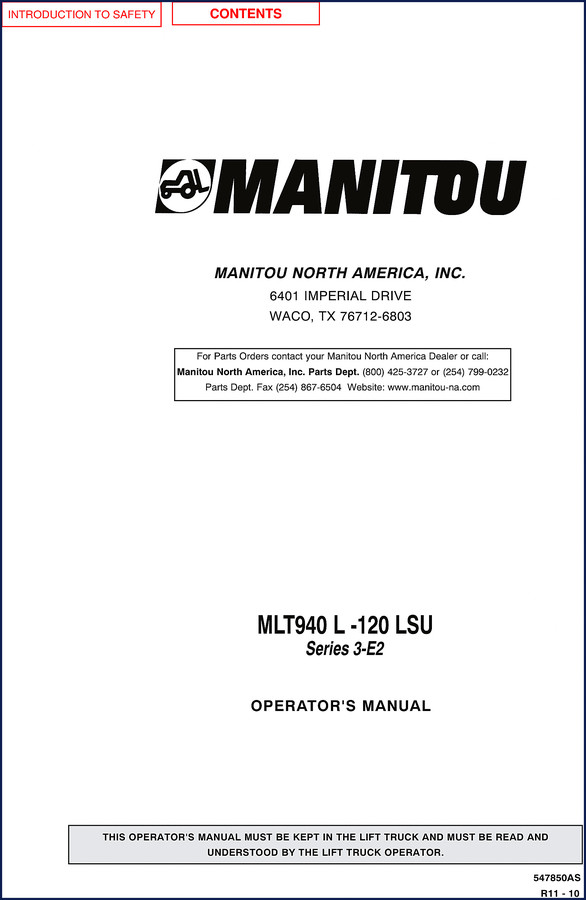
Manitou MLT940 L -120 LSU Operators Manual
If you’re running a Manitou MLT940 L -120 LSU on a job site and you lack the factory operators manual, you’re gambling with a broken axle or an OSHA citation. This is the real thing – the OEM document straight from Manitou, not some aftermarket translation that guesses on your charge pressures. It’s 124 pages of safety standards, decal placement, and daily procedures written in Imperial units.
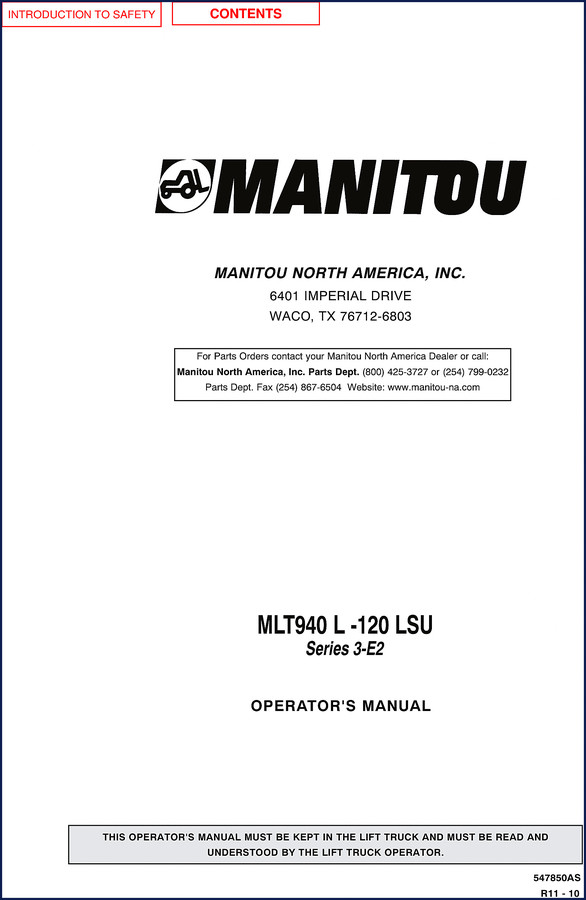
INTRODUCTION TO SAFETY – Why This Section Isn’t Skippable
The manual opens with general safety standards on Page I. That page lists the required personal protective equipment, fire prevention protocols, and lift capacity limits for the MLT940 L -120 LSU. Don’t skip it thinking you know the machine. Manitou designed that section to be read before the ignition key turns. I’ve seen too many guys blow a hydraulic line because they ignored a safety decal warning. This section covers the exact message locations and what they mean.
General Safety Standards: What the Manual Tells You
You get a breakdown of safe operating procedures specific to rough terrain forklifts. The manual covers load charts, stability triangles, and proper travel speeds on slopes. It also lists the fluid types – engine oil, hydraulic fluid, coolant – with capacities in quarts and gallons. No metric conversions to guess at. Manual Transmission fluid specs are included for the transmission, though that chapter lives later in the document.
SAFETY DECALS – Where They Belong and What They Warn
Each decal on the MLT940 L -120 LSU is documented on Page VIII. You get part numbers, placement diagrams, and the exact text. If a decal is faded or missing, you can order the correct replacement using those numbers. Don’t slap a generic “Caution” sticker on there. The manual also explains the color coding – red for immediate danger, yellow for caution, blue for mandatory actions.
124 Pages – What You Get in This Operators Manual
This isn’t a fluff piece. You get the table of contents on Page XV, then straight into daily pre-operation checks, starting procedures, and emergency shutdown sequences. The manual includes a troubleshooting section for common issues like engine won’t start or hydraulics slow. Each problem gets a step-by-step diagnostic – check fuel level, verify battery voltage, inspect hydraulic filter. No guesswork.
Does This Manual Cover Daily Pre-Operation Checks?
Yes, and it’s the factory list, not a condensed version. You’ll find a walkaround inspection with checkboxes: tire condition, fluid leaks, fork wear, safety device function. The manual specifies which tools to carry – a tire pressure gauge (in PSI), a fluid sample container, and a torque wrench for lug nuts. It also lists service intervals in hours and what to do at each interval.
Torque Specs and Fluid Capacities – Imperial Units
All torque values are in foot-pounds. Wheel lug nuts? Page not specified but you’ll find them in the maintenance section. Hydraulic system pressure? Check the spec chart. The manual uses Imperial exclusively because Manitou intended this for North American operators. Don’t rely on a conversion app when you’re up against a deadline.
If you need more specialized manuals for related power units, check these factory OEM documents:
- K-D Manitou D 2876 LE 401-405 Operators Manual – OEM Marine Diesel
- K-D Manitou D 2866 TUE Operators Manual – Factory Specs & Procedures
- Operating Instructions MAN Industrial Diesel Engines D 2876
Also verify your transmission fluid specs with Manual Transmission guidelines from the manufacturer’s website.
- Is this the same as a service repair manual?
- No. This is the operators manual – it covers safe operation, daily checks, decals, and basic fluid specs. It does not contain engine overhaul procedures. If you need repair steps, look at the related manuals listed above. The operators manual is meant to stay in the cab for reference during operation and pre-shift inspections.
- Can I use this on a MLT940 L -120 without the ‘LSU’ suffix?
- Not recommended. The LSU suffix indicates specific safety and control features that differ from the base model.
Don’t run your Manitou without the factory documentation. Download the Factory Manual from AutoRepairManuals and keep it in the machine.



Michael S. –
I am very pleased with this transaction. It is very easy to read on my iPad without losing quality. Every torque spec is provided for Manitou MLT940. I will definitely buy again.