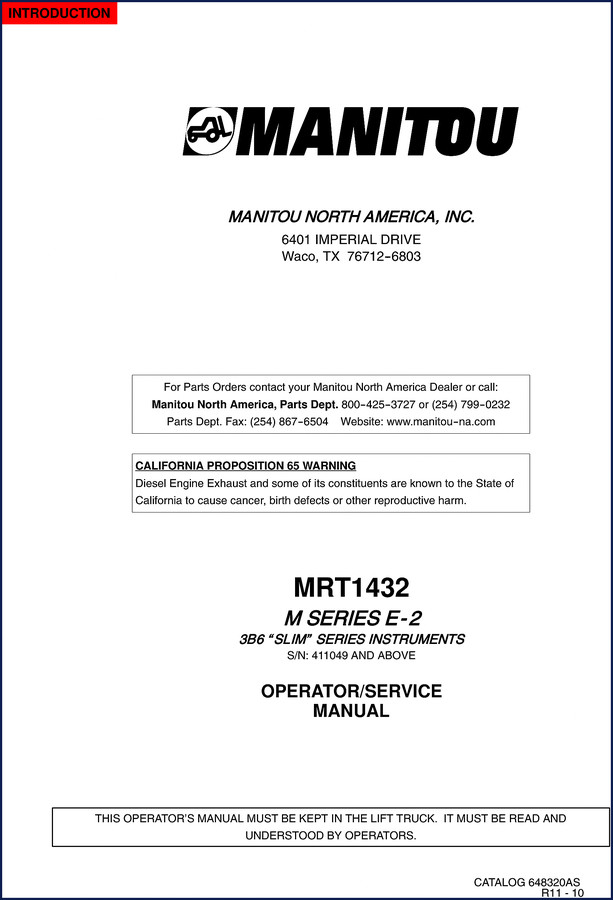
Manitou MRT1432, 386 2010 Operators Manual
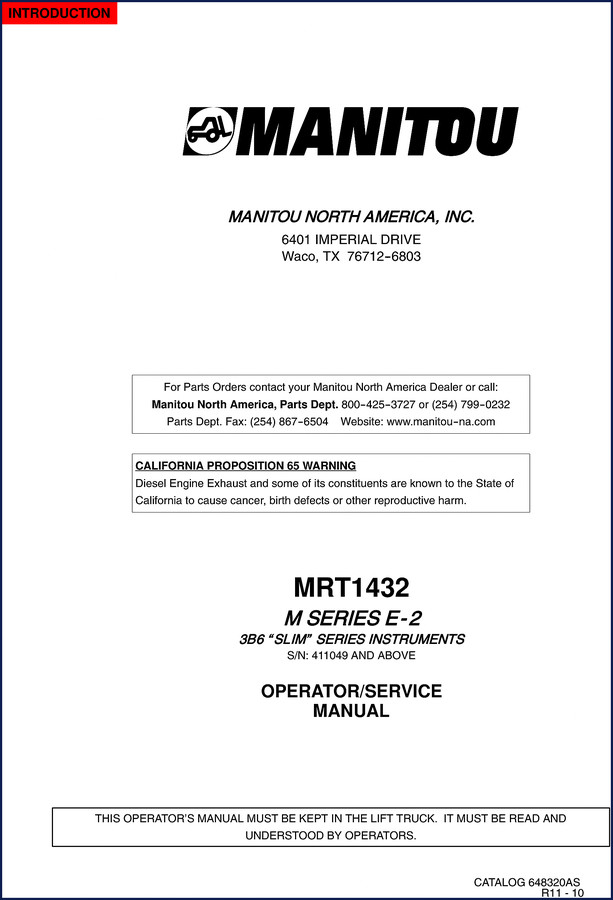
I’ve pulled wrenches long enough to know that most equipment accidents happen because somebody skipped the manual. That’s why you see me beating this drum: if you’re running a Manitou MRT1432, 386 2010 Operators Manual is not optional reading. This is the 306‑page factory document that Manitou North America printed for the MRT1432 and 386 series rough terrain forklifts (S/N 411048 and below). It’s the same booklet that should be chained to the seat box of every machine. Aftermarket copies? I don’t trust ’em. This is the real deal—OEM, 2010 publication, Catalog 648226AS.
General Safety Standards Breakdown
Section starts on page I of the Introduction to Safety. The manual devotes the first eight pages to warnings you cannot ignore. You get General Safety Standards on page I, Safety Messages on page VII, and Safety Decals on page VIII. I’ve seen guys pull a forklift out of a muddy quarry and snap a hydraulic line because they didn’t read the part about overhead loads. Page I tells you exactly where the operator’s zone is—stay in the cab, keep limbs inside, never carry riders. It’s not cute. It’s OSHA-grade stuff written by engineers who know what happens when a 6,000‑lb machine shifts.
Does This Manual Cover the Hydraulic System?
No, not in a service sense. This is an operators manual, not a repair manual. It covers daily inspection, safe operation, decal identification, and load charts. If you need piston seal part numbers or valve body torque, you’ll want the Manitou MRT1432 M SERIES E2 Parts Catalog – Section: Frame Assemb or the full Manitou MRT1432 Parts Catalog. But for every shift start, this manual tells you to check the tires, fluid levels, and the condition of the safety decals on page VIII. That alone will keep you from dropping a load.
3 Critical Safety Sections You Need to Read
1. General Safety Standards (page I) – Do not bypass this. The manual states “THIS OPERATOR’S MANUAL MUST BE KEPT IN THE LIFT TRUCK.” It also warns about California Proposition 65 for diesel exhaust and mandates reading before operation. 2. Safety Messages (page VII) – These are the triangle/circle warnings you see on the machine. The manual decodes each one. 3. Safety Decals (page VIII) – Exact locations and replacement part numbers. If a decal is peeling, you need the OEM part, not a sticker from the hardware store.
Get the Right Torque Specs for Wheel Lugs
This operators manual won’t give you engine internal torques—it’s not a service manual. But it does list the tightness values for lug nuts and wheel retention hardware that you need to verify daily. Page 1 (the start of the Rough Terrain Forklift Truck section) covers the pre-start inspection sequence. Torque specs from the factory are specified in the load chart section toward the back. For the complete service breakdown, see the Manitou MRT1432 Crane Operation Manual which covers the crane attachment operation and associated torque values for the boom pivot pins.
Safety Decals: Factory Placement and Meaning
On page VIII you get a full spread of every decal on the machine: loader arm warning, pinch point, crushing hazard, and the backup alarm decal. The manual tells you the part number for each decal and where it goes on the cab or frame. I’ve seen operators tape over a cracked decal—don’t do it. The decal is your first warning before a load swings. Replace it using the factory part number from this manual. The Manual Transmission section? Not here—this is about safe operation, not gearbox rebuilds. For transmission fluid type and capacity, refer to the separate Manual Transmission document.
Skip these sections at your own risk.
This manual is aimed at the operator—the guy sitting in the seat every day. If you’re a home‑garage DIYer who bought a used Manitou for the property, you need this manual on the dashboard. It walks you through the daily check: engine oil, coolant level, tire pressure, mast condition, and function tests for the lights and horn. Page 2 of the introduction shows the contents clearly: General Safety Standards, Safety Messages, Safety Decals, and then the Rough Terrain Forklift Truck section starts on page 1. No ambiguity. No aftermarket guesswork. This is the same document that went with the machine when it left the factory in Waco, Texas.
Download the Factory Manual now and keep it with the machine. Your fingers, your back, and the next operator will thank you.
Frequently Asked Questions
- Is this an electronic copy of the book that came with my MRT1432?
- Yes. This is a direct PDF scan of the original 2010 printed Operators Manual (Catalog 648226AS).
- Does this manual cover the MRT1432 and the 386 series?
- One manual covers both models: MRT1432 (400° and M Series E-2) and 386 series (S/N 411048 and below). It’s the combined operator/service manual.
- Can I use this manual to rebuild the transmission?
- No. This is the operators manual. It covers daily operation, safety, and maintenance checks only. For transmission overhaul you need the separate service manual.
- What if I find a safety decal that’s missing on my machine?
- Page VIII lists every decal with its part number. Order the OEM decal from Manitou North America using that number. Do not substitute aftermarket decals because the warning symbols and placement are regulated. This manual tells you exactly where it goes.


Reviews
There are no reviews yet.