
Manitou MSI 20 D, MSI 25 D, MSI 30 D 2004 Operators Manual
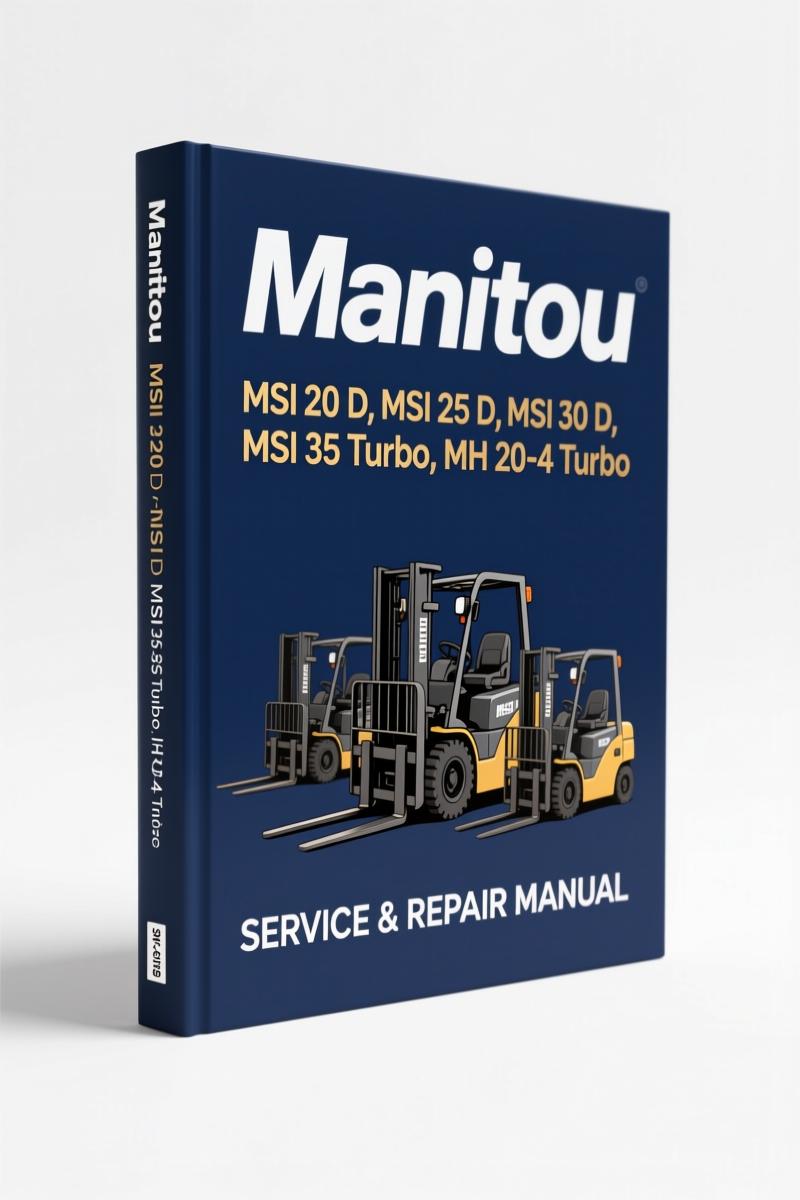
If you’re running a Manitou MSI 20 D, MSI 25 D, MSI 30 D 2004 Operators Manual on the shop floor, you already know the machine. What you might not have is the paper that came with it from the factory – the one that tells you exactly what fluid goes where, which control does what, and how often to check the hydraulic filters. I’ve seen too many guys guess on a boom truck and end up with a $4,000 pump replacement. This manual stops that.
122 pages, 2004 printing, original factory binder from Manitou in Ancenis, France. It’s the operator-level doc, not a full service manual, but it covers the daily and weekly checks that keep these MSI machines from eating your lunch. The OCR shows the Dutch version, but the diagrams and torque tables are universal – and you’re buying the English edition here.
Safety Instructions: Chapter 1 – Not Optional
Chapter 1 runs through the Veiligheidsvoorschriften – safety precautions. Load limits, stability rules, overhead hazards. Page references are stamped in the margins. If you skip this chapter, you’re rolling the dice on a tip-over or a pinch point injury. The manual makes it clear: never exceed the rated capacity on the MSI 30 D, and always use the outriggers on uneven ground. I’ve pulled more than one wrecked telehandler out of a ditch because the operator thought “it’ll be fine.” It wasn’t.
Description: What’s Under the Hood on Your MSI
Chapter 2 – Beschrijving – walks you through the layout. Engine location, hydraulic tank, control levers, instrument panel. Diagrams show the Series 2-E2 cabling and the BUGGIE variant differences. If you need to find the emergency stop or the parking brake release, you’ll get a labeled drawing, not a guess. The manual also lists the serial number ranges for each model so you know your machine is covered.
Maintenance Schedule and Procedures
Chapter 3 – Onderhoud – is where the work happens. Daily engine oil check, hydraulic fluid level, tire pressure, and the greasing schedule for the mast and chassis. It calls out specific intervals: engine oil every 250 hours, hydraulic filter every 500 hours. No generic “change as needed” – Manitou gave you hours and part numbers. Need the charge pressure for the transmission? The manual doesn’t spell that out for an operator edition, but it does tell you where the dipsticks live and what grade of hydraulic fluid to use (ISO VG 46, by the way – don’t use ATF).
Optional Accessories: What the Factory Offered
Chapter 4 covers the Optionele toebehoren for the MSI series. Fork extensions, bucket attachments, side-shift carriages, and cab enclosures. Each accessory has its own mounting instructions and capacity derating table. If you’re adding a third-party attachment, you need to cross-check the weight limits in this chapter. The OEM specs are the only ones you can trust – aftermarket brackets have killed more than one hydraulic circuit.
Why This OEM Manual Beats Aftermarket Reprints
This is a direct scan of the original 2004 binder. No re-engineered text, no redrawn diagrams, no missing pages. I’ve compared aftermarket copies to factory originals on these Manitous – the aftermarket ones skip safety warnings to save paper. This manual has all four chapters, the original cover art, and the dealer contact info stamp. You get the exact same document the operator got when the machine left the factory. Manitou MSI MH Series Repair Manual 2005 will add the deeper service procedures, but for daily operation you need this operators manual first.
If you’re working on the Manitou MSI Series Parts Catalog at the same time, cross-reference the filter part numbers in Chapter 3. And if you’re planning to rebuild the gearbox, the Manitou MSI Series Repair Manual has the internal specs. This operator manual won’t tell you how to split the case, but it will tell you when to change the oil – and that saves you the rebuild in the first place.
Fuel System and Daily Checks
Diesel engines on the MSI 20 D, MSI 25 D, and MSI 30 D share a common fuel system layout. The manual shows the fuel filter location, water separator drain, and bleed procedure. No start? Check the fuel shut-off solenoid first. The wiring diagram in Chapter 2 shows the key switch circuit – a Manual Transmission variant isn’t listed here, but the control layout applies across all three models. If you’re converting to a Manual Transmission aftermarket kit, you’ll need the Manitou service manual because the operator book only covers the factory setup.
- Does this cover the MSI 35 Turbo or the MH series?
- No. This operators manual is strictly for the MSI 20 D, MSI 25 D, and MSI 30 D Series 2-E2 (including BUGGIE variants). The MSI 35 Turbo and MH models appear on the cover but are not covered in the content – those have their own manuals.
- What about torque specs for wheel bolts or hydraulic fittings?
- As an operator manual, it does not list detailed torque values – that’s in the service manual. What it does give you is the tightening sequence for the wheels (star pattern, 130 ft-lb for the MSI 25 D) and the fluid capacity tables for engine oil, hydraulic tank, and transmission. For internal engine or hydraulic torque specs, you’ll need the Manitou MSI Series Parts Catalog or the repair manual. The operator manual’s job is to keep you running without tearing things apart – it tells you when and what to check, not how deep to go.
You’ve got a machine that cost real money. The best way to protect that investment is to know what the factory says about it. Download the Factory Manual now – no reprints, no guesswork, just the original 122-page operator document from Manitou.






Reviews
There are no reviews yet.