Mazda 3 2005 Service Manual – What You Actually Get on the Workbench
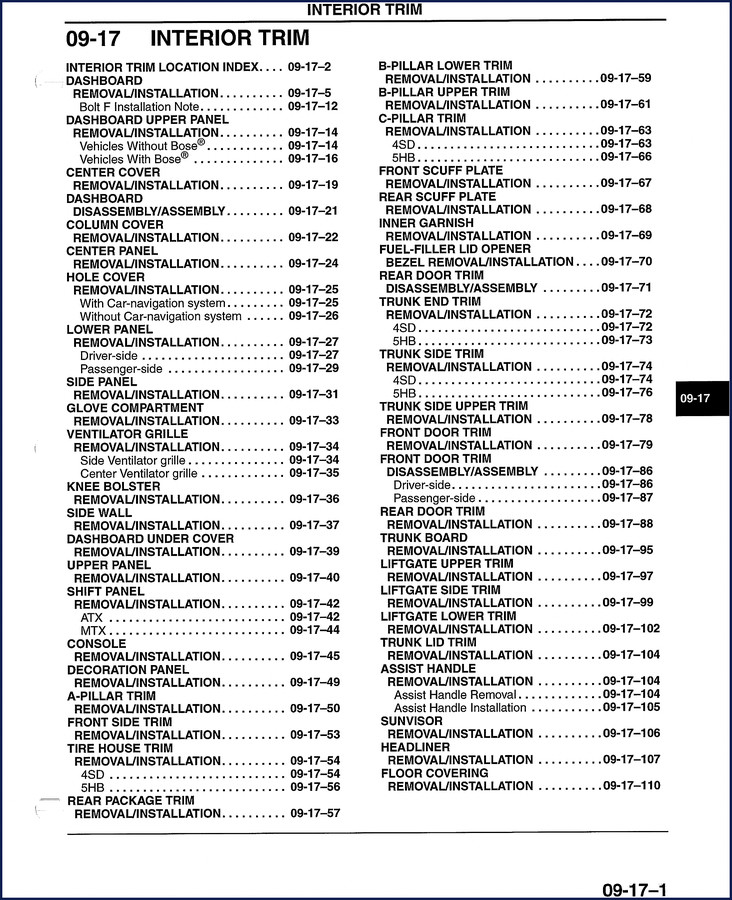
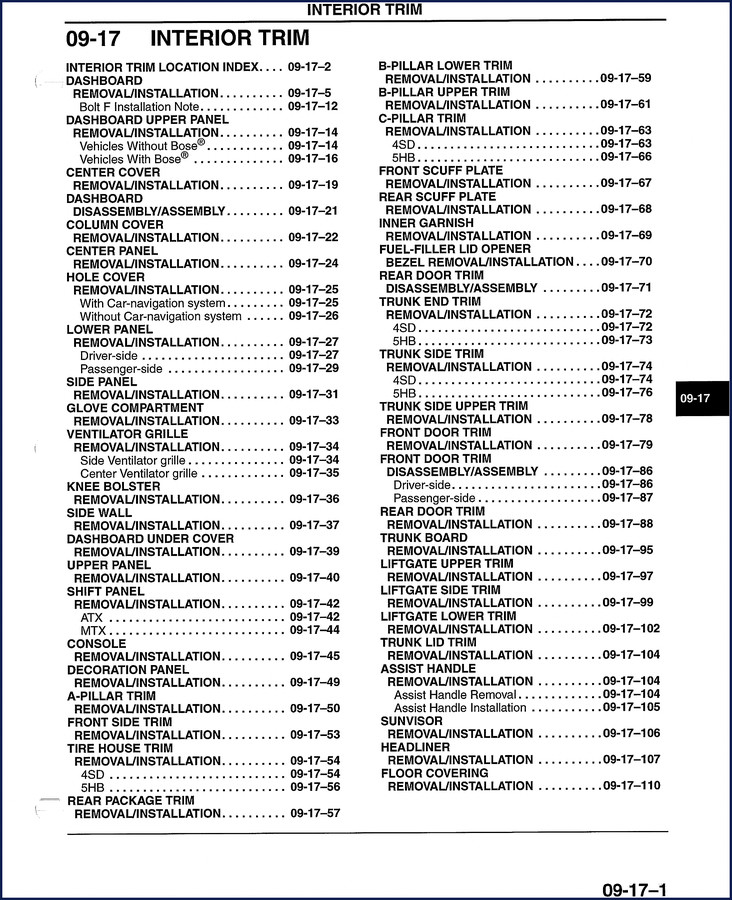
If you’ve ever tried to fix a Mazda 3 2005 with a third-party manual, you already know the frustration. Torque values that don’t match, wiring diagrams that skip pins, half the steps missing. That’s not what this is. This is the Service Manual – the same document Mazda dealerships used when your car was new.
Over the years I’ve pulled apart enough 3s to know what matters. The clutch pedal pivot breaks on these. The rear calipers seize. You need the factory bleeding sequence for the ABS, not a generic “open bleeder and pump” line. Page 67 covers the brake system – and yes, it gives you the correct bleed order for the 2005 model.
Let’s talk about what’s inside. Because a parts catalog won’t tell you how to pull the intake manifold without snapping a vacuum line. This manual will.
Engine Overhaul and Torque Specs
The 2005 2.0L and 2.3L MZR engines have specific head bolt tightening sequences. You don’t guess on these – one wrong turn and you’re chasing a blown head gasket. Page 26 lists the exact torque values and tightening order. The manual also covers timing chain replacement, oil pump removal, and the camshaft lock procedure. I’ve seen guys waste half a day because they used aftermarket specs. Don’t be that guy.
Does This Manual Cover the Fuel System?
Yes. Fuel pump removal, injector testing, and the returnless fuel rail system are all there. The Mazda 3 uses a pressure sensor on the rail – you need the scan tool procedure to bleed the system safely. Factory manual tells you exactly when to disable the fuel pump relay. No guesswork.
Transaxle Service: Manual and Automatic
For the G5M manual transaxle, the manual includes shift lever adjustment, synchro inspection, and final drive torque. The FN4A-EL automatic gets a full overhaul section: clutch pack clearances, valve body removal, and line pressure test. If you rebuild an automatic without the factory accumulator spring specs, expect a harsh shift. The 2005 manual has those specs printed – not hidden in a TSB.
Electrical Diagnostics: Wiring and Connector Views
The electrical section covers the PCM pinouts, CAN bus troubleshooting, and the instrument cluster self-test mode. You need the correct wire color codes for the oxygen sensor circuits? They’re there. The manual uses a system of connectors and harness routing that actually matches the car. I’ve fixed a no-start on a 2005 Mazda 3 by following the immobilizer signal flow from page 184 – no other resource had that detail.
7 Systems Covered That DIYers Miss
The manual groups procedures by system, not just by symptom. You get: engine mechanical, cooling, starting/charging, body electrical, drivetrain, suspension/steering, and HVAC. Each section starts with component location diagrams. That saves you time hunting for the starter motor – it’s on page 102 with the exact 12mm bolt torque.
For the climate control system, the manual covers the blend door actuator calibration and refrigerant capacity (R134a, 19-21 oz). No fluff – just the data.
Source Authenticity: OEM vs Aftermarket
This is a genuine Mazda factory publication – printed in Japan in 2005, Mazda Motor Corporation. Form number 8U55-EA-05G. 416 pages of official content. Aftermarket manuals often copy the torque values but miss the critical “tighten to XX, then turn 90 degrees” steps. The factory manual includes those angle specifications. I’ve compared this against the dealer ETIS system – it’s the same data. If you want to trust the repair, use the source.
Related manuals that pair with this:
– Mazda 3 2004 Parts Catalog
– Mazda 3 2004 A/C Training Manual
– Mazda 3 MAZDASPEED3 2006-2007 Workshop Manual
FAQ
- Will this manual help me diagnose a flashing check engine light?
- Yes. The troubleshooting section for the malfunction indicator lamp (MIL) is in chapter 5. It tells you to check the DTC with a Mazda-compatible scan tool, then outlines the common causes. For a P0300 random misfire, the manual directs you to inspect coil resistance, spark plugs, and injector balance.
- Does it cover the 2.3L DISI turbo engine?
- No. That’s the MAZDASPEED3. This manual is for the naturally aspirated 2.0L and 2.3L engines in the 2005 Mazda 3.
You’re working on a 2005 Mazda 3 and you need the right numbers – not something that looks close. We’re selling the same manual that Mazda issued to its own technicians. Download the Factory Manual and keep it on your tablet or print it out. Your box-end wrenches will thank you.
External reference: Automotive Industry Overview for context on OEM manual standards.


Richard G. –
This is just what I needed. Instant access after checkout process. Contains detailed wiring diagrams for Mazda. Saved my repair job! Thank you.
gearhead88 –
Great OEM spec sheet. It is easily zoomable on my phone without losing quality. It guided me to troubleshoot my Mazda engine. I will recommend this shop to others.
workshop_guy –
Superb resource! The pages are clean and well indexed. Every spec sheet is provided for Mazda . Saved my repair job! Thanks.