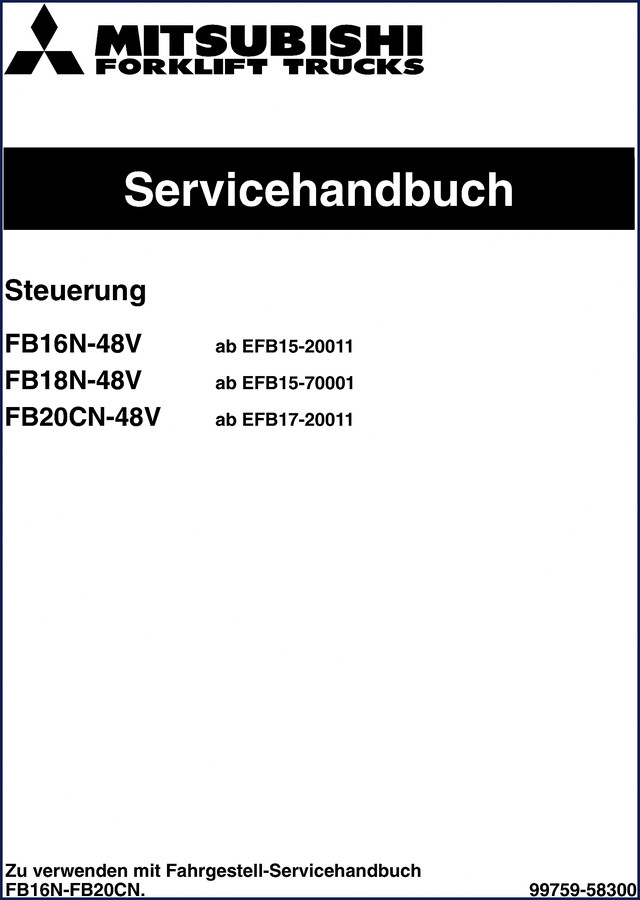
Mitsubishi FB16N, FB18N, FB20CN Service Manual – Factory Specs for 1.6–2.0 Ton Forklifts
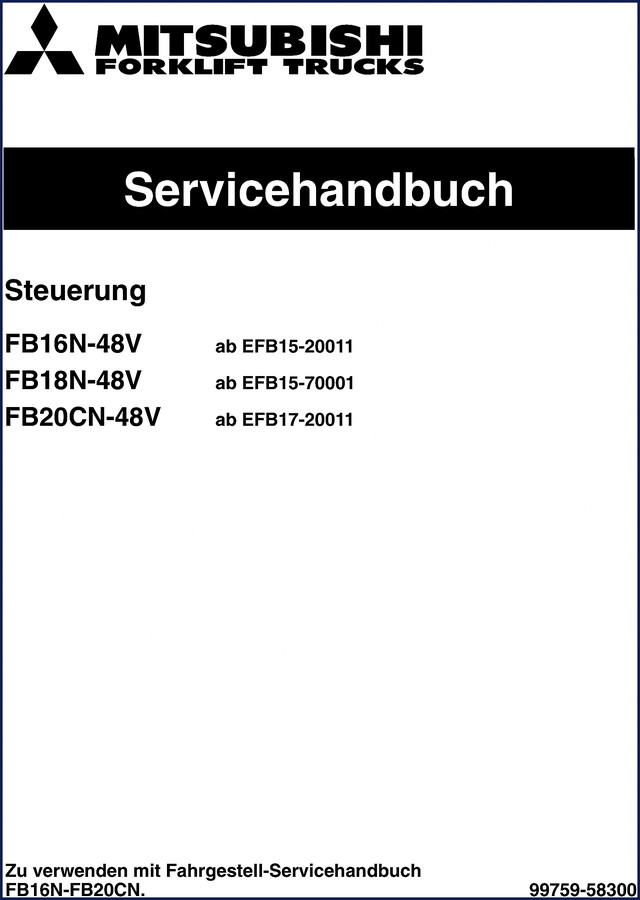
You’ve got a customer’s Mitsubishi forklift dead in the bay, and the aftermarket PDF you downloaded shows some generic torque chart that doesn’t match the mast bolts. Sound familiar? That’s the kind of frustration that costs you billable hours and risks a comeback when the head of a lift cylinder leaks. I’ve been turning wrenches for 28 years, and I’ve seen more stripped threads from guessing torque values than I can count. This Mitsubishi FB16N, FB18N, FB20CN Service Manual is the real deal – the same 282-page factory book Mitsubishi service techs used. It covers chassis, mast, and options for the 1.6‑ton, 1.8‑ton, and 2.0‑ton electric forklifts. No guesswork.
What the 282 Pages Cover: Chassis, Mast & Options
The manual is split by systems, not by some confusing parts catalog. Each section starts with a disassembly diagram – like the one on page 4 that shows the clearance between cylinder and piston in inches and millimeters. You get the standard value and the service limit side by side. Need to know the proper sequence for pulling the output shaft? It’s right there in the suggestion for disassembly. The foreword even tells you to read the respective sections carefully before you touch a test or repair. That’s the kind of detail you don’t get from a Chilton knockoff. The manual also covers the FB20CN model with serial numbers EFB17-20011-up, so you know exactly which trucks this applies to.
Torque Specs and Fluid Capacities You Can Trust
Page after page of this manual gives you the numbers that matter. When I say “factory torque specs,” I mean the ones Mitsubishi stamped into the engineering drawings, not something a third‑party writer guessed. The manual uses both inch and millimeter clearances – for example, 0.020 to 0.105 mm (0.00079 to 0.00413 in) for cylinder‑to‑piston clearance. Every bolt, every fitting has a spec. If you’ve ever had a mast tilt cylinder weep because you under‑torqued the gland nut, you know why this matters. Follow the manual’s procedure and you won’t be redoing the job next week.
Does This Manual Cover the Controller Service?
This is a common question. The manual title says “Chassis, Mast & Options” and the front page states it is for use with the FB16N–FB20CN Controller Service Manual. So no, this volume does not include the controller schematic or drive motor diagnostics. You need the companion controller manual for that. But if you’re dealing with steer axle, brake system, mast assembly, or hydraulic piping, this is the book. The warning labels on page 5 remind you to lower forks and block implements before any work – that’s the kind of safety detail a shop owner appreciates when OSHA comes around.
282 Pages of Factory Procedures
That page count isn’t padding. Each page has real content: disassembly sequences, parts names, suggestions, and safety warnings. The manual uses three levels of alerts – WARNING, CAUTION, and NOTE – to highlight hazards. For instance, page 5 warns that components over 50 lb should be lifted with a hoist to avoid back injury. That’s practical advice you can hand to a junior tech. And because it’s an OEM document, the part numbers (like 99759‑57100) match what your dealer parts counter uses. No translation errors, no missing specs.
Source Authenticity: Why OEM Beats Aftermarket
I’ve worked with enough aftermarket manuals to have a deep distrust of them. A typical PDF from a third‑party site might have a wiring diagram that’s reversed polarity or a torque value that’s 10 ft‑lb off. Mitsubishi’s factory service manual is printed from the same plates used in the dealerships. The copyright date isn’t given on the scan, but the serial number range (EFB15‑20011‑up for FB16N, EFB17‑20011‑up for FB20CN) tells you it’s for current production. If you need to verify the specific series, check the Mitsubishi FB16N FB18N FB20CN Service Manual page for serial number details.
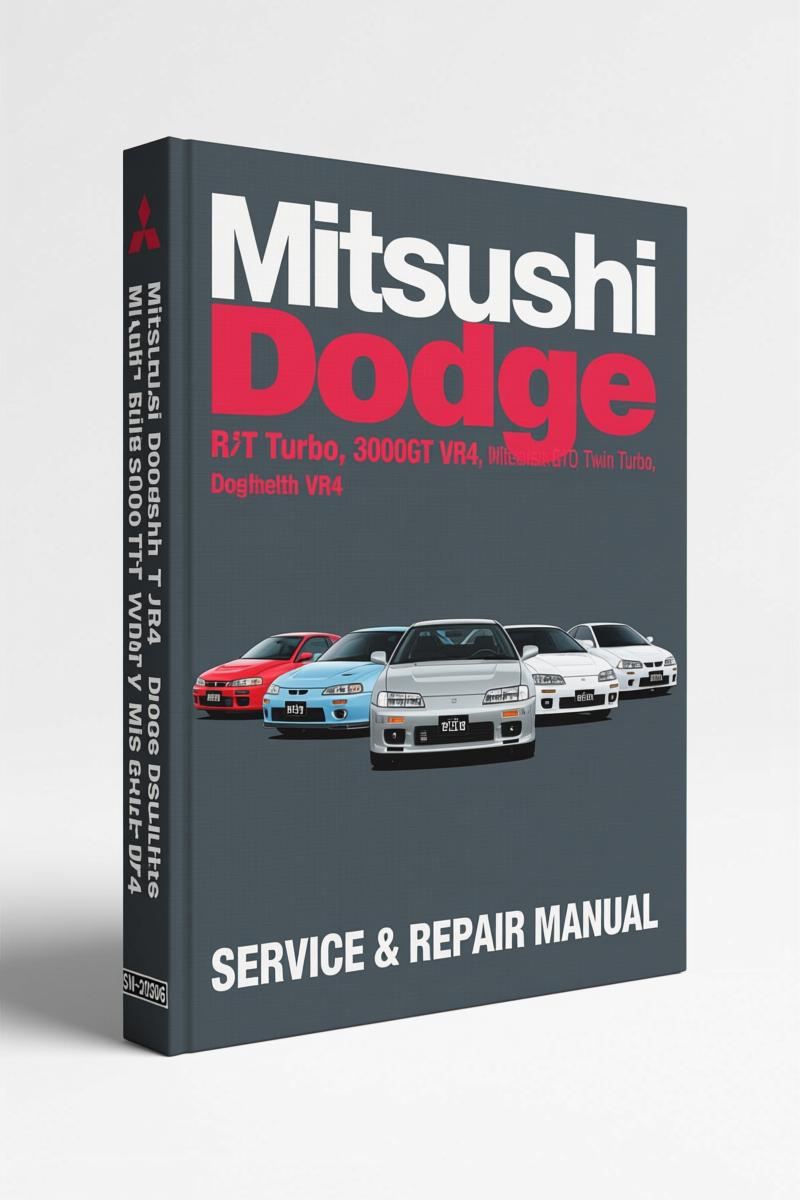
For related models, consider the Mitsubishi Dodge Stealth R/T Turbo 3000GT VR4 GTO Service Manual if you also work on Mitsubishi cars, or the Mitsubishi Eclipse Spyder 1996 Service Manual – Factory Specs & Wiring for a passenger‑car comparison. For broader automotive repair background, see the Automotive Industry Overview from Toyota, or check the Automotive Industry Overview for industry safety guidelines.
- Does this manual apply to the controller/drive system?
- No. This manual covers chassis, mast, and options only. You need the separate Controller Service Manual for drive motor and control unit work.
- What serial numbers are covered?
- This manual applies to FB16N‑48v trucks with serial EFB15‑20011‑up, FB18N‑48v with EFB15‑70001‑up, and FB20CN‑48v with EFB17‑20011‑up. If your truck’s serial is outside these ranges, the procedures may still apply, but the illustrations and specs could differ for earlier builds. Always verify by comparing the actual part numbers in the manual with your truck’s components before starting disassembly. The manual’s foreword warns that Mitsubishi reserves the right to change specifications, so treat the diagrams as representative but not final for every unit.
Stop wasting time on generic repair books that leave you questioning every fastener. Download the Factory Manual and get the exact specs Mitsubishi stamped into the build sheet. Your lift truck’s next PM will be faster, safer, and less likely to come back with a leak.
Reviews
There are no reviews yet.