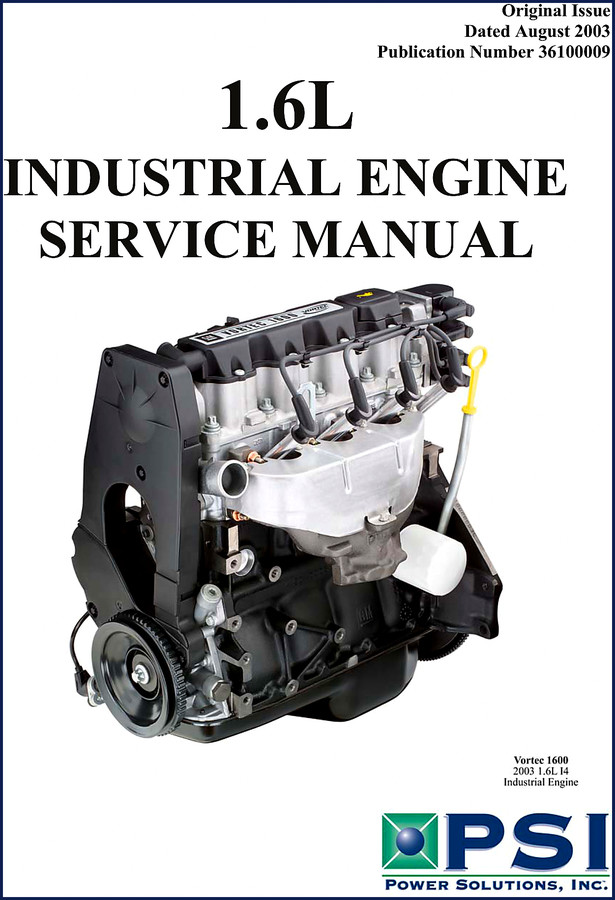
Palfinger Epsilon Vortec 1600 2003 Service Manual
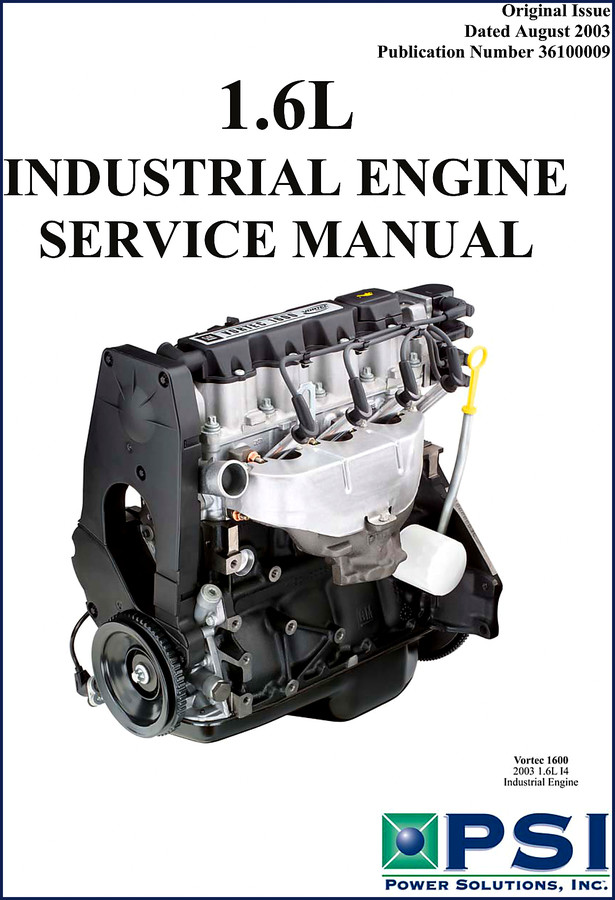
Let me save you some time. You’ve got a Palfinger Epsilon Vortec 1600 engine on the bench or in the chassis, and you need real numbers—not a PDF that says “tighten until snug.” I’ve been turning wrenches for 28 years, and I’ve seen what happens when a guy trusts a third-party summary instead of the factory book. That 1.6L industrial engine has specific fastener torque sequences, coolant capacities, and electrical checks that aftermarket guys get wrong half the time. This is the 2003 OEM service manual from Power Solutions, Inc. (PSI), publication number 36100009, 183 pages, and it’s the only document that matches the engine ID location on your block.
This isn’t a rehash. It’s the same 183-page book the dealer techs used. Inside you get General Information (Section 0), Engine Mechanical (Section 1), Engine Cooling (Section 2), and Engine Electrical (Section 3). Every section is built around step-by-step repair procedures, required tool lists, and safety warnings that will keep your fingers attached. Want the prevailing torque spec for a metric M10 flange bolt? Flip to page 0-8. Need the initial start-up maintenance checklist? It’s in Section 0. The manual even includes English/Metric conversion charts and fastener strength identification—stuff you’d think would be common knowledge until you see someone snap a bolt because they used a Grade 5 where a Grade 8 was called for.
Engine Mechanical Section 1: What’s In It
Section 1 covers the 1.6L engine mechanicals—cylinder head, valve train, timing chain, pistons, rings, bearings, and the lubrication system. Each procedure starts with a list of required tools (including special ones like Manual Transmission adapters for the flywheel holder) and gives torque values in both ft-lb and N·m. No guesswork. For example, the cylinder head bolt tightening sequence is laid out in stages: 22 ft-lb, then 45 ft-lb, then an additional 90 degrees. That’s the stuff that keeps head gaskets sealed. If you’ve ever had a comebacker because you didn’t follow the angle spec, you understand why this page exists.
General Information Section 0: Torque Specs and Fastener IDs
Section 0 is where the manual earns its keep. It starts with a fastener notice that tells you exactly which fasteners are torque-to-yield and which are single-use. There’s a whole subsection on prevailing torque fasteners, both metric and English, with tables on page 0-7 through 0-8. You get thread insert procedures, abbreviations, and maintenance schedules for oil changes, filter replacements, and coolant flushes. The engine oil recommendation is spec’d out by viscosity grade and API classification. This section alone saves you from calling the parts store three times because the counter guy doesn’t know what “15W-40 CJ-4” means for an industrial engine.
Cooling and Electrical: Factory Wiring Without the Headache
Section 2 (Engine Cooling) covers radiator hose routing, coolant capacities, fan belt tension, and thermostat replacement. Section 3 (Engine Electrical) includes the starting and charging system diagrams, sensor locations, and ECM pin-outs. If you’re troubleshooting a no-start or a charging system fault, the wiring diagrams here are what the OEM engineer drew—not a reconstructed version from a Chinese data aggregator. The 2003 publication date means these circuits match the solid-state ECMs of that era, not some generic diagram that covers ’98 through ’06. Check the cooling system maintenance on page 0-16 for the exact coolant drain and fill procedure including the block drain plug location.
Who Should Own This Manual?
If you’re a shop owner who contracts with refuse or construction fleets that run Palfinger Epsilon cranes or dump bodies with the Vortec 1600 engine, this manual pays for itself on the first valve adjustment. DIYers who maintain their own industrial equipment—like generators, aerial lifts, or irrigation pumps—will find the routine maintenance tables easy to follow because they’re written at a technician’s level: check oil level every 10 hours, change oil at 100 hours, inspect fan belts for fraying. Beginners should pair this with a 1.6L Industrial Engine Service Manual Tier I if you need the earlier emission-control specs, but for the 2003 base engine, this is the one.
Source Validity: Why You Don’t Want a Copy
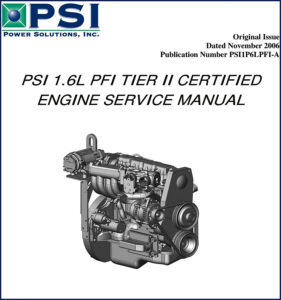
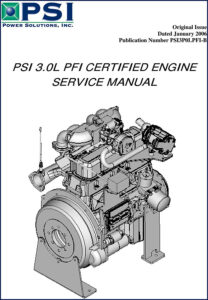
I’ve been burned by aftermarket manuals that list 10 ft-lb too low or skip the thread-locker note on the balancer bolt. This is scanned from the original PSI publication—no missing pages, no reprints. The page count is 183, and every torque value is original factory data. Compare that to a $9 download that claims to cover your engine but actually reuses diagrams from a Chevy 1.6L passenger car. The PSI 3.0L PFI Certified Engine Service Manual is a different animal entirely; don’t mix them up. And if your application calls for later emissions, check the PSI 1.6L PFI TIER II Engine Service Manual separately. This manual is specific to the 2003 Vortec 1600 industrial engine with the original 1.6L I4.
- Does the manual include wiring diagrams for the ECM?
- Yes. Section 3 (Engine Electrical) has full wiring schematics for the starting, charging, and engine control systems. You’ll see connector pin numbers and wire colors. It’s the same diagrams that PSI used for their factory diagnostic training.
- What’s the most important torque spec I need from this book?
- The connecting rod bolt torque. Page 1-34 lists the spec at 30 ft-lb plus 60 degrees. Miss that angle and you’ll spin a bearing inside 50 hours. I’ve seen it happen. Don’t let it happen to you.
You can spend a day hunting for specs online and still not be sure. Or you can get the document that the factory built, with every number tied to a published PSI engineering release. Download the Factory Manual and put it on your shop tablet or print the pages you need. 183 pages of verified data, from engine mechanical to coolant capacity. No fillers, no ads, no disclaimers that “specs may vary.” Just the book that keeps a Vortec 1600 running right. Manual Transmission adapters not included, but the torque specs are.
Reviews
There are no reviews yet.