Suzuki SWIFT 2004 Service Manual
If you’ve ever relied on a generic aftermarket manual for your 2004 Suzuki Swift, you already know the gamble. I’ve seen head gasket failures and electrical shorts traced back to torque values that came from a different engine family. This Suzuki SWIFT 2004 Service Manual is the OEM document — 1257 pages of factory engineering, printed when the car was new. Suzuki doesn’t guess, and neither should you.
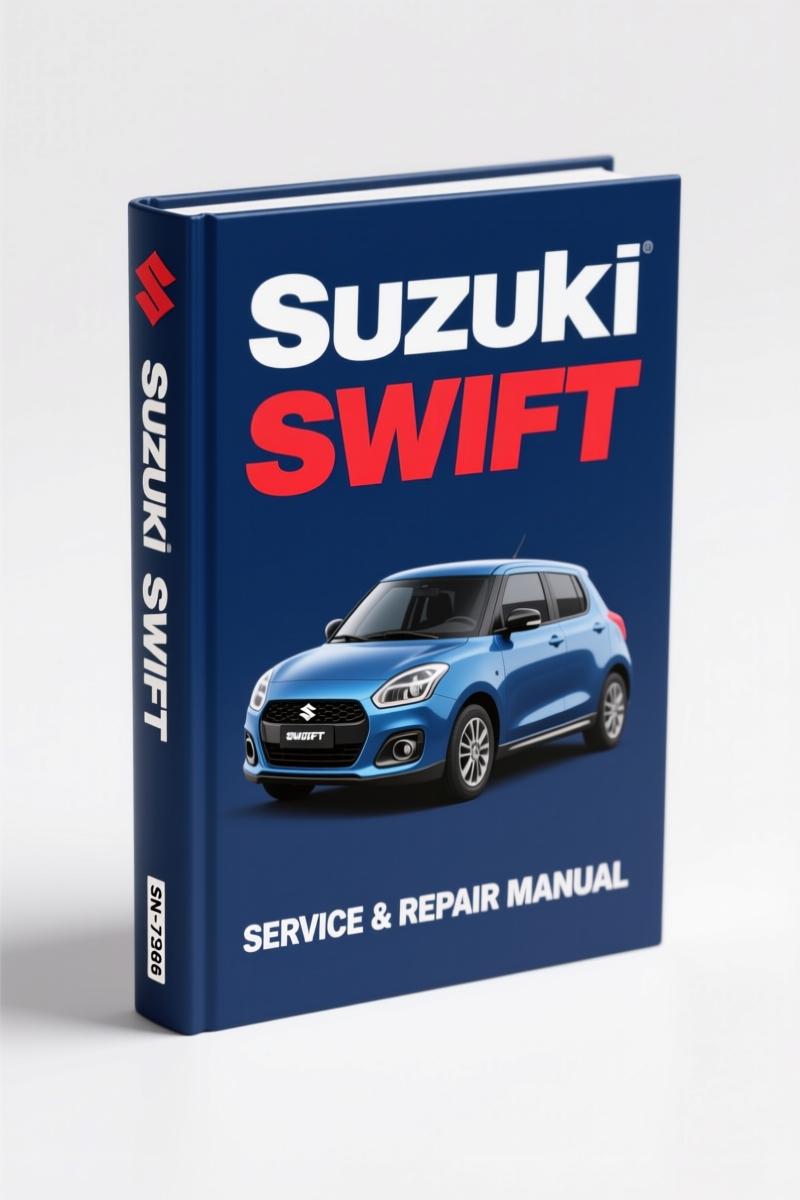
You’ll find everything from precautions for the supplemental restraint system to the CAN communication system diagnostics. Suzuki wrote this for their dealership techs, so the language is direct and the numbers are the numbers. No reprint house speculation.
1257 Pages of Factory Service Data
Volume 1 covers General Information, Engine, Suspension, Drive/Axle, and Brakes. Volume 2 handles Transmission/Transaxle, Steering, HVAC, Restraint, and Body. The table of contents alone is worth the price — every section is broken into Precautions, Repair Instructions, and Specifications. Need to find the valve lash inspection procedure? It’s under Maintenance and Lubrication. Spark plug replacement? Same chapter. The manual even lists the recommended fluids and lubricants with part numbers. That’s data you won’t find in a third-party reprint.
Precautions First: Airbag and Electrical Safety
Page 1 of the PDF lays out the WARNING/CAUTION/NOTE hierarchy. Suzuki is explicit: service on airbag components is for authorized dealers only. If you’re working near the airbag system, you need to read the “Air Bag System Service Warning” and the precautions for electrical circuit service. The manual also warns about CAN communication system precautions. I’ve seen backyard mechanics pop an airbag because they skipped the disconnect step. This manual doesn’t let you ignore it. Also covered: Precaution for Installing Mobile Communication Equipment — a detail most aftermarket books forget entirely.
Engine General Information and Diagnosis
This section starts with a cleanliness statement: keep everything clean. Then it dives into the on-board diagnostic system, DTC tables, fail-safe tables, and scan tool data. The manual includes a full component location diagram for the electronic control system. If your Swift is throwing a code, you can trace the DTC table and check the fail-safe mode without guessing. The engine symptom diagnosis flowchart is specific to the M13A and M15A engines used in that year. No generic “check fuel pressure” — Suzuki tells you the exact test conditions.
Does This Manual Cover the Transmission?
Yes. The transmission/transaxle section in Volume 2 includes both manual and automatic transaxle fluid level inspection, replacement procedures, and cooler hose inspection. The manual also covers the drive shaft boot inspections and wheel bearing service. If you’re swapping a clutch or rebuilding an automatic, the step-by-step repair instructions reference the special tools Suzuki designed for the job. You’ll need those part numbers if you want to avoid buying the wrong puller.
Find the Torque Specs Without Guessing
Torque values are listed in the Maintenance and Lubrication section under “Tightening Torque Specifications.” Suzuki uses Newton-meters and foot-pounds. For the engine oil drain plug, it’s 30 N·m (22 lb-ft). For the spark plugs, 25 N·m (18 lb-ft). These numbers are verified factory specs, not a translator’s approximation. The manual also includes a “Fastener Caution” that reminds you to always replace self-locking nuts and cotter pins. That kind of reminder keeps a hub from falling off on the highway.
For electrical work, the manual dedicates a full Repair Instructions subsection to “Electrical Circuit Inspection Procedure” and “Intermittent and Poor Connection Inspection.” If you’ve ever chased a parasitic draw on a Swift, you know how important the wire color symbols and ground points are. The schematic and routing diagram in the engine section maps the CAN communication lines. Aftermarket manuals often merge different model years; this one is year-specific.
If you need earlier model information, check the Suzuki Swift 1991 Wiring Diagram or the Suzuki Swift 1300 GTi 1988 Service Manual. For a different Suzuki platform, the Suzuki VLR1800 2008 Service Manual – OEM Factory Repair Guide might be useful. For broader automotive industry standards, you can refer to Automotive Industry Overview. Another source is Automotive Industry Overview.
- Is this manual suitable for a beginner?
- No. It’s written for qualified technicians.
- Does it include wiring diagrams and electrical troubleshooting?
- Yes. The Electrical Circuit Inspection Procedure is detailed, covering intermittent connections, CAN communication, and wire color symbols. The manual also includes DTC tables and scan tool data for the engine control system. You’ll find the component locations and schematic diagrams that show each circuit’s path. Suzuki designed this for dealership diagnostics, so expect precision, not fluff.
Stop chasing aftermarket guesswork. Get the real data. Download the Factory Manual.
Reviews
There are no reviews yet.