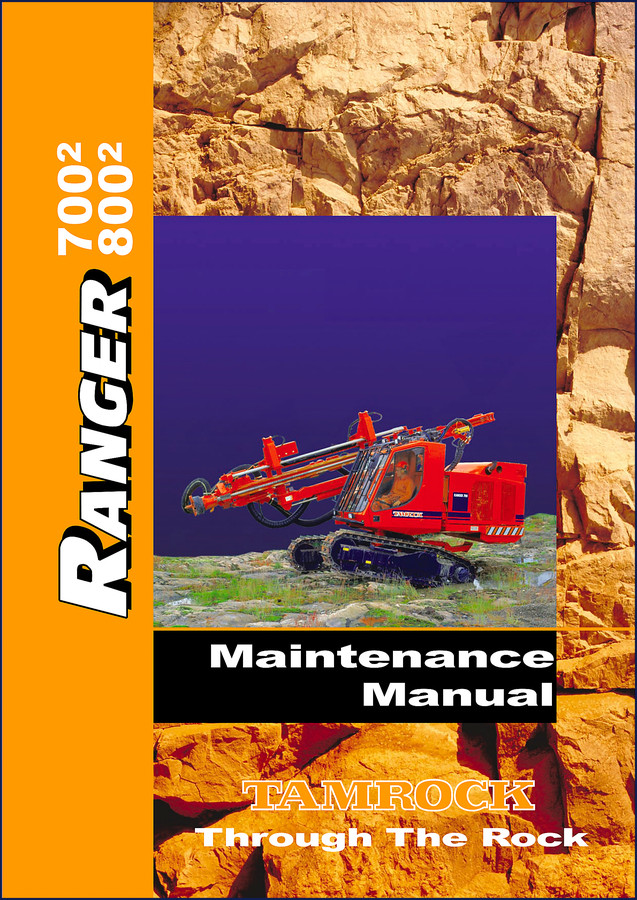
Tamrock RANGER 700, RANGER 800 2003 Operators Manual
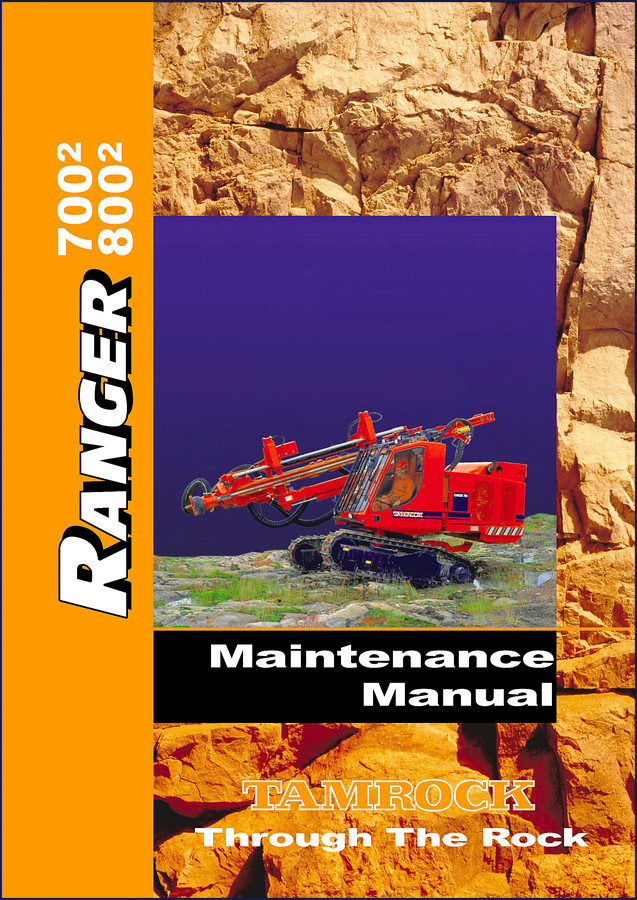
I’ve seen more aftermarket manuals than I’ve had flat-rate hours, and let me tell you – most of them belong in the trash. Guys buy a cheap reprint of a Tamrock RANGER 700, RANGER 800 2003 Operators Manual, and then wonder why their tramming controls don’t match, or why the safety section is missing pages. This isn’t a parts list. It’s an OEM 108-page document that tells you exactly how to operate – and not kill yourself on – these rigs. You get the real factory procedures from Sandvik Tamrock, printed in 2003. No third-party copy, no scanned blurbs that leave out the gradient angles. That matters when you’re parked on a slope.
Safety Instructions: Not Optional
Section 2 of this manual runs from page 14 and covers everything from operator safety to warning sign locations, type plate, symbol plates, center of gravity, and gradient angles for tramming and drilling (section 2.7). I bet half the guys running these machines have never seen the OEM safety rope setup or emergency stop locations. The manual gives you the exact danger areas during tramming and drilling – section 2.8 breaks it down. You want to know what happens when you ignore the dual tramming prevention? Read section 2.17. Then don’t skip it.
Controls Layout: What the Manual Covers
Chapter 3 – Operation Instructions – starts with controls. Left hand panel, drilling control, drilling pressure gauges, rod handling control, right hand panel, boom control, roof panel, engine control display, remote control panel, air conditioning unit. Each gets its own subsection (3.1.1 through 3.1.12). The manual doesn’t assume you know where the error codes live; it lists them in section 3.1.10. If your engine control display throws a code, you flip to that page and decode it right there. No guessing.
Does This Manual Cover Operator Troubleshooting?
Yes, Chapter 4 is dedicated to operator troubleshooting. The PDF bookmarks show it’s a separate section. While it’s not a full service manual, it gives you the common issues an operator can address without calling truck in – like checking fuses (section 3.3.2), releasing brakes for towing (section 3.8.1), and stopping drill procedures. For deeper repairs, you’ll want the TAMROCK Ranger 700/800 Maintenance Manual 2003. But for daily operation and basic diagnostics, this is your go-to.
3 Systems You Need to Understand
First, the tramming system: sections 3.7.1 through 3.7.8 cover before tramming, position, cabin tramming, oscillation, stopping, remote control with winch, moving to next hole. Second, the drilling system: section 3.9.1 explains percussive drilling, 3.9.9 gives drilling parameters like feed pressure and rotation, and 3.9.10 covers adding drill rods. Third, the emergency stop system: section 2.14 details emergency stops, safety rope – and section 2.15 lists automatic stop functions. If you don’t know where those stops are when you’re tramming, you’re a liability.
Understand the Emergency Stops Before Firing Up
Section 2.14 is not filler. It describes the exact locations of emergency stops and the safety rope system. Section 2.16 covers tramming stop device, 2.17 dual tramming prevention. I’ve seen guys try to override those because they were in a hurry. That’s how you end up with a rig on its side. The OEM manual also includes noise levels (2.10), acceleration values (2.11), and locations of fire extinguisher (2.13). The Manual Transmission section of this rig’s drivetrain isn’t covered, but the tramming procedure (3.7) tells you how to control it safely.
Why OEM Documentation Beats Aftermarket Reprints
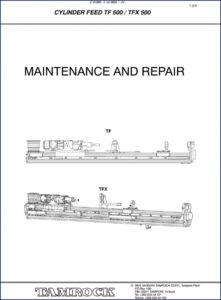
Aftermarket manuals leave out the symbol plates page, the centre of gravity diagram, the exact gradient angles for drilling vs. tramming. This one has them, from the original Sandvik Tamrock print. The type plate information (section 2.4) and warning sign locations (2.3) are laid out so you can verify your machine’s actual build. I’ve seen shops use generic manuals that had the wrong fuse ratings – that’s how you get electrical fires. This manual gives the fuses (3.3.2) from the factory. Pair it with Tamrock HL 710, HL 710S Operation and Maintenance and Tamrock Cylinder Feed TF 500 / TFX 500 Maintenance for the full powertrain documentation.
FAQ
- Is this manual suitable for the RANGER 800?
- Yes, it covers both RANGER 700 and 800.
- Does the manual include drilling parameters?
- Yes, section 3.9.9 covers drilling parameters like feed pressure, rotation speed, etc. The manual gives you the factory numbers for collaring, normal drilling, and adding rods. Without these, you’re guessing and risking damage to the drill string. It also includes the principle of percussive drilling (section 3.9.1) so you understand what’s happening down the hole. That kind of depth is why you buy OEM.
Look, I don’t have time to chase down missing pages. If you’re running a Tamrock Ranger 700 or 800, you need the real deal. This 108-page operators manual from 2003 is the same one the factory handed to operators. It covers everything from routine checks before shift (section 3.5) to storing the rig (3.12). Download the Factory Manual and stop relying on photocopies. Your machine – and your crew – will thank you.
Reviews
There are no reviews yet.