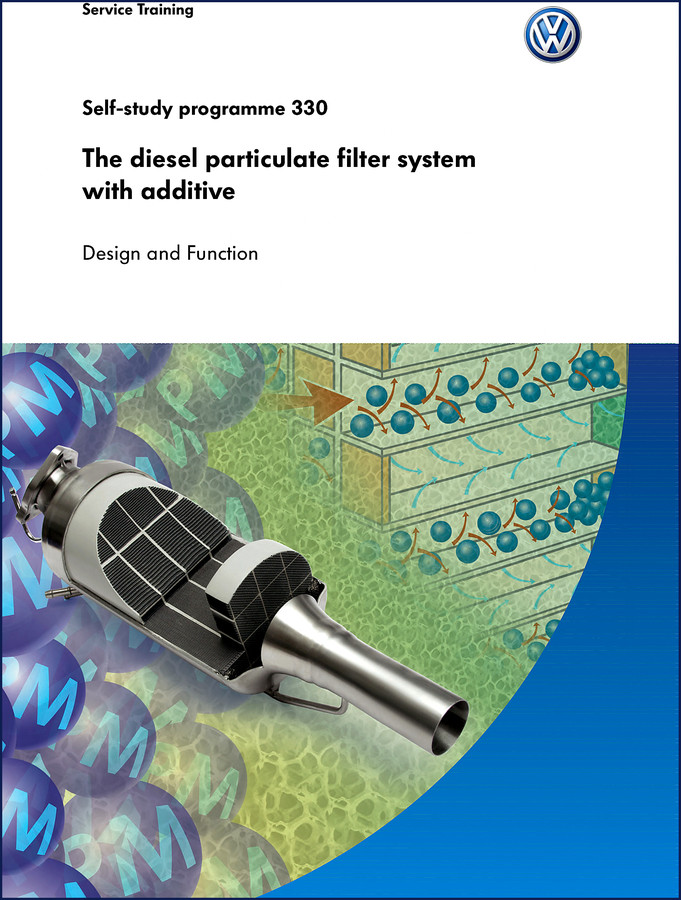
If you’ve ever chased a DPF regeneration issue with a generic aftermarket wiring diagram, you know the frustration. That’s why I keep this Volkswagen 330 Training Manual on my bench. At 36 pages, it’s not a novel – it’s a straight shot from the factory into your hands. No third-party interpretation, no guesswork. The manual was built for VW service technicians, and that shows in every diagram.
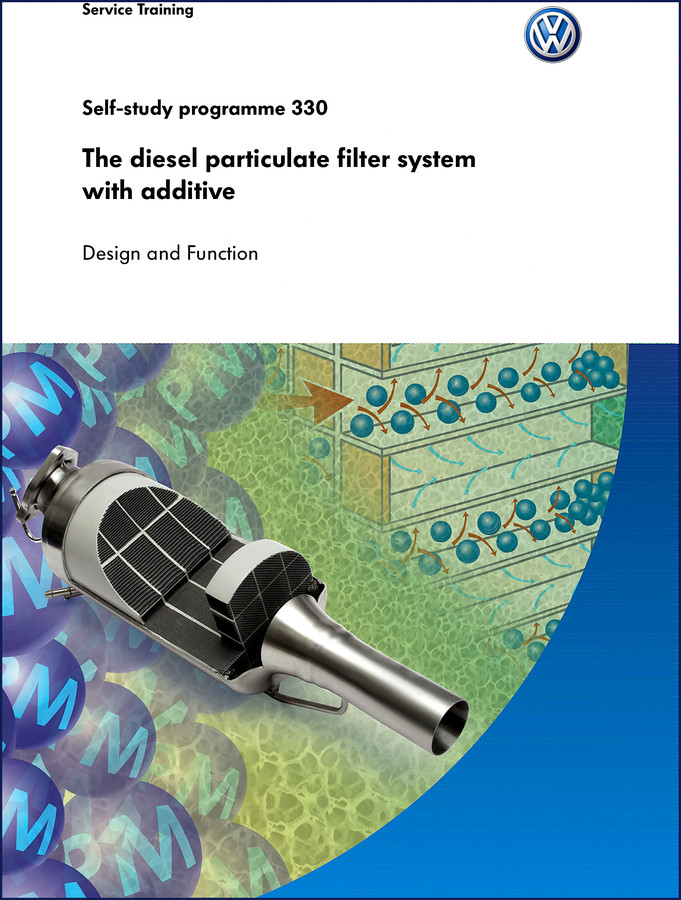
Combine the introduction section on page 4 with the design details starting on page 12. Page 12 walks through the additive system and how it lowers the soot burn-off temperature. I’ve seen backyard mechanics replace a perfectly good DPF because they didn’t understand that the additive injector was the real problem. This section kills that kind of wasted diagnosis.
Design and Function – How the Additive System Works
Page 12 covers the full design and function of the diesel particulate filter with additive. The manual explains why Volkswagen engineers chose an additive-based system instead of a passive regeneration strategy. You get the cross-sections, the flow paths, and the chemical reasoning. Skip this, and you’ll be chasing regen cycles that never need chasing.
Sensors and Actuators – What to Check First
Flip to page 20 for the sensors and actuators list. Differential pressure sensor, exhaust temperature sensors, additive injector, and the control logic. The manual shows you where each one lives and what signal to expect. I’ve had guys swap the DPF pressure sensor three times when the problem was a stuck additive metering valve. This section ends that nonsense.
Service and System Limits – When to Replace
Page 33 gives you the service procedures – how to regenerate, when to replace the filter, and what the system limits are. Page 32 spells out the system limits: temperature thresholds, backpressure limits, and additive fill levels. These are factory numbers, not aftermarket approximations. Use them. For related factory documentation, look at the Volkswagen 2.3-ltr. V5 Training Manual – OEM Factory Specs and the Volkswagen Passat 2005 Training Manual – Technical Overview. Also, the VW SSP 264 2000 Training Manual Brake Assist System OEM covers another critical safety system.
System Overview – Understanding the Whole Loop
Page 19 gives you the system overview – a block diagram of how the ECU, sensors, and additive system talk to each other. If you approach DPF diagnosis without this overview, you’ll waste time chasing red herrings. The functional diagram on page 31 ties the electrical signals to the mechanical parts. It’s the kind of stuff that makes a diag session go from three hours to one.
Why OEM Documentation Beats Aftermarket Reprints
I’ve seen too many copied manuals with wrong torque values and missing steps. Volkswagen built this training manual for their own techs, and it’s never been updated with revised specs – which means you need the current service literature alongside it. But for understanding the system’s bones, this is gold. The self-study format means the text is direct and the illustrations are factory-correct. General automotive background can be found at Automotive Industry Overview. And if you need to understand drivetrain fundamentals, the Manual Transmission page gives solid context.
Test Yourself – Verify Your Understanding
Page 35 has a self-test. I make every apprentice run through it before they touch a customer’s car. It saves headaches and prevents comebacks. The questions are written by the same engineers who designed the system – not someone guessing from a parts catalog.
- Does this manual include torque specifications?
- No. This is a training manual, not a repair manual. Use it alongside the factory workshop manual.
- Can I use this to service a 2010 Volkswagen 330?
- This training manual covers the design and function of the DPF system with additive, as used on the Volkswagen 330 platform. It explains sensor locations, system limits, and basic service guidelines. However, because it’s a self-study programme and not a step-by-step repair guide, you should pair it with the official workshop manual for actual repair procedures. The manual was published for internal training and its contents are not updated, so always check the latest service literature for current specs. For the 2010 model, ensure compatibility by verifying the DPF system matches the additive type described.
So before you crack open that DPF system, get the right documentation. Download the Factory Manual and keep it handy.
Reviews
There are no reviews yet.