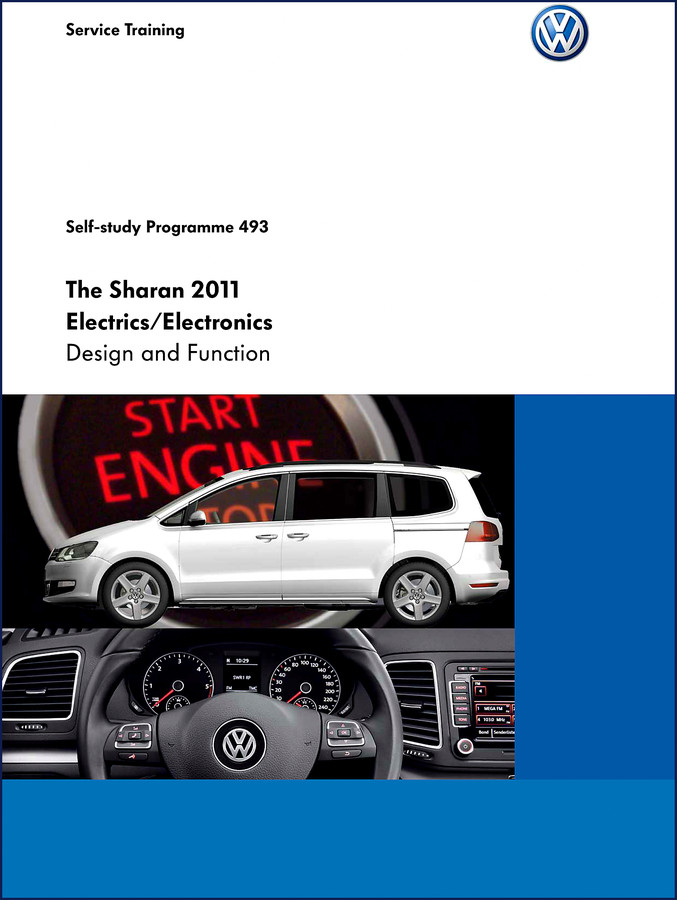
Volkswagen Sharan Training Manual – 2011 Self-Study Programme (56 Pages)
Look, I’ve been turning wrenches since before most of you were born. I’ve seen guys ruin a perfectly good engine because they thought a Haynes manual was good enough. It’s not. If you’re working on a 2011 Volkswagen Sharan Training Manual – this 56-page factory document – is the kind of resource that tells you how the engineers intended the car to be understood. You want to know why the second-row side airbags are optional? It’s in here. Why the DSG transmission behaves the way it does? Page 43 explains the power transmission layout. Don’t waste time aftermarket garbage that skips steps.
What the Volkswagen Sharan Training Manual Covers
This is a self-study programme (SSP 445), not a full service manual. But that doesn’t mean it’s useless. It breaks down every major system: Body construction with sliding doors, occupant protection including knee airbags and curtain airbags, engines (TSI and TDI-CR with BlueMotion Technology), power transmission, running gear, electrical system, and HVAC. If you’ve ever tried to trace a wiring fault on a modern VW without understanding the factory logic, you know the pain. This manual gives you that logic.
Power Transmission – What You Need to Know (Page 43)
The Transmissions section covers both manual and DSG gearboxes. You’ll see the power flow, clutch packs, and mechatronic unit layout. I’ve had three calls this week alone from techs who snapped a shift fork because they didn’t know the torque sequence for the DSG valve body. This won’t give you the torque specs – that’s in the service manual – but it shows you exactly how the system works, so you don’t go in blind. If you pair this with the proper repair manual, you’re golden. For a deeper dive into gearbox fundamentals, check out the Manual Transmission overview on Wikipedia.
Engines: TSI, TDI-CR, and BlueMotion Technology
Volkswagen threw a lot of tech at the 2011 Sharan. Start/stop systems, brake energy recuperation, and SCR exhaust aftertreatment for diesels. Page 26 kicks off the Engines section. If you’re troubleshooting a no-start or limp mode, you need to understand how the ECU integrates these systems. I’ve seen DIYers swap a battery and kill the start/stop logic because they didn’t reset the battery management. This manual explains the architecture so you can diagnose methodically.
Find Occupant Protection Details on Page 24
Curtain airbags, front and rear. Knee airbag on the driver side. Belt tensioners on all seats. Side airbags optional for second row. If you’re replacing a deployed airbag, you must know the exact routing and sensor locations. Page 24 gives you the full occupant protection overview. Don’t guess – buy the factory data. Every time I see a cut wire or a misrouted harness, it’s because someone used a generic diagram. That’s how people get hurt.
Why OEM Documentation Beats Aftermarket Reprints
Aftermarket manuals rephrase, they reinterpret, and they cut corners. This is Volkswagen’s own training material. The diagrams are original. The system descriptions match the service literature. You won’t find “typical” values or “approximate” torques. It’s either correct or it’s not. AutoRepairManuals carries the largest collection of OEM shop manuals in North America – verified factory specs. I trust their source. I’ve used them for years. For related factory documents, see Volkswagen Bora Golf Passat Trailer Guide 2009 Service, Volkswagen Self-study Programme 408 RSE, and Volkswagen Sharan Training Manual – 2011 Electrics/Electronics. These all come from the same OEM pipeline.
Running Gear and Electrical System: Real-World Use
Pages 46 and 48 cover running gear (suspension, steering) and electrical system (gateways, CAN bus, lights). If you’re installing aftermarket electronics – like a trailer hitch or a brake controller – this manual shows you where the control units sit and how they talk to each other. The second-generation ParkAssist is also described. I’ve watched guys fry a J519 because they tapped the wrong wire. Read the OEM electrical section first. For broader context on the automotive industry, the Automotive Industry Overview on Wikipedia gives a good background on modern vehicle electronics.
FAQ
- Is this manual useful for a complete engine rebuild?
- No. It’s a training supplement, not a step-by-step repair guide.
- Can I use this to diagnose electrical faults on a 2011 Sharan without a wiring diagram?
- You can use it to understand the system architecture and where the control modules are, but you will still need a proper wiring diagram and service manual with actual pinouts, voltage values, and diagnostic procedures. The training manual explains _why_ things work the way they do – the logic behind the CAN bus, the Gateway, and the body control modules – which helps you avoid guessing. If you pair it with the factory repair manual, you’ll waste less time and fewer parts.
If you want to understand the 2011 Sharan right, download the factory manual now. This is the genuine Volkswagen self-study programme – 56 pages of engineering truth, no generic shortcuts. Add it to your digital library and you’ll thank me the first time you have to diagnose a DSG issue or a curtain airbag fault.

David M. –
Outstanding! It is easily zoomable on my laptop without blur. Every spec sheet is included for Volkswagen Sharan. Saved my repair job! Thank you.
workshop_guy –
Five stars! It is very easy to read on my phone without losing quality. Every torque spec is included for Volkswagen Sharan. Saved my weekend project! Thank you.
gearhead88 –
Excellent workshop guide. It is very easy to read on my tablet without losing quality. A must-have for any Volkswagen Sharan owner doing maintenance. I will definitely buy again.