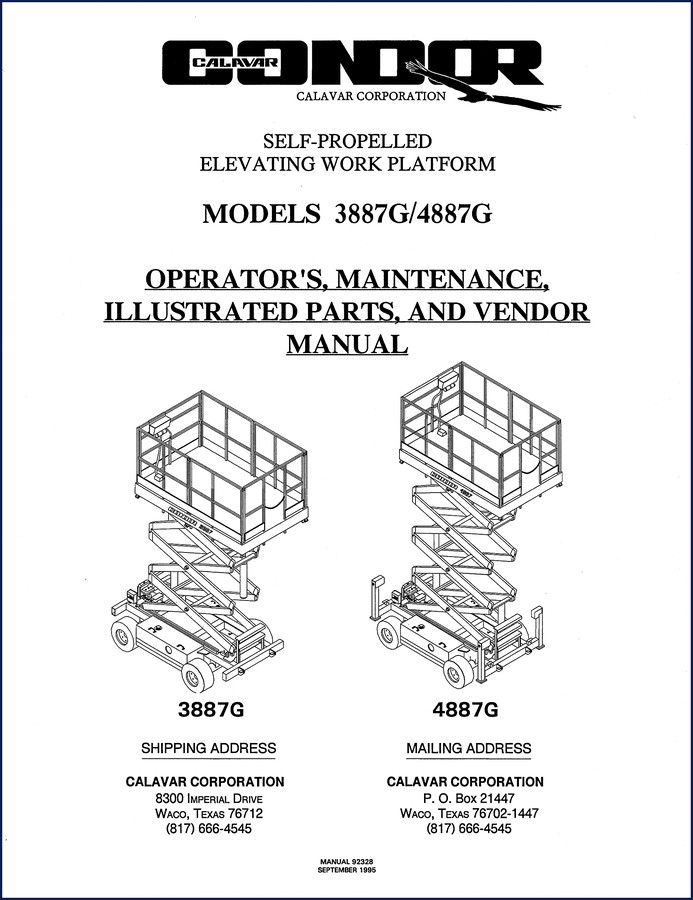
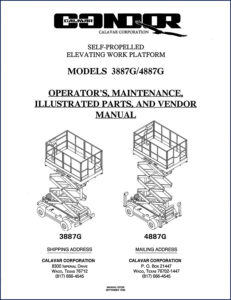
Calavar 3887G, 4887G 1995 Operators Manual – OEM Factory Specs for Self-Propelled Work Platforms
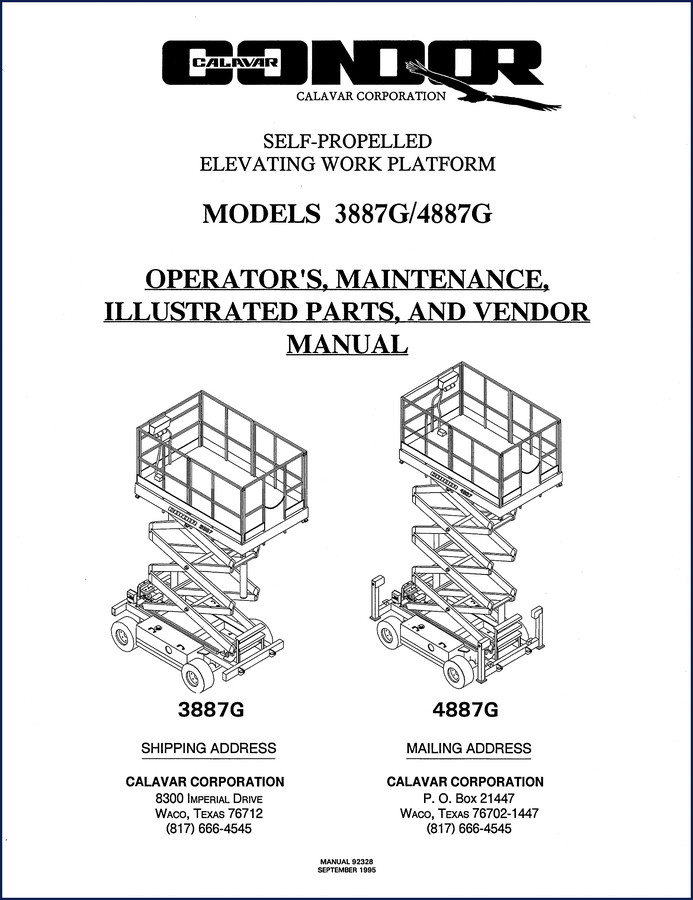
You’re running a shop, or you’re a guy who owns one of these Calavar boom lifts. You need the operator’s manual that came with the machine from the factory – not some scanned copy with missing pages and generic instructions. I’ve seen too many hacks try to run a 3887G or 4887G without the proper documentation. That’s how people get hurt, or worse, cost themselves a day of downtime because they skipped a maintenance step. This is the Calavar 3887G, 4887G 1995 Operators Manual, 181 pages, straight from Calavar Corporation, dated September 1995. It covers both models. If you’re going to operate, inspect, or maintain one of these self-propelled elevating work platforms, this is the paper you need on the machine.
What This 181-Page Manual Covers
Open this manual and you’ll find a proper table of contents that breaks down every section. Page 3 gives you the introduction, including the legal requirement to keep the manual on the machine at all times. Then it gets into the meat: Preparation, Inspection, and Maintenance (Section I) covering overall machine condition, lower control station, platform, hydraulic system, and batteries. Rated work load, optional equipment, lower and upper controls – all documented. The emergency lowering procedure is on page 6. That’s the page you memorize before you ever take the lift up. Moving from job site to job site includes ramp method and forklift loading instructions. The manual also contains the ANSI/SIA 92.6-1990 Manual of Responsibilities. That’s the safety standard you need to comply with. No aftermarket fluff here – every page came from Calavar’s own engineering department.
Calavar 3887G and 4887G Operators Manual: Real OEM Specs
I’ve been burned by aftermarket manuals that guess torque values and skip safety warnings. This is not that. This is the original factory manual from Calavar Corporation, manual number 92328-001. The same booklet that shipped with the machine in 1995. You get the exact procedures the factory certified. When the manual says to check battery electrolyte level, that’s the factory recommendation. When it describes the lower control station functions, those are the actual Calavar schematics. If you trust a third-party reprint for a piece of equipment that lifts people 80 feet in the air, you’re taking a liability I wouldn’t touch.
Preparation, Inspection, and Maintenance – Section I
Section I isn’t just a checklist – it’s the daily routine that keeps these platforms safe. It breaks down into five sub-sections: Overall Machine Condition, Lower Control Station, Platform & Upper Control Station, Hydraulic System, and Batteries. For each, you get a list of what to check. For example, the hydraulic system inspection includes checking fluid level, looking for leaks, and verifying hose condition. No guesswork. If your machine fails any of these checks, the manual tells you to tag it out and repair before operation. I’ve seen rental yards skip this step and send out lifts with bad hoses. That’s how you get a catastrophic failure. Follow the manual.
Emergency Lowering Procedure and Job Site Transport
Page 6 is the emergency lowering procedure. That’s the one you practice in the yard before you ever work at height. The manual walks you through the manual descent valve operation step by step. Section VII covers moving from job site to job site – loading/unloading with ramps or forklift, and transporting. There’s no margin for error when you’re loading a 12,000 lb boom lift onto a trailer. The ramp method instructions on page 6 tell you the angle limits and tie-down points. I’ve seen guys skip reading this section and end up with a tipped machine. This manual keeps you from being that guy.
Who Needs This Manual?
If you own a 3887G or 4887G, you need it. If you rent these machines, you need it on the machine per ANSI requirements. If you’re a fleet manager, every operator should read the upper and lower control descriptions before they touch the joystick. Beginners – yes, this manual is written for the operator, not just the mechanic. It uses plain language and pictures. But don’t mistake that for lack of rigor. This manual assumes you have common sense and will follow the steps. It doesn’t hold your hand, but it gives you the exact procedure. Professionals – you know the value of having the factory spec on hand for an OSHA inspection.
- Is this the original OEM manual for both the 3887G and 4887G?
- Yes. This is the factory manual from Calavar Corporation, September 1995, covering both models.
- Does it include torque specs for bolts or specific maintenance intervals?
- This operators manual covers daily inspection and operation. For detailed torque values and service intervals, you’ll want the separate service and repair manual. But it does include the hydraulic fluid checks and battery maintenance procedures that keep the machine running.
- Can I use this manual for the Calavar 4887G only?
- Yes, it covers both models identically. The manual title is self-propelled elevating work platform models 3887G/4887G – same book, same procedures.
- What safety standards are included in this manual, and why should I care?
- The manual includes the full ANSI/SIA A92.6-1990 Manual of Responsibilities for Self-Propelled Elevating Work Platforms. This is not optional – if you operate this machine in the US, you are required by OSHA to follow that standard. The manual also contains the emergency lowering procedure and daily inspection checklist that keep you and your crew alive. Unlike a standard Manual Transmission in a car, this lift’s drive system is hydraulic, but the safety protocols are documented here. I’ve seen too many operators skip the daily inspection because they think it’s just a formality – until a hydraulic line bursts at height. This manual gives you the legal, safe procedure. Don’t skip it. Manual Transmission maintenance is straightforward compared to the critical safety checks on a boom lift.
Download the Factory Manual and keep it on the machine. Every operator, every shift, every day. That’s how you stay safe and keep the equipment running.
Reviews
There are no reviews yet.