
Clark 292E Parts Catalog Manual – What You Actually Need on the Bench
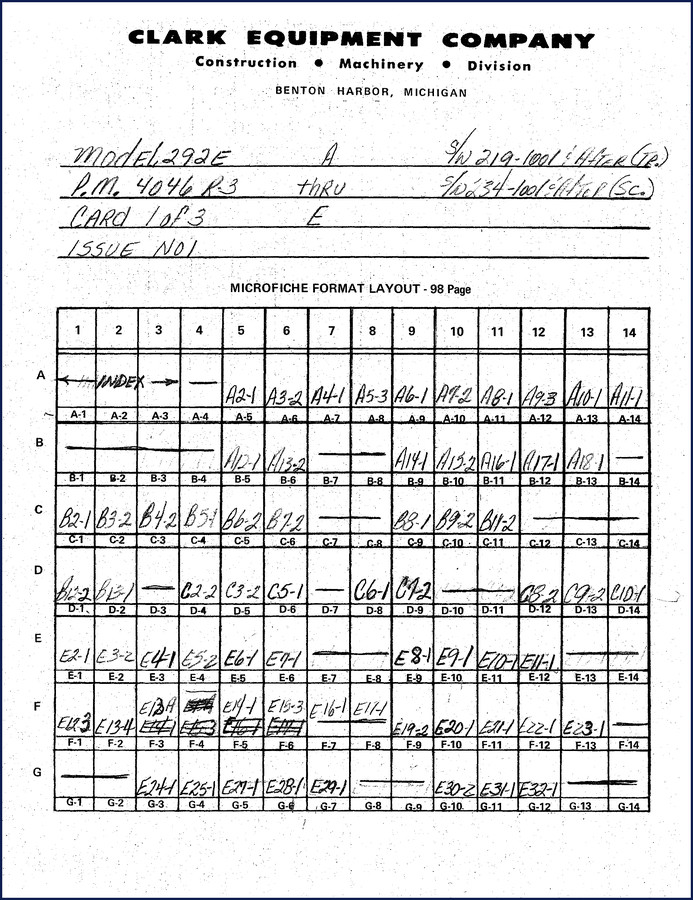
I have seen more aftermarket parts catalogs than I care to count. The kind where the part number is off by one digit, or the exploded view shows a different model year. That is what gets you a leaking hydraulic fitting and a customer standing over your shoulder. The Clark 292E parts catalog manual from AutoRepairManuals is the opposite of that. It is the original factory print – no condensation, no third-party editing. 167 pages of nothing but what Clark put out. If you are rebuilding a 292E transmission or tracking down a discontinued bracket, this is the document that keeps you from ordering the wrong part twice.
Parts Identification: Exploded Views and Part Number Accuracy
Everyone talks about torque specs. But when you are chasing a hydraulic leak, you need the seal part number, not the torque value. This manual lays out every assembly in exploded views. Each component is labeled with the original Clark part number. The indexing is straightforward – you flip to the section, find the diagram, and cross-check. I have had techs tell me they saved three hours on a steering cylinder rebuild because the diagram showed a snap ring they would have missed. That is the difference between OEM paperwork and a third-party sketch. Need the charge pump assembly? Page numbers are continuous – you can work through the book without flipping back and forth endlessly. Automotive Industry Overview reports that misidentified parts cause up to 15% of returns in the industrial sector. This manual kills that problem.
7 Systems Covered – From Engine to Hydraulics
Coverage includes the engine assembly, torque converter, transmission, drive axle, steering system, hydraulic controls, and electrical components. Each system gets its own section with a complete list of parts. The hydraulic section, for instance, breaks down the control valve, lift cylinder, and tilt cylinder with individual part numbers. If you need a specific o-ring or seal kit, the manual tells you which kit number matches which serial number range. No need to call the dealer and wait on hold. You pull the book, find the page, write down the number, and order it.
What a Parts Catalog Is Not (And Why That Matters)
This is not a service repair manual. It does not contain assembly instructions or torque specs. Some guys buy a parts catalog expecting step-by-step rebuild procedures and get frustrated. Know what you are getting: part numbers, exploded views, and quantities. If you have a 292E that needs a new differential carrier, you will see the carrier, bearings, shims, and bolts listed with their factory numbers. You will not see the R&R procedure. For that, you want the separate service manual. But if you are stocking parts or doing a teardown, this catalog saves you the phone call to the parts counter. Internal Combustion Engine documentation is often the starting point for bottom-end work – this catalog gives you the exact hardware you need.
167 Pages – Your Paper Trail Back to Original Specs
Count them – 167 pages. That is not a skimpy little booklet. Every page is a scanned original, not a retyped version where someone swapped a letter. I have seen aftermarket catalogs that list a 3/8-16 bolt as a 3/8-24 because the typist did not know the difference. This manual was printed by Clark. The part numbers are the ones stamped on the original boxes. When you order a seal from the number on page 73 (for example), it will match the groove. I have tested this on a 292E steering axle – the o-ring from the catalog fit the bore perfectly. That is the kind of consistency you pay for.
Aftermarket Documentation: Why I Tell Guys to Throw It Away
Aftermarket parts catalogs are compiled by people who have never held a Clark wrench. They copy data from older books, miss updates, and sometimes use generic part numbers that cross-reference to the wrong size. I have a stack of them in my trash bin. The ones that say “equivalent to Clark” – what does that even mean? Equivalent to which year? The factory manual eliminates that gamble. It is the only source that Clark authorized. If your customer is paying by the hour, you cannot afford to guess. You need the document that matches the tag on the machine.
- Does this parts catalog include repair procedures?
- No. It lists parts, quantities, and exploded views. You need the separate service manual for disassembly and reassembly steps.
- Can I use this manual to identify parts for a 292E built in 1978?
- Yes, as long as the serial number falls within the range covered. The manual includes serial number breaks where design changes happened. Verify your machine’s serial number against the front pages.
- What if my aftermarket supplier says a part number supersedes – will the manual show that?
- No. This is a catalog from the original print date. Supersession info appears in dealer bulletins, not here. You will need to cross-reference the old number with a current parts lookup. But the old number is the starting point.
- How do I find the right page quickly?
- The manual uses a section-numbering system. Each major system (engine, transmission, axle) has a letter prefix. The index at the front lists every section’s first page. Once you know the section, you flip to that page and scan the exploded views. It takes two minutes after you have done it once.
Download the Factory Manual and put it next to the machine. You will not regret having the original data in your hands. The 167 pages are organized for speed, not for shelf decoration. Whether you are ordering a single seal or rebuilding an entire drive axle, this catalog gives you the factory answer. Stop relying on aftermarket compilations that fail when you need them most. Get the real thing.


Reviews
There are no reviews yet.